Showing posts with label RALPH FIENNES. Show all posts

Friday, October 25, 2024

SWEET SISTINE

Opening in theaters this weekend:

Conclave--Ralph Fiennes plays the Dean of the College of Cardinals, who has the unenviable job of presiding over a contentious election to replace a recently deceased Pope. With liberal, conservative and shifty middle-of-the-road candidates and their factions jockeying, the sequestered old fellows can't arrive at the needed two-thirds majority.

Stanley Tucci is a liberal who insists, demurely and unconvincingly, that he doesn't want the gig, but is willing to take it and will embrace a broad spectrum of progressive reforms if elected. Sergio Castellitto is a cheerfully reactionary, Italo-centric Cardinal who still resents Vatican II. John Lithgow, playing the middle, is all wounded innocence when told that there's a bad report about his last meeting with the late Pontiff. Then there's the mysterious Cardinal (Carlos Diehz) of Kabul, who shows up out of nowhere, having only recently been appointed by the deceased Pope unbeknownst to the College.

This tale of an improbable papal ascendancy almost challenges Fr. Rolfe's Hadrian VII  for far-fetched wishful thinking. How possible, let alone plausible, any of it is I can't say. Nor do I much care. High ecclesiastical dramas are fun. Movies ranging from the naïvely pious Shoes of the Fisherman (1968) to the campy Monsignor (1982) to the wild and woolly Angels & Demons (2009) have all taken advantage of the splendor and grand theatrical ceremony of the Vatican, and the intrigues of its sumptuously outfitted habitués.

So too does Edward Berger, the German director of Conclave, adapted by Peter Straughan from the 2016 novel by the Brit Robert Harris. The movie starts a little slow, but very soon, abetted by the cinematography of Stéphane Fontaine and the fevered strings of Viktor Bertelmann's score, it becomes an exciting spectacle, swept along by Berger in a manner reminiscent at times of the great silents; he gives us carefully composed tableaux of clerics skulking about shadowy stairwells, or Eisenstein-ish masses of nuns under umbrellas, surging like tides into high-angle shots.

But Berger's eye on the settings also cuts through the superficial lushness and opulence to find an oppressive cheerlessness. The marble-paneled hallway into which Fiennes and his fellow Cardinals emerge from their austere dorm rooms during the conclave's lockdown has an institutional dreariness.  The figures in Michelangelo's Last Judgement glower down in reproach upon the Cardinals as they vote. Somehow the most hopeful presence in the film is a rather intrepid turtle.

Berger's skill is impressive, but it's the acting that makes Conclave lively and juicy, and ultimately even moving. Fiennes, always good at suffering, has rarely been so woebegone, or so wryly likable. Tucci and Lithgow could do roles like these in their sleep, and they're both crisply on point. Lucian Msamati and Brian F. O'Bryne are strong as a Nigerian Cardinal and as the Dean's sheepish aide, respectively. And as a large-and-in-charge, baleful-looking nun, Isabella Rossellini's role is almost wordless early on, but then she brings off her one big moment so flawlessly that her punctuating gesture wins applause.

Friday, May 3, 2019

WHITE CROW; DARK MOVIES

Happy Friday everybody! Check out my "Friday Flicks" column this week, online at Phoenix Magazine, for my review of the Ralph Fiennes/David Hare drama The White Crow...


...as well as a preview of this year's Arthur Lyons Film Noir Festival in Palm Springs.


Have a great weekend everybody!

Friday, November 6, 2015

BROWN. CHARLIE BROWN.

Opening this weekend:


The Peanuts MovieCharlie Brown is trying to fly a kite in winter, on the theory that the Kite-Eating Tree will be dormant. The chaos that ensues is interrupted by the arrival of a new kid moving in across the street from his house. This turns out be a Little Red-Haired Girl, and once Our Hero gets a look at her, he’s in love.

The trouble is, we get a look at her too. It’s true that the Little Red-Haired Girl was shown, very ill-advisedly, in a couple of the later Peanuts movie and TV cartoons, but she was kept offstage in the strip, and she should have been here, too. Showing the Little Red-Haired Girl is like showing Maris on Frasier or Howard’s Mom on The Big Bang Theory or Charlie on Charlie’s Angels or Carlton the Doorman on Rhoda.

This feature version of the greatest American comic strip—and one of the great achievements in 20th-Century literature—is very cute. It’s visually inventive from beginning to end. It has good values at its core. And it doesn’t vulgarize its source material, at least not too much—not nearly as much, certainly, as some of the terrible Peanuts TV cartoons that were made while Charles M. Schultz was alive, presumably with his blessing.

But The Peanuts Movie is still more miss than hit, or at least it was for me. It could be that I’m too close to Peanuts—the strip is a big part of why I fell in love with reading, and I still take my volumes down from the shelf frequently. I’ve been reading and rereading the best vintages of Peanuts (roughly the late ‘50s to the mid ’70s) all my life, and this movie, produced by Craig Schultz (son of Charles) from a story of his devising, doesn’t feel like Peanuts to me. It’s almost Peanuts.

The misstep with the Little Red-Haired Girl isn’t the only one, alas. There’s too much rich texture—to Lucy’s hair, to Charlie Brown’s shoes, to the countryside over which Snoopy flies in search of the Red Baron. Peanuts was an austere world of lines and dots and stock phrases from which Schultz wrung an astonishing half-century’s worth of variations; this movie tries to fill in the details he let our minds fill in.

More disappointingly, The Peanuts Movie turns Charlie Brown from a mythic figure—a loser who strives mightily against his fate as a loser, and doesn’t overcome it—into a standard kids-movie underdog who triumphs. It’s true that he triumphs for the best of reasons—his selflessness and honesty—but it still robs him of his neurotic complexity and his pained, unrecognized heroism.

“Winning is great,” Schultz once observed, “but it isn’t funny.” The unflinching moral of Peanuts is that some people really are born losers, and that this sucks for them, but it doesn’t mean that their lives are without value. The first Peanuts movie, 1969’s A Boy Named Charlie Brown, ended on this note, but it’s not the sort of thing that the makers of a big-budget contemporary animated movie can embrace.

This, maybe, is why the meandering story lacks tension and emotional weight. When the Charlie Brown of the strip or the earlier TV cartoons said “Rats!” or was told “Boy, are you stupid, Charlie Brown!” it landed like a blow. The Peanuts Movie isn’t a disgrace, but it pulls its punches. It’s in 3-D, but it has less depth than a line drawing.


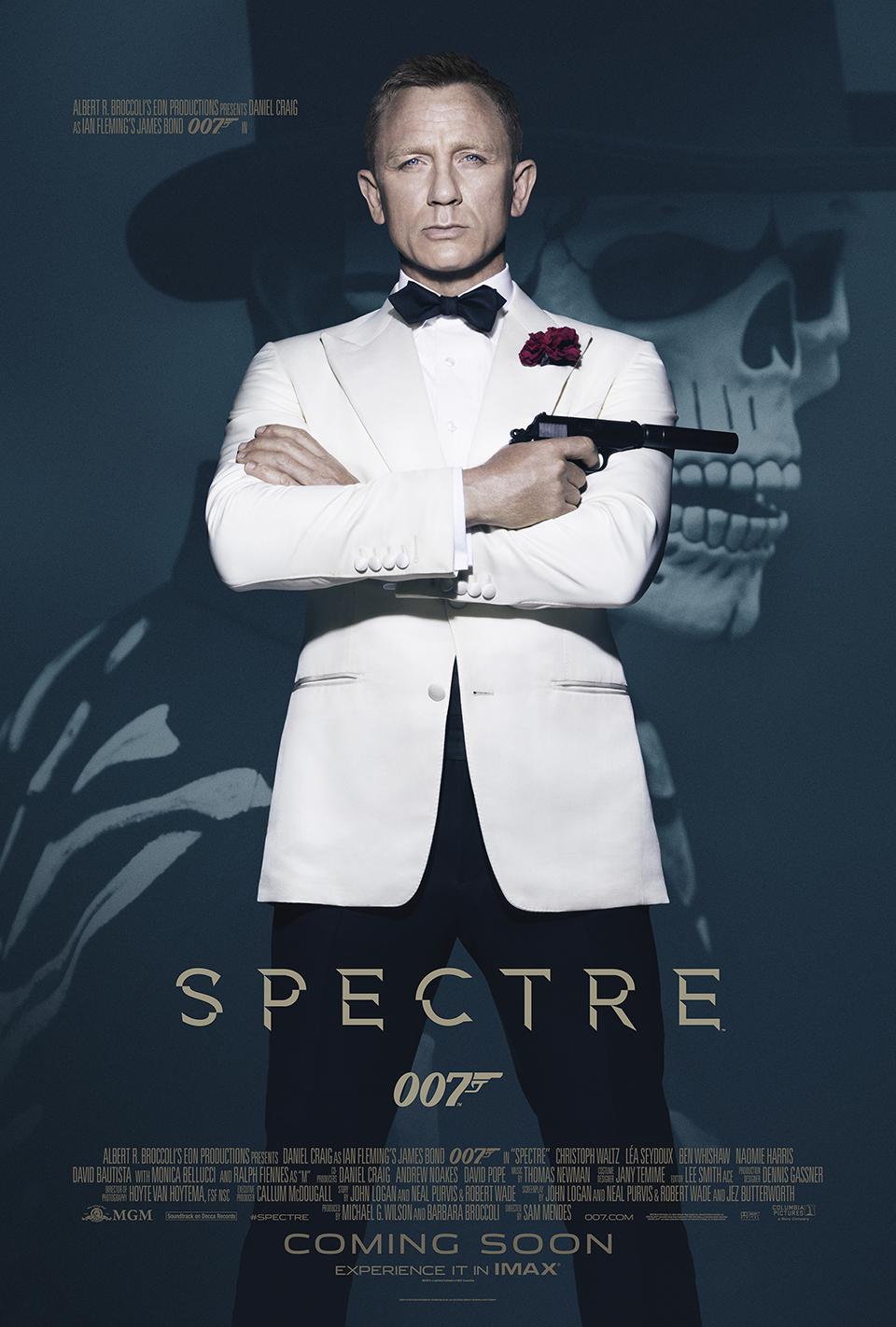
SpectreJames Bond, it could be argued, is sort of the anti-Charlie Brown: confident, assured, decisive, in command, and always a winner with the ladies, Red-Haired and otherwise. It’s only since Daniel Craig took over the role that the Bond movies have begun to seriously explore the idea that he’s no less neurotic or unhappy for all that.

This new one takes 007 from Mexico City to Rome to Austria to Tangier and back to London, chasing down a final tip from the late M (Judi Dench) that leads to an old enemy (Christoph Waltz). Meanwhile the new M (Ralph Fiennes) is struggling to keep a bureaucrat from shutting down the Double-0 program and, incidentally, turning the world into one big cyber-surveillance police state. Q (Ben Whishaw) and Moneypenny (charming Naomie Harris) get caught up in the intrigue this time too.

Watching the old Bond pictures, with their excesses and chauvinisms, used to feel like a Paleolithic indulgence—like letting yourself enjoy something that was bad for you, and probably bad for the world. The Bonds featuring Craig, with his wearily amused old-shoe face and his effortless poise, seemed to be trying for more emotional and moral depth.

Until this one, that is. Despite the relevance of the supposed theme to current civil rights concerns, these are old-fashioned Bond antics—preposterously overscaled set-piece action scenes, women succumbing to 007’s charms, urbane courtesies between Bond and his enemies. It’s also way overlong.

Having said that, I mostly enjoyed Spectre anyway. Director Sam Mendes doesn’t ask us to take the proceedings too seriously—though it’s less overtly facetious, it’s not much less cornball than the Roger Moore Bonds—so I just enjoyed it for its old-fashioned movie serial silliness.

Also, Monica Bellucci appears as an assassin’s widow with whom Bond hooks up. It’s a brief role, but a little Monica Bellucci is better than no Monica Bellucci, I always say.

Plus, the title sequence features a really cool octopus.

Friday, March 14, 2014

PRO & CONCIERGE

Opening this week:


The Grand Budapest Hotel--Wes Anderson’s latest is set in another of his seamlessly-imagined alternative realities. This time, it’s a fortress-like resort hotel in a mountainous eastern-European nation. At the core of a couple of nesting-doll-like frame stories, the main action concerns the adventures of the Grand Budapest’s hapless but unflappable concierge Gustave H. (Ralph Fiennes) and his sidekick, the neophyte lobby-boy Zero Moustafa, charmingly played by Tony Revolori as a boy. F. Murray Abraham plays Zero’s older self, telling the story in the 1960s to a young writer (Jude Law) staying at the now-shabby hotel.

Gustave sees his duties as including gigolo services to the hotel’s wealthy, elderly—in some cases octogenarian—female guests. When he is implicated in the murder of one of these ladies—who has left him an impressive legacy—he and Zero are chased across “Zubrowka” by the sinister agent (Willem Dafoe) of her rotten son (Adrien Brody).

This is, I think, about as simply as the plot can be explained. There are dozens of characters, all manner of intrigues, subplots, chases, gun battles, romances, delicious-looking baked goods, and eccentric characterizations by a cast that includes Tilda Swinton, Jeff Goldblum, Bill Murray, Harvey Keitel, Saoirise Ronan, Bob Balaban, Edward Norton, Mathieu Amalric, Jason Schwartzman and others, all in good form. Fiennes gives maybe his funniest and most endearing performance. It’s the usual Anderson shtick, and if, like me, you buy into his visions, you’ll probably find The Grand Budapest Hotel a delight.

Or mostly a delight, anyway. Grand Budapest is slightly marred, or at least was marred for me, by odd touches of violence—fingers severed by a sliding door, prison guards massacred during an escape, a casually murdered pet—that feel jarringly out-of-key with the general atmosphere of stylized whimsy. Other Anderson films have shown this trait—the arrow killing the dog in Moonrise Kingdom, for instance, or the fatal helicopter crash in The Life Aquatic with Steve Zissou. I’ve always guessed that it’s Anderson trying to force some dramatic gravity into his fictions, to keep them from seeming too trivial.

He probably felt even more pressure in this direction with The Grand Budapest Hotel, because of the setting and the period. On the whole, Europe in the mid-20th Century was no picnic, and since there are no Nazis or Fascists in the movie, the gruesome touches in The Grand Budapest Hotel may have been the director’s attempt to reassure the audience (especially its older members) that he knows this.

But this doesn’t seem any more substantial than anything else in the film—just less good-natured. F. Murray Abraham’s magnificent voice, narrating from weary decades later, carries all the poignant melancholy the movie needed to offset its lightness. The Grand Budapest Hotel is the work of mature master confectioner; its violence seems self-consciously scribbled on its surface, by Anderson’s adolescent inner vandal.


RazeViolence is also the issue in this exploitation melodrama, opening today and playing this week at Filmbar Phoenix. It stars the marvelous actress and stuntwoman Zoe Bell, best known for Tarantino’s Death Proof, as Sabrina, one of a bunch of women who have found themselves abducted and imprisoned in an underground bunker and forced to fight each other, mano a mano, to the death, in an elimination tournament.

They’re told that if they die, their loved ones will be murdered, and the survivors are shown videos to prove it. Running this vile spectacle is a husband-and-wife team (Doug Jones and Sherilyn Fenn) of unctuous sickos; the audience, watching on video monitors, are rich scumbags.

I sat there watching this film, directed by Josh C. Waller from a script by Robert Beaucage, wondering why it seemed so toxically more vicious than innumerable action films with very similar premises, in most of which the combatants were male—just last year, for instance, I enjoyed the Keanu Reeves-directed Man of Tai Chi, the plot of which, in bare outline, is close to identical. Was my reflexive revulsion to Raze just cultural Victorianism because the cast was distaff?

It can’t have been only that, because while I don’t much like the Hunger Games flicks, which also employ this idea and a warrior heroine, I’m not appalled by them in the same way I was by this film. Perhaps it’s because the fight scenes in Raze are so furiously savage and concentrated, and the actresses—among them Tracie Thoms, Bell’s costar from Death Proof—give off a despairing sense of empathy for the opponents they have little choice but to pummel. Anyway, while I found the first two-thirds of Raze more grueling than fun, it doesn’t seem fair to censure a movie for making hideous violence seem hideous.

Based on this description, your own tastes should tell you if Raze is for you. I wouldn’t quite call it torture porn, but it carries some of that genre’s dismal stink. In any case, on its own terms, it’s effective. When (spoiler alert!) Sabrina at last gets around to some vengeance against her captors, I can’t claim I’m sufficiently pure-hearted not to have enjoyed it.

Thursday, January 9, 2014

ONE MANN AND ONE WOMAN


RIP to actor Larry D. Mann, passed on at 91. Mann appeared in movies ranging from The Singing Nun to The Sting and TV ranging from Hogan’s Heroes to Hill Street Blues to Homefront, but will perhaps be most fondly remembered as the voice of bearlike prospector Yukon Cornelius in Rudolph the Red-Nosed Reindeer.


Opening tomorrow in the Valley is The Invisible Woman, directed by Ralph Fiennes, who also stars as Charles Dickens, opposite Felicity Jones as the author’s mistress Nelly Ternan. It’s an intriguing subject, but I missed the screening, so…

Monster-of-the-Week: …this week’s award will have to go to the more literally invisible title character of Universal’s 1940 film The Invisible Woman.


Played by Virginia Bruce, she’s a fetching department store model who volunteers to be a guinea pig for sweet but absent-minded scientist John Barrymore, and uses her newfound transparency to take revenge on her skunky boss (Charles Lane).

Non-lethal revenge, that is. She’s surely among the most benign, least scary of all Monsters of the Week—the movie is a comedy, though it’s included on the Universal Monsters Invisible Man DVD collection. The humor is extremely corny and smirky and jocular, but it’s sort of a must-see all the same—can anyone afford not to see a movie the cast of which includes not only Barrymore and Charles Lane but Oscar Homolka, Charlie Ruggles, Donald MacBride, Shemp Howard, Margaret Hamilton and even a glimpse of Maria Montez?

Saturday, March 10, 2012

ROMAN RUIN

Some of Shakespeare’s plays seem awkward when performed in modern dress, and some of them seem perfectly attired. The Roman tragedy Coriolanus is of the latter sort. I saw it in modern dress in Washington, D.C. more than twenty years ago, with, of all people, a game young Bradley Whitford in the title role, and despite this miscasting it worked.


It works again in a gripping new movie version, opening this weekend in the Valley, directed by and starring Ralph Fiennes. He retells the story in 21st-Century clothes and settings (much of it was filmed in Serbia and Montenegro), with Shakespeare’s text boiled down to its bones by screenwriter John Logan.

Although T.S. Eliot thought it was superior to Hamlet, Coriolanus is one of Shakespeare’s most brilliant but least-beloved works. It’s the story of a General in the early Roman Republic, Caius Martius, later given the title cognomen for his victory over the Volscians at the town of Corioli, and of how, for all his martial valor, he is ultimately destroyed by his open contempt for the uppity Plebeians—with a little unwitting help from his psychotically militant mother.

For his successes in war, Martius (Fiennes) is nominated for consul, but he can’t get past a formality he finds demeaning—a requisite custom of presenting himself to the common people and displaying his scars won in Rome’s service. An unapologetic Patrician snob, he loathes the commoners, if he thinks about them at all, and is indifferent to their opinion of him.

Cajoled by his mother Volumnia (Vanessa Redgrave) and the avuncular consul Menenius (Brian Cox) into the ritual scar-baring, he endures it with misery, only to have the Tribunes stir up an insurrection by convincing the Plebes that he was insincere. They aren’t wrong, either—confronted with this horde, he spews venom at them, and ends up banished for his trouble.

Now homeless, Martius seeks out his mortal enemy—who’s also his unmistakable and requited man-crush—the Volscian leader Tullus Aufidius (Gerard Butler), and spitefully offers to help him invade Rome. Aufidius gleefully agrees, and the stage is set for a final, catastrophic clash between native loyalty and lust for revenge.

Fiennes and Logan find very clever modern contexts for the verse, and Fiennes’ tense staging of the battle scenes could please any fan of Green Zone or The Hurt Locker. He also captures a wonderful performance from Cox, and one of Redgrave’s best turns in a long time.


Gerard Butler comes off well, too. His Aufidius, thick-bearded, friendly, slyly sexy, makes a startling contrast to Martius.


On top of all this, Fiennes also gives one of his own best screen performances. He’s a strong, commanding actor, and he had a certain sad charm in Quiz Show, but overall, likability isn’t his specialty. That’s not a problem here. He doesn’t need a common touch for his Martius, a portrait of a deeply unhappy man who can only make sense of life in the midst of chaotic violence, to be moving.

Unlikable though the title character is, maybe part of the reason that Coriolanus can be so alienating for modern audiences is that the Ayn-Rand-ian slight regard of Martius for the unwashed herd has its seductive side. From this and many other works, there can be little doubt that Shakespeare shared at least some of his protagonist’s disgust for the fickle and dangerous mob, though not to the same pathological degree, and you may find yourself guiltily stirred up by the sneering invective directed at them (partly because Shakespeare, unlike Ayn Rand, could write).

And finally, in this Primary season you may reflect that, compared to the shameless attempts to dupe us into serving the interests of the rich, the open disdain of Martius for the poor might be downright refreshing.