Showing posts with label JEFF GOLDBLUM. Show all posts

Friday, June 10, 2022

DINO EXIT

Opening in the multiplexes this weekend:

Jurassic World Dominion--Before discussing this supposed finale to the Jurassic Park series, I should offer my usual disclaimer: I'm a lifelong dinosaur geek. A movie with dinosaurs starts at as much of an advantage with me as, say, a movie about fighter jets does with a military aviation buff.

So take this into account this when I tell you that I thoroughly enjoyed Jurassic World Dominion. Which I did.

The premise here is that dinosaurs have become a regular fact of contemporary life, usually as a danger or a pest. The movie begins with an enormous Mosasaur ruining the day of a commercial fishing boat, and from there director Colin Trevorrow, working from a script he co-wrote with Emily Carmichael, serves up one sequence after another of Mesozoic mayhem, as the revived reptiles cause traffic accidents, harass children, intrude on industrial sites and so forth. The beasts are also, of course, poached, illegally bred and otherwise exploited by humans.

The plot mixes the characters from the recent chapters, like Chris Pratt's raptor whisperer and Bryce Dallas Howard's Jurassic Park administrator turned dinosaur-liberation activist, with the heroes from the first film, Laura Dern, Sam Neill and Jeff Goldblum. Pratt and Howard are attempting to recover their adoptive daughter, the cloned child of a deceased JP scientist, as well as a young velociraptor, the offspring of Pratt's beloved Blue. Both have been kidnapped by a bio-engineering firm headed by creepy CEO Campbell Scott, and spirited off to an isolated research facility and dinosaur preserve in the Italian Alps.

Meanwhile Dern, startled by an invasion of locusts the size of baguettes that are decimating crops across the U.S., also suspects that the bio-firm is scheming, in the words of Simon Bar Sinister and Tears for Fears, to rule the world. She recruits her old pal Neill to help her infiltrate the facility, where Goldblum is gadfly-in-residence, and get proof. Eventually both sets of characters, along with an extremely glamorous pilot (DeWanda Wise) and a handful of other sympathetic parties, converge.

Along they way they are menaced by dinosaurs and other genetically-engineered perils. Raptors stalk our heroes through the streets and over the rooftops of Malta like assassins in a Bourne thriller. Dimetrodons chase them through amber mines. A giant flying Quetzalcoatlus attacks a plane in midair. Monstrous Giganotosaurus and sentimental favorite Tyrannosaurus Rex brawl like Japanese kaiju.  And that's aside from the worst outbreak of giant grasshoppers since 1957's The Beginning of the End.

Best of all, maybe, is an eerie, dreamlike sequence in which Therizinosaurus, a beast that resembles an enormous downy pheasant with claws like giant salad forks, towers over Howard as she lowers her pin-up-beauty face into a swampy green pool. This scene is a good example of a strength that has benefitted the whole series but is particularly pronounced in Dominion: the superb sound effects. For all of the movie's visual effects splendors, it's the sounds of the creatures, from the enveloping yet somehow muted bellow of the T-rex to all of the distinctive squawking and hissing and clucking and chittering of the others, that really make them scary.

On the downside, with as much objectivity as I can muster as a sucker for dinosaurs, I must note that the dialogue in Dominion seems bland and inexpressive; even Goldblum has to push his comically diffident delivery harder than usual to wring laughs out his lines. And the story is so unnecessarily scattered that the movie loses momentum at times.

Trevorrow is an admirably free-wheeling talent; he made 2015's Jurassic World a wild ride. With a tighter, more streamlined rescue-mission plot, this one could have been similarly edge-of-the-seat. On the other hand, if it was a tighter movie, it might have lost some of its eccentricity, and therefore some of its magic.

Friday, July 2, 2021

IMMIGRANTS, BOSSES AND BABIES

Opening this weekend:

I Carry You With Me--Ivan and Gerardo grow up gay and closeted in Mexico. They meet, fall passionately in love, have to keep it secret from their families, and eventually immigrate, separately and illegally, to the U.S. Over many years, Ivan finds success in the restaurant business; later the two of them reunite in New York.

The director is veteran documentarian Heidi Ewing, of Jesus Camp and other chronicles. She began this one as another non-fiction feature about two of her friends, but eventually decided the film had to dramatize their younger days. So various excellent young actors play the characters at different stages of their lives, and Ewing employs some of the initial documentary footage she shot of the real guys as well.

The result is a verite epic with the flavor of a good long novel. There are many powerful, even harrowing scenes, as when the child Gerardo is terrorized by his father, who already suspects the truth about him, or Ivan's and his friend Sandra's desert border crossing. Ewing's technique makes high drama feel lifelike, and more significantly, reminds us that real life is high drama. 

The Forever Purge--The Purge series, launched in 2013 by screenwriter and director James DeMonaco, is set in a theocratic near-future America in which, once a year, anarchy is sanctioned; for a twelve-hour period, nothing, including murder, is illegal. The idea, supposedly, is that this will purge people of our rage, and society will be stable the rest of the year.

There's been something vile all along about the way these movies offer this loathsome outrage for our delectation; they're also, alas, efficiently made and very watchable. This fifth entry has a western flavor; it's set in a small Texas town, and deals with Mexican immigrants and the suspicious, bigoted, affluent Anglos for whom they work.

This time, when The Purge ends, it...doesn't end. A faction of nationalists and white supremacists declares that the Purge is now permanent, and uses the opportunity to try to "cleanse" America racially. An anglo rancher and his family, attacked by the "Purgers" for being rich, band together with a few of their undocumented employees and desperately try, in what DeMonaco probably regards as blistering irony, to flee across the border into Mexico.

The movie is full of shaggy bikers out of a Mad Max film and nightmarish masked riders out of a spaghetti western fever dream. Seven months ago I might have still dismissed this as hokum, crude theatrics; now the "Purgers" look disgustingly but unmistakably like the January 6 rioters. It's hard to escape the conclusion that what The Forever Purge presents as horror is what these people want. Even though the movie's diverse heroes are the sort of people that reactionaries regard as the bad guys, this movie still might serve that audience as porn.

The Boss Baby: Family Business--Expanded from a children's book by Marla Frazee, 2017's The Boss Baby was a pretty laborious animated saga, but it had a hilarious character at its center: toddler Ted Templeton, who swaggered around in the persona of a corporate honcho. The diminutive tycoon spoke in the peerless silky growl of Alec Baldwin, tossing off lines like "I need upsies" as if he were asking an administrative assistant for a cup of coffee.

In this sequel Ted, now grown up, is transformed back into a baby, and his older brother Tim (James Marsden, replacing Tobey Maguire in the original) is transformed back into a little kid so that they can infiltrate the school for overachieving kids that Tim's daughters attend. Tim's younger daughter (Amy Sedaris) is, it turns out, herself a boss baby.

In short, it's even more laborious than the first film; I wouldn't recommend unless you need to kill a slow afternoon with a six-year-old. But if you go, you'll see gags referencing everything from Pulp Fiction to Norma Rae, and the movie still has Baldwin going for it, delivering quips like "I'm in the dum-dum holding tank!" with effortless authority. He gets to square off with another great Hollywood voice, Jeff Goldblum, as the oily, passive-aggressive headmaster.

Also, it has kind of a pretty song, called "Together We Stand." 

Friday, November 3, 2017

NORSE OF A DIFFERENT COLOR

Opening:


Thor: Ragnarok--Superhero movies have been on a roll lately. For the first decade or so of this century, my reviews of Marvel and DC films have amounted to a lot of grumbling that they were heavy, they were overlong, they were sometimes jocular but lacked true humor, and above all that they were repetitively caught up in a post-9/11 fixation with urban destruction, buildings crumbling to rubble. In short, I didn't find them fun.

And then I did. In the last few years, superhero movies suddenly lightened up. Ant-Man, Dr. Strange, Wonder Woman, Spider-Man: Homecoming and (if you count them) the Guardians of the Galaxy flicks were all fine entertainments, and even the more standard, turgid entries like Captain America: Civil War and Batman v Superman: Dawn of Justice and Avengers: Age of Ultron had scenes or performances that zapped some life and looseness into them.

This trend reaches its zenith with the latest Marvel release, Thor: Ragnarok. Those who demand seriousness from their superhero flicks may disapprove, as this movie is played more or less entirely for laughs. But it kept me smiling from beginning to end. It's like an antidote to the preceding Thor flick, 2013's chilly Thor: The Dark World. This movie's world is pretty bright.

Chris Hemsworth returns, and remains agreeable, as the Marvel version of the Norse deity with the hammer only he can sling. "Ragnarok" is the term for the prophesied End Times in the Norse tradition, the day when the giant Surtur will lead an attack on Asgard. This does come into play in the movie, but the principal villains here are Thor's long-dormant sister Hela (Cate Blanchett) the Goddess of Death, and a character called simply Grandmaster (Jeff Goldblum), who presides over gladiatorial games on a chaotic planet.

Blanchett is an elegant Maleficent type, topped with a chic antler headdress and attended by an impressive monster wolf. But it's Goldblum who steals big chunks of the picture, bringing the same halting, diffident delivery to tyrannically ruling a violent world that he does to pitching Apartments.com on TV. He's hilarious.

The director is the witty New Zealander Taika Waititi, working from a script by Eric Pearson, Craig Kyle and Christopher Yost. Waititi serves up plenty of other cheeky performances from his large cast. Tom Hiddleston is back as the ever-devious, ever-likable Loki, as is Anthony Hopkins as crusty old man Odin, and Benedict Cumberbatch as Dr. Strange, and Mark Ruffalo as the chagrined Bruce Banner/The Hulk, who has gone soft with cheap celebrity on Goldblum's planet. Tessa Thompson, the love interest in Creed, makes a quite adorable Valkyrie here, Waititi himself is riotous, behind motion capture, as a mild-mannered revolutionary rock monster, and his countryman Karl Urban gets a nice turn as Blanchett's rather sheepish toady.

The talented cinematographer Javier Aguirresarobe bathes the movie in cheery colors, and Waititi stages one sly, silly set piece after another. The movie clocks in at over two hours, but just slightly. It's a trifle, but it hit the spot, and with the exception, maybe, of Spider-Man: Homecoming earlier this year, it's the first superhero movie in recent memory that I could imagine wanting to go see again.

Friday, March 14, 2014

PRO & CONCIERGE

Opening this week:


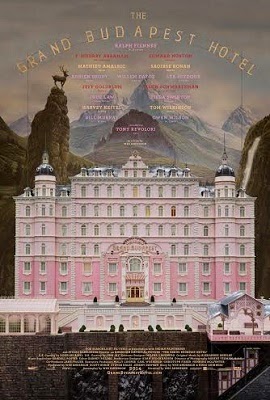
The Grand Budapest Hotel--Wes Anderson’s latest is set in another of his seamlessly-imagined alternative realities. This time, it’s a fortress-like resort hotel in a mountainous eastern-European nation. At the core of a couple of nesting-doll-like frame stories, the main action concerns the adventures of the Grand Budapest’s hapless but unflappable concierge Gustave H. (Ralph Fiennes) and his sidekick, the neophyte lobby-boy Zero Moustafa, charmingly played by Tony Revolori as a boy. F. Murray Abraham plays Zero’s older self, telling the story in the 1960s to a young writer (Jude Law) staying at the now-shabby hotel.

Gustave sees his duties as including gigolo services to the hotel’s wealthy, elderly—in some cases octogenarian—female guests. When he is implicated in the murder of one of these ladies—who has left him an impressive legacy—he and Zero are chased across “Zubrowka” by the sinister agent (Willem Dafoe) of her rotten son (Adrien Brody).

This is, I think, about as simply as the plot can be explained. There are dozens of characters, all manner of intrigues, subplots, chases, gun battles, romances, delicious-looking baked goods, and eccentric characterizations by a cast that includes Tilda Swinton, Jeff Goldblum, Bill Murray, Harvey Keitel, Saoirise Ronan, Bob Balaban, Edward Norton, Mathieu Amalric, Jason Schwartzman and others, all in good form. Fiennes gives maybe his funniest and most endearing performance. It’s the usual Anderson shtick, and if, like me, you buy into his visions, you’ll probably find The Grand Budapest Hotel a delight.

Or mostly a delight, anyway. Grand Budapest is slightly marred, or at least was marred for me, by odd touches of violence—fingers severed by a sliding door, prison guards massacred during an escape, a casually murdered pet—that feel jarringly out-of-key with the general atmosphere of stylized whimsy. Other Anderson films have shown this trait—the arrow killing the dog in Moonrise Kingdom, for instance, or the fatal helicopter crash in The Life Aquatic with Steve Zissou. I’ve always guessed that it’s Anderson trying to force some dramatic gravity into his fictions, to keep them from seeming too trivial.

He probably felt even more pressure in this direction with The Grand Budapest Hotel, because of the setting and the period. On the whole, Europe in the mid-20th Century was no picnic, and since there are no Nazis or Fascists in the movie, the gruesome touches in The Grand Budapest Hotel may have been the director’s attempt to reassure the audience (especially its older members) that he knows this.

But this doesn’t seem any more substantial than anything else in the film—just less good-natured. F. Murray Abraham’s magnificent voice, narrating from weary decades later, carries all the poignant melancholy the movie needed to offset its lightness. The Grand Budapest Hotel is the work of mature master confectioner; its violence seems self-consciously scribbled on its surface, by Anderson’s adolescent inner vandal.


Raze—Violence is also the issue in this exploitation melodrama, opening today and playing this week at Filmbar Phoenix. It stars the marvelous actress and stuntwoman Zoe Bell, best known for Tarantino’s Death Proof, as Sabrina, one of a bunch of women who have found themselves abducted and imprisoned in an underground bunker and forced to fight each other, mano a mano, to the death, in an elimination tournament.

They’re told that if they die, their loved ones will be murdered, and the survivors are shown videos to prove it. Running this vile spectacle is a husband-and-wife team (Doug Jones and Sherilyn Fenn) of unctuous sickos; the audience, watching on video monitors, are rich scumbags.

I sat there watching this film, directed by Josh C. Waller from a script by Robert Beaucage, wondering why it seemed so toxically more vicious than innumerable action films with very similar premises, in most of which the combatants were male—just last year, for instance, I enjoyed the Keanu Reeves-directed Man of Tai Chi, the plot of which, in bare outline, is close to identical. Was my reflexive revulsion to Raze just cultural Victorianism because the cast was distaff?

It can’t have been only that, because while I don’t much like the Hunger Games flicks, which also employ this idea and a warrior heroine, I’m not appalled by them in the same way I was by this film. Perhaps it’s because the fight scenes in Raze are so furiously savage and concentrated, and the actresses—among them Tracie Thoms, Bell’s costar from Death Proof—give off a despairing sense of empathy for the opponents they have little choice but to pummel. Anyway, while I found the first two-thirds of Raze more grueling than fun, it doesn’t seem fair to censure a movie for making hideous violence seem hideous.

Based on this description, your own tastes should tell you if Raze is for you. I wouldn’t quite call it torture porn, but it carries some of that genre’s dismal stink. In any case, on its own terms, it’s effective. When (spoiler alert!) Sabrina at last gets around to some vengeance against her captors, I can’t claim I’m sufficiently pure-hearted not to have enjoyed it.

Friday, April 5, 2013

PARK & REX

The realization that Steven Spielberg’s Jurassic Park turns twenty years old this year left me feeling pretty prehistoric myself. I was in my early thirties when the film of Michael Crichton’s bestseller came stomping into theaters, but I had been a dinosaur geek since childhood, to which the movie sent me back.


Now Jurassic Park has returned to the multiplexes, in a re-mastered 3-D version. I still love dinosaurs, but two decades have made it easier, now that astonishment at the truly convincing special effects has faded, to pick the movie apart logically, and to acknowledge the middle-class banality of its dramatics. Granting all this, however, I still say that Jurassic Park is one of the most thrilling special effects spectacles of all time, and that it remains the best showcase of computer-generated effects to date.

I say this in full awareness of James Cameron’s Avatar, which astounded so many people a couple of years ago. Avatar was an absorbing sci-fi romance, preoccupied with the human ability to disrupt nature—a theme it shared with Jurassic Park. But Cameron used the story to wow us with CGI effects which, though impressive and sometimes even lovely, were always obviously virtual phantoms. Spielberg used his rock-solid virtual effects—seamlessly blended with animatronic puppetry—to draw us into the story.

In case you’ve forgotten or somehow missed it the first time, the film concerns a theme park on an island off Costa Rica featuring real live dinosaurs, cloned from blood extracted from ancient mosquitoes trapped in amber. Prior to opening this ill-advised attraction, the founder (Richard Attenborough at his jolliest), invites several scientists (Sam Neill, Laura Dern and Jeff Goldblum) as well as his own grandkids (Ariana Richards and Joseph Mazzello) to endorse it. A bit of industrial espionage and a power outage lead to dinosaurs on the loose.

Because of Spielberg’s brilliant timing and theatrical flair, I didn’t notice until I’d seen the film several times how vague and malleable the geography of the park is: steep retaining walls suddenly appear when they are needed dramatically, characters strike out across open country when it would make more sense to wait where they are for help to arrive. But when you’re watching the movie, Spielberg’s confident touch, and the effects, hustle you past these inconsistencies.

There are eccentric moments that still play beautifully, as when one velociraptor quixotically lunges to the defense of another against a much larger tyrannosaurus. The gag involving the rear-view mirror, which even people who disliked Jurassic Park had to admit was pretty good, is now being used in the poster, presumably to tout the movie’s new 3-D status.

But here, alas, I have to note that the re-release gains nothing in particular from the addition of 3-D. I can’t think of one scene that was enhanced by the effect in any way I noticed. Again, not that it matters—my ten-year-old, no particular dinosaur fan, joined me for the screening and was properly spellbound. With or without 3-D, Jurassic Park still has teeth.