Showing posts with label TILDA SWINTON. Show all posts

Friday, June 23, 2023

CRATER LOVE HATH NO MAN

Opening in theaters today:

Asteroid City--In Golden Age of Television black and white, a stentorian TV host (Bryan Cranston) tells us that we're about to see a documentary about the writing and staging of a new play. The drama in question is titled Asteroid City, and it's set in a tiny desert community near the impact crater from an ancient meteorite. It's the Cold War mid-'50s in this, Wes Anderson's latest; mushroom clouds blossom in the distance from the occasional nuclear bomb test.

Soon we shift to color, and to a stylized milieu that looks like Midcentury travel-poster art of the southwest. A large roster of characters assembles in Asteroid City, many of them for the convention of the Junior Stargazers, an organization of youthful science prodigies and inventors.

At the center of this ensemble, insofar as it has a center, is a bereaved young photographer (Jason Schwartzman) who hasn't yet broken the news to his kids that their mother has passed on; he's one cabin over from a movie star (Scarlett Johansson) with whom he bonds, as do his son and her daughter. Along with these familial tensions, the gathering sees military intrigues, scientific experiments, quarantine and even alien close encounters.

I really wish I liked this movie better than I did. Anderson is a one-of-a-kind comedic artist, and his 1998 Rushmore is one of my favorite films of the last thirty years. His debut feature Bottle Rocket is a gem as well. Most of his subsequent films have been brilliant but uneven; the best of them, like The Life Aquatic With Steve Zissou and Moonrise Kingdom and The Grand Budapest Hotel, have been flawed near-masterpieces, dazzlingly imagined and acted but marred by heavy-handed touches of sour violence and labored narrative conceits.

All of this is regrettably at work in Asteroid City. It has a beautiful look, the title setting is beguiling, there are patches of funny dialogue (by Anderson and Roman Coppola) and strong visual gags. The cast is without peer for current Hollywood prestige, glamour and chops. The star power is almost too abundant to name; check the poster above for the listing. It's the sort of bunch that only Woody Allen used to be able to command. But all of this, alas, falls short of overcoming Anderson's misguided habits.

Most ruinous is the frame story, about the play. It looks great, but it distances us from the main story while adding no perspective on it that I could see, is of minimal amusement in itself, and diffuses the later part of the picture into hazy anticlimax. But even within the Asteroid City story, Anderson strikes a curiously flat tone. Deadpan is a wonderful comic technique, unless everybody's deadpan, and then it just becomes monotonous.

A couple of the actors, like Liev Schreiber, Tilda Swinton, Hope Davis and Steve Carrell, manage to escape the Jack Webb Sound-Alike Contest and texture their performances a bit. And Tom Hanks, as Schwartzman's dour father-in-law, somehow finds a tone that's fully in keeping with the movie's style but also seems entirely naturalistic. Hanks seems to be indestructible.

Monday, February 27, 2017

OSCARRED

Best Picture is usually the least interesting of all the awards at the Oscars. At least, that’s how it seems most years. Which film will win often feels, after the results of all those other awards shows, like a fait accompli going in, and even when it doesn’t, by the time we’ve arrived at the last award of the night, you typically have a sense of how things are leaning. There are exceptions, of course—Shakespeare in Love over Saving Private Ryan in 1999, for instance—but as a rule, Best Picture tends to be an anticlimax.

That sure wasn’t the case this year, however.


The show Sunday night began in normal fashion. Host Jimmy Kimmel, not being of the Neil Patrick Harris, Seth MacFarlane or Billy Crystal mold, didn’t try to wow everybody with a big semi-ironic song-and-dance production number, so that duty was managed by Justin Timberlake, extravagantly performing “Can’t Stop the Feeling,” his nominated song from Trolls.

Kimmel took over from there, and handled himself well, with some relaxed, mostly uncontroversial but quite funny standup and an unobtrusive modesty. There were oddball routines—like concessions dropping from the ceiling in tiny parachutes, or a group of Hollywood-star-home tourists being led through the Dolby Theatre by surprise—that seemed, as such bits often do, like more laborious trouble than they were worth, but they still had some charm.

There were touching moments as well, like the real-life, 98-year-old NASA mathematician Katherine Johnson, played by Taraji P. Henson in Hidden Figures, being wheeled onstage to a thunderous ovation. And a friend called me, convulsed with hilarity, after a segment in which Seth Rogen, discussing 1985’s Back to the Future, observed that “They really, like, captured future clothing pretty well, ‘cuz if you saw, like, Tilda Swinton wearing that exact outfit, you would not think it was weird.”

For most of its length, the show chugged along agreeably, if without any particular excitement. Casey Affleck winning Best Actor for Manchester by the Sea was perhaps a slight surprise, as Denzel Washington had taken the SAG Award for Fences. But on the whole, nothing suggested that La La Land wouldn’t win Best Picture as expected.

That Moonlight took the award instead would have been a surprise to begin with, but what made the upset great TV was an unfortunate mix-up: Presenters Warren Beatty and Faye Dunaway were somehow accidentally given the wrong envelope, a duplicate of the one reading Emma Stone for Best Actress in La La Land. Beatty was confused, paused, and showed the card to Dunaway who, thinking that Beatty was just clowning, glanced at it and announced La La Land as the winner.


The cast and producers of that film came onstage and were in the midst of their acceptance speeches when the error was pointed out to them. Producer Jordan Horowitz stepped to the microphone, announced the mistake, and graciously called the Moonlight team to the stage, saying he was proud to present the award to them.

While I was less enthusiastic than most critics about La La Land, and while the stirring Moonlight topped my Top Ten List this year, it was hard not to feel for the La La Land gang, and harder still not to admire the grace with which they handled the situation. It was painful, but it sure wasn’t dull.

Another friend called me after the show to tell me he had the inside scoop on how the practice of two sets of envelopes originated. He claims that at the 1964 Oscars, the agent for Pricewaterhouse (then still known as Price Waterhouse) suffered a fatal heart attack just before showtime. These being the days when, probably mostly for the sake of showmanship, the operative would be presented onstage handcuffed to the briefcase containing the winners, the misfortune created an obvious problem for the ceremony, and the need for a backup became clear.

But there was another twist to the tale, according to my friend (who claims he knew the Price Waterhouse man's family as a kid in Reseda, California). He says the guy's heart attack was brought on by stress because he was related to Governor John Connally of Texas, who had been wounded a few months earlier in the Kennedy assassination. So there you have it: Last night's Oscar telecast was one more casualty of that fateful day in Dallas.

I have been unable to find any independent confirmation whatsoever for this. But hey, if you can't trust the testimony of a guy who calls you late at night after playing bar trivia, what can you trust?

Friday, November 4, 2016

LONG STRANGE TRIPS

Opening this week:


Doctor StrangeOnce he’s fully decked out in the cloak and amulet, with the neatly trimmed goatee, Benedict Cumberbatch really looks and sounds the part of the title character, one of Marvel’s more agreeably metaphysical superheroes. This is an origin story for the “Master of Mystic Arts,” conjured up in 1963 by Steve Ditko and Stan Lee for the pages of Strange Tales.

As in the comics, he’s a brilliant but selfish and arrogant surgeon who loses the use of his hands in a car accident. In desperation, he travels to Nepal to seek out “The Ancient One” (a droll and courteous Tilda Swinton) in hopes of being healed. Instead she recruits him as a new student of sorcery, teaching him to leave his physical body and use his astral form, travel through the “multiverse” and battle evil psychically. Reality-bending adventures across M.C. Escher-ish cityscapes ensue, as Strange and Mordo (Chiwetel Ejiofor)—a villain in the comics; here sympathetic—take on the sinister Kaecilius (Mads Mikkelsen), who has purloined a spell from one of the Ancient One’s books.

On the whole, I found this the most enjoyable comic book movie since Ant-Man in 2015, and Guardians of the Galaxy the year before that. Despite the cosmic scope of the material, director Scott Derrickson takes a straightforward and coherent approach to the narrative, which goes pleasingly easy on tired action-movie conventions.

Technically speaking, there’s little physical violence in the film at all. There’s plenty of martial-arts fighting, to be sure, but most of it takes place outside the physical realm, so for once the superhuman feats are justifiable. Better still, as we were leaving the screening, my friend pointed out “No guns,” and he was right—unless I missed it, there isn’t a single gunshot in Doctor Strange, and I didn’t feel cheated by this in the least.

Toward the end, the forces of darkness are unleashed, and buildings start to crumble in Hong Kong. I sighed. Again with the crumbling buildings, like in just about every other big action blockbuster of recent years—blocks literally being busted. But then Strange and his allies do battle with the bad guys while time runs backwards around them, and we get to see the buildings reassemble. This inversion of the sad, frightened post-9/11 subtext of the genre is very refreshing.


TrollsLike the Smurfs flicks of recent years, this movie doesn’t shy away from its own potential to be annoying. The kitschy, cloying cutesiness of the “Good Luck Trolls” developed in the mid-20th Century by the Danish toymaker Thomas Dam is built right into this CGI musical from Dreamworks Animation, in the hope that it can be turned to ironic, self-deprecating advantage. For the most part, this works, or at least it worked for me.

The Trolls, who have long shocks of prehensile hair sticking up above their elfin faces, live like perennial glam clubbers. Led by Princess Poppy (voiced by Anna Kendrick), they spend their days singing, dancing and partying, under a philosophy of life as “Cupcakes and Rainbows,” not to mention hourly scheduled hugs.

Twenty years earlier, they narrowly escaped from the “Bergens,” a race of miserable snaggle-toothed ogres who believe they can only attain happiness by eating Trolls. The lone Troll dissenter from constant cheerfulness, the glum Branch (Justin Timberlake), is sure that the Bergens are still a threat, and that Princess Poppy’s blithe insistence on noisy partying increases the danger. He’s proved right, of course, and he and Poppy must team up to rescue a group of captured Trolls in danger of becoming a Bergen banquet.

A variety of allegorical interpretations are possible here, from a straightforward vegetarian reading to an evaluation, at times surprisingly subtle and nuanced, of pessimism versus optimism. But in any event, the movie is a silly good time, with inventive, laugh-out-loud gags and a generous heart.

Also, the music’s pretty good. In part, this is a jukebox musical—Zooey Deschanel, as a lovesick Bergen, gets to sing Lionel Richie’s “Hello,” for instance. But there are some original numbers as well, and a couple of them are sung by Kendrick, in her singular steely yet sweetly plangent belt. Her presence on the soundtrack biases me in favor of Trolls, I admit—not to put too fine a point on it, I could listen to her sing all day. 


Coming Through the RyeIt’s 1969, and Jamie Schwartz (Alex Wolff) has written a stage version of Catcher in the Rye as his senior project at a private school in Pennsylvania. He hasn’t been able to secure permission from J.D. Salinger to produce it, however, so one weekend he and a free-spirited girl (Stefania Owen) head to New Hampshire to seek out the man in person.

This slight coming-of-age yarn is ostensibly based on the real-life experience of writer-director James Steven Sadwith. It’s pleasant, and sometimes poignant, and Wolff and Owen have a sweet chemistry. But there wouldn’t be much to the movie without the brush-with-reclusive-celebrity encounter.

Eventually Jamie manages to get a few minutes with Salinger, sharply played here, in two brief scenes, by the always-commanding Chris Cooper. Brusque and irritable but not unkind, the author endures another kid telling him about the connection he feels with Holden Caulfield. Momentous as this was to him, Sadwith is under no illusions that the episode was at all significant (or even unique) for Salinger, and this modesty gives Coming Through the Rye its rueful charm.

Wednesday, July 2, 2014

STRANGENESS ON A TRAIN

Summertime tends to be sci-fi time at the American movies, and so far this summer is no exception. Opening this week:


Snowpiercer—This one begins with the release of a cooling agent, something like “Ice Nine” in Vonnegut’s Cat’s Cradle, to combat global warming. The world immediately freezes and, according to the opening exposition, “all life became extinct.” This would be rather anticlimactic, so the movie contradicts itself at once: A remnant of society remains, riding a futuristic supertrain in a constant, annual loop around the snowbound earth.

The train’s “Tail Section” houses the ragged underclass, kept in check by armed guards and fed on nasty-looking cubes of protein gel. A band of revolutionaries led by Curtis (Chris Evans) and a wizened old sage, Gilliam (John Hurt) makes a charge toward the front of the train, where the first-class passengers live in decadent luxury. Once past the more brutal and unsavory security forces, each car along the way is increasingly swanky and bizarre—the revolutionaries storm aquariums, sushi bars, schoolhouses, beauty salons and discos. Central to the plot are such initially baffling elements as hard-boiled eggs, tape measures and apparently the last two cigarettes in the world.

Based on a French comic book (Le Transperceniege), this is the work of Bong Joon-ho, the brilliant Korean who made The Host. For a while I couldn’t decide if Snowpiercer was the silliest piece of camp in years or the most blisteringly profound allegory for modern society since Hobbes’ Leviathan, but after a while I realized I didn’t have to choose—either way, the movie is never boring.

The cast is superb—it includes Jamie Bell, Ed Harris, Song Kang-ho and Ah-sung Ko (both from The Host), Octavia Spencer, Alison Pill and, best of all, Tilda Swinton, hilarious as a toadying minor official. The design of the train is a series of nutty surprises, and the music, by Marco Beltrami, is stirring. Snowpiercer is savagely violent at times, and has episodes that fall flat, but overall it’s one of the weirdest and most fascinating sci-fi movies to come down the track in a long time.


Earth to Echo—Three preteen friends are about to be separated by the eminent domain destruction of their Nevada subdivision. They decide to have one more big adventure together, so they ride their bikes out to the middle of the desert, tracking a digital signal, and there find a cute little cybernetic alien, apparently marooned. They dub him Echo and quickly figure out how to communicate with him. Soon, joined by a pretty girl they like, they’re helping Echo gather parts to repair himself and return to his spaceship.

The movie is a collection of motifs from ‘80s kids’ fantasy/adventure movies—most obviously E.T., both in its storyline and in certain visual nods, like the creepy, amorphous mob of human researchers chasing the boys, flashlights in hand. But there are also hints of The Goonies, Explorers, maybe even Stand By Me, and Echo looks a bit like Bubo the clockwork owl in the original Clash of the Titans. This gives the film a pleasing throwback quality, and the young leads create a likable sense of loyalty to each other.

Still in theatres:


Transformers: Age of Extinction—Because the Transformers toys came along after my own childhood, I don’t have the sentimental attachment to them that boys who were kids in the ‘80s do. And the first two big-budget Transformers blockbusters starred Shia LeBeouf, whose appeal, I’m afraid, was lost on me. So those films left me cold.

But this new sequel features robotic dinosaurs, and I’ve always been partial to dinosaurs. And instead of LeBeouf in the male lead, it features Mark Wahlberg, who I also like (though not as much as I like dinosaurs). So I was prepared to like this movie.

Well, it has some splendid otherworldy spectacle. The director, Michael Bay, doesn’t seem to have an ounce of restraint in his personality, but he is able to stage scenes in which robotic giants amble nonchalantly through settings of burnished Americana, as if Isaac Asimov’s imagination had somehow invaded the vision of Norman Rockwell, and this stuff is executed seamlessly by the special effects team.

All that said, this move is dumb, and so outrageously overlong that it feels, somehow, like an act of aggression. It’s nearly three hours long. It’s almost an hour longer than Citizen Kane. It’s more than an hour longer than Casablanca. And you don’t even get to see the robot dinosaurs until near the end. If you really want to see it, wait for the DVD.

Friday, March 14, 2014

PRO & CONCIERGE

Opening this week:


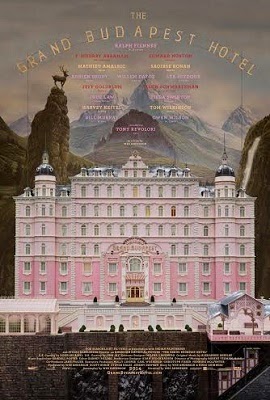
The Grand Budapest Hotel--Wes Anderson’s latest is set in another of his seamlessly-imagined alternative realities. This time, it’s a fortress-like resort hotel in a mountainous eastern-European nation. At the core of a couple of nesting-doll-like frame stories, the main action concerns the adventures of the Grand Budapest’s hapless but unflappable concierge Gustave H. (Ralph Fiennes) and his sidekick, the neophyte lobby-boy Zero Moustafa, charmingly played by Tony Revolori as a boy. F. Murray Abraham plays Zero’s older self, telling the story in the 1960s to a young writer (Jude Law) staying at the now-shabby hotel.

Gustave sees his duties as including gigolo services to the hotel’s wealthy, elderly—in some cases octogenarian—female guests. When he is implicated in the murder of one of these ladies—who has left him an impressive legacy—he and Zero are chased across “Zubrowka” by the sinister agent (Willem Dafoe) of her rotten son (Adrien Brody).

This is, I think, about as simply as the plot can be explained. There are dozens of characters, all manner of intrigues, subplots, chases, gun battles, romances, delicious-looking baked goods, and eccentric characterizations by a cast that includes Tilda Swinton, Jeff Goldblum, Bill Murray, Harvey Keitel, Saoirise Ronan, Bob Balaban, Edward Norton, Mathieu Amalric, Jason Schwartzman and others, all in good form. Fiennes gives maybe his funniest and most endearing performance. It’s the usual Anderson shtick, and if, like me, you buy into his visions, you’ll probably find The Grand Budapest Hotel a delight.

Or mostly a delight, anyway. Grand Budapest is slightly marred, or at least was marred for me, by odd touches of violence—fingers severed by a sliding door, prison guards massacred during an escape, a casually murdered pet—that feel jarringly out-of-key with the general atmosphere of stylized whimsy. Other Anderson films have shown this trait—the arrow killing the dog in Moonrise Kingdom, for instance, or the fatal helicopter crash in The Life Aquatic with Steve Zissou. I’ve always guessed that it’s Anderson trying to force some dramatic gravity into his fictions, to keep them from seeming too trivial.

He probably felt even more pressure in this direction with The Grand Budapest Hotel, because of the setting and the period. On the whole, Europe in the mid-20th Century was no picnic, and since there are no Nazis or Fascists in the movie, the gruesome touches in The Grand Budapest Hotel may have been the director’s attempt to reassure the audience (especially its older members) that he knows this.

But this doesn’t seem any more substantial than anything else in the film—just less good-natured. F. Murray Abraham’s magnificent voice, narrating from weary decades later, carries all the poignant melancholy the movie needed to offset its lightness. The Grand Budapest Hotel is the work of mature master confectioner; its violence seems self-consciously scribbled on its surface, by Anderson’s adolescent inner vandal.


RazeViolence is also the issue in this exploitation melodrama, opening today and playing this week at Filmbar Phoenix. It stars the marvelous actress and stuntwoman Zoe Bell, best known for Tarantino’s Death Proof, as Sabrina, one of a bunch of women who have found themselves abducted and imprisoned in an underground bunker and forced to fight each other, mano a mano, to the death, in an elimination tournament.

They’re told that if they die, their loved ones will be murdered, and the survivors are shown videos to prove it. Running this vile spectacle is a husband-and-wife team (Doug Jones and Sherilyn Fenn) of unctuous sickos; the audience, watching on video monitors, are rich scumbags.

I sat there watching this film, directed by Josh C. Waller from a script by Robert Beaucage, wondering why it seemed so toxically more vicious than innumerable action films with very similar premises, in most of which the combatants were male—just last year, for instance, I enjoyed the Keanu Reeves-directed Man of Tai Chi, the plot of which, in bare outline, is close to identical. Was my reflexive revulsion to Raze just cultural Victorianism because the cast was distaff?

It can’t have been only that, because while I don’t much like the Hunger Games flicks, which also employ this idea and a warrior heroine, I’m not appalled by them in the same way I was by this film. Perhaps it’s because the fight scenes in Raze are so furiously savage and concentrated, and the actresses—among them Tracie Thoms, Bell’s costar from Death Proof—give off a despairing sense of empathy for the opponents they have little choice but to pummel. Anyway, while I found the first two-thirds of Raze more grueling than fun, it doesn’t seem fair to censure a movie for making hideous violence seem hideous.

Based on this description, your own tastes should tell you if Raze is for you. I wouldn’t quite call it torture porn, but it carries some of that genre’s dismal stink. In any case, on its own terms, it’s effective. When (spoiler alert!) Sabrina at last gets around to some vengeance against her captors, I can’t claim I’m sufficiently pure-hearted not to have enjoyed it.

Friday, June 8, 2012

THE MOON ALSO RISES

As much as any Tolkien geek or Star Trek nut, Wes Anderson delights in invented worlds of immersive detail. At times he’s like a little kid, showing you the pictures he’s drawn in a spiral-bound notebook. The difference is that his invented worlds aren’t fairy-tale domains or distant planets, they’re embellishments on twee upper-middle-class Boomer-era culture, especially as experienced by adolescents, and by the eternal adolescents that this culture produced.

The conceit of Anderson’s Royal Tenenbaums (2001) was that we were seeing enacted a Salinger-esque midcentury Manhattan novel. In The Life Aquatic With Steve Zissou (2004) he went so far as to invent marine species, like the “Sugar Crab” or the “Jaguar Shark” (charmingly stop-motion animated by Henry Selick), for his titular TV star/explorer hero to chronicle.


His latest, co-written with Roman Coppola, is Moonrise Kingdom, a pubescent star-crossed love story set on fictitious New England coastal islands in 1965, and it’s as obsessively imagined as the rest. Anderson gives us maps, fake meteorological history delivered by an authoritative-sounding Chorus (Bob Balaban), a warren-like house with an intricate floor-plan, a made-up scouting organization for boys called the “Khaki Scouts”—with its own magazine, Indian Corn—and a series of “young reader” novels pored over by the heroine that truly look like the sort of thing you’d have found on a Bookmobile in that era. The movie is a ‘60s childhood as it should have been, but also, specifics aside, as it sort of was.

Said heroine is twelve-year-old Suzy (Kara Hayward), whose cold-fish Dad (Bill Murray) and repressed Mom (Frances McDormand) are both lawyers. At first the stonefaced Suzy is a little creepy, peering through binoculars out the windows of her handsome home, but even though she’s capable of violent outbursts she’s no bad seed. She’s a romantic, keeping vigil for her beloved.

He arrives in the form of Sam (Jared Gilman) a runaway from a Khaki Scout camp on the island. A year earlier, he saw her as The Raven in a local production of Benjamin Britten’s Noye’s Fludde, and knew immediately he’d found the meaning of life. They talked only once, but she invited him to correspond, and he did not shirk.

The two of them run away together. Sam, an orphaned foster child, tries to impress her with his woodcraft, unaware that his ardor has already won her heart. They camp out, and she reads to him from her favorite books as he smokes a corn-cob pipe. Needless to say, their idyll drives the rest of the island into a tizzy.


Besides Suzy’s parents, the worriers include the earnest Khaki Scoutmaster (Edward Norton) and the slow-spoken, sad-sack Police Captain (Bruce Willis). The other Khaki Scouts treat the operation not as a search for two missing children but as a manhunt for potentially dangerous fugitives; they fan out, armed to the teeth.

More complications arise, including a Deus ex machina storm, and eventually a Social Services representative (Tilda Swinton in striking blue) and a Khaki Scout bigwig (Harvey Keitel) enter the action as well. Willis gives one of those performances that he’ll be remembered for after most of his action roles are likely forgotten, Norton is touching, the kids are excellent, and Murray and McDormand are effective even if they get less than usual to do here. Robert Yeoman’s water-color-ish cinematography is ravishing—there’s a shot of Willis crossing a church roof that has the austere devotional beauty of an image from Dreyer—and so is the music, by composers ranging from Alexander Desplat to Mark Mothersbaugh to Britten.

For me, Anderson has never topped his first two features, Bottle Rocket and especially Rushmore—one of my favorite movies—but Moonrise Kingdom, despite some clunky missteps toward the end, falls only a little short of these. Some parents may be uncomfortable with the (non-graphic) scenes of Suzy and Sam’s physical intimacy, and with the period-realistic tobacco habits of both Sam and the Scoutmaster, and in the course of the story an animal meets a jarringly awful (and gratuitous) fate that might be a deal-breaker for some kids (and some adults). But with these caveats duly noted, Moonrise Kingdom borders on the sublime.