Showing posts with label WILLEM DAFOE. Show all posts

Friday, October 4, 2024

SKETCHER ON THE RISE

Opening here in the Valley today; wide October 11:


Saturday Night--The evening in question is October 11, 1975, and we're at 30 Rock in Manhattan, watching the final rehearsal for the very first episode of Saturday Night Live. Out on the sidewalk an NBC page (Finn Wolfhard) is trying to scare up an audience for the show, but passersby aren't interested in free tickets for this moment in broadcast and cultural history. Up in the studio, the camera darts and weaves through the chaos backstage and onstage as the minutes tick down to 11:30 p.m. in something approximating real time.

Through most of the movie, director Jason Reitman follows the frantic pipsqueak Lorne Michaels (Gabriel LaBelle) as he scurries from one absurd crisis to another. These range from getting a live llama up from the loading dock to getting bricks laid on the stage while union stagehands refuse to help to getting John Belushi (Matt Wood) to sign his contract.

Belushi is immobilized by anger at having to wear the silly bee costume, until he's taunted by his cocksure castmate and rival Chevy Chase (Cory Michael Smith), at which point Michaels must keep the two men from pummeling each other. There are also executives and affiliates for Michaels to schmooze, with the diplomatic help of his long-suffering, appeasing Programming Executive Dick Ebersol (Cooper Hoffman), and technical difficulties to solve, and sketches and musical numbers to be cut; the earlier rehearsal ran three hours. And Jim Henson (Nicholas Braun) would like somebody to write a script for his Muppets to perform. 

And so on. At heart this is an old-school "hey kids, let's put on a show" movie, with Michaels in the Mickey Rooney part. But like it or not, this isn't just any show. Even in its formidable best vintages, Saturday Night Live has never been the finest sketch comedy show on TV. But it has almost certainly been the most directly and widely influential, and Reitman's movie makes the case that its very existence was a tenuous fluke, borne of a squabble between the network and Johnny Carson over weekend airings of reruns of The Tonight Show.

The script, which Reitman co-wrote with Gil Kenan, feels romanticized, but it also ingeniously finds ways to incorporate references to classic bits that came on later episodes, like Julia Child's kitchen accident or Garrett Morris singing "Gonna Get Me a Shotgun." When these and countless other iconic gags are spun past us in such a concentrated way, we realize the degree to which SNL has inhabited our generational psyches.

Not everything works, but like the show it's celebrating, Saturday Night barrels along even when jokes fall flat, largely through remarkable acting. LaBelle, from Spielberg's The Fabelmans, is willing to play Michaels as a bit of a pretentious, self-important young ass, which goes a long way toward holding sentimentality at bay. It helps you buy into the hero's determination to get the show on, both because he believes his vision could be great and because he knows this night might be his only chance to take over the asylum.

Rachel Sennott strikes a strategically seductive tone as writer Rosie Shuster, the insufficiently-recognized wife of Michaels. The huge supporting cast includes impressive work by Dylan O'Brien as a handsy Dan Aykroyd, Nicholas Podany as Billy Crystal, Emily Fairn as Laraine Newman, Kim Matula as an alluring Jane Curtin, Lamorne Morris nailing the voice and body language of Garrett Morris (no relation!) and Ella Hunt coming about as close as a mortal could to capturing some of the enchantment of Gilda Radner. Some of these work better than others, but none are embarrassments.

Amusing in smaller turns are Matthew Rhys as George Carlin, J.K. Simmons as Milton Berle, Jon Batiste (who also wrote the score) as Billy Preston, Tracy Letts as Herb Sargent, Willem DaFoe as forbidding NBC exec David Tebet and Robert Wuhl as director Dave Wilson. There's also a startlingly chameleon-esque double role; see if you can spot it.

With Batiste's insistent jazz pushing Michaels along through the halls and dressing rooms, the film often recalls Inarritu's Birdman, from 2014. But I found Saturday Night much more enjoyable than Birdman; it's Birdman with a heart, and without the sour, unearned cynicism.

I'm predisposed to like show-biz stories, and I well remember watching, at 13, that baffling but entertaining first "cold open," between Belushi and headwriter Michael O'Donoghue (Tommy Dewey). So Saturday Night admittedly had an advantage with me. But it wouldn't have held me without Reitman and his cast's skillful execution of Hawksian overlapping dialogue and manic ensemble hum. SNL has turned many of its performers into stars, and this film could do the same.

Friday, September 6, 2024

HAUNT GENERATOR

Opening this weekend:

Beetlejuice Beetlejuice--To the list of Gen X-era movie favorites getting very belated sequels, the sweetly macabre 1988 comedy Beetlejuice may now be added. You may remember the title character (spelled, outside of the title, like the red giant star in Orion) is a manic ghost who specialized in exorcizing the unwelcome living from haunted houses. Like Clive Barker's Candyman, he could be conjured into the world of the quick by speaking his name aloud three consecutive times, after which he would wreak havoc.

It's one of the signature roles of the great Michael Keaton; probably his greatest comedic triumph. The film also featured a breakthrough performance by Winona Ryder as the endearing, self-consciously "goth" heroine Lydia, and was a showcase for the visual and comic style of director Tim Burton. It's unquestionably a classic of '80s popular cinema, and it gave rise to a TV cartoon, video games, comics, a long-running stage show at Universal Studios theme parks, and eventually a Broadway musical that put Representative Lauren Boebert into an uncommonly good mood.

None of which necessarily means, of course, that a sequel was required. But one has been made, directed by Burton, starring Keaton, Ryder, and Catherine O'Hara, and scored by Danny Elfman. It has, in short, the stamp of authenticity, and this many years later it's a bit surprising that the original makers have managed to infuse, if anything, even more craziness into it.

Ryder's Lydia, now widowed, is still able to see ghosts, including the occasional startling glimpse of her old nemesis. She's the host of a paranormal TV show produced by her intolerable boyfriend (Justin Theroux). Relations between Lydia and her teenage daughter Astrid (Jenna Ortega) are tense, but circumstances bring the two of them and Lydia's stepmother Delia (O'Hara) back to the old house in picturesque small-town Connecticut. Before long, the boundary between our world and the Kafkaesque, DMV-style bureaucratic afterlife has been breached, and the title ghoul is trying to insinuate himself back into the picture.

What ensues, strung along a script by Alfred Gough and Miles Millar from a story by Seth Grahame-Smith, are more of Burton's elaborate yet non-sequitur slapstick set pieces. The gross-out content is slightly higher here than back in 1988, but it works. The original, you'll recall, had a fixation with Harry Belafonte songs from which its most memorable sequences arose; the new movie is likewise enriched by similarly out-of-nowhere musical interests, even more grandly staged. There are sequence here that achieve true, weapons-grade silliness.

Ortega is touching, and there are other effective new additions to the cast, like Willem Dafoe as an afterlife cop--he was a movie cop in this life--with an exposed brain, or Arthur Conti, excellent as a local kid who charms Astrid. Best of all is Monica Belluci, formidable as the enraged ghost of the leader of a "soul-sucking death cult" who has an unhappy history with our titular hero. The scene in which she pulls herself together with the help of a staple gun is a Burton classic.

Keaton, though used somewhat sparingly, slips easily back into his role, tossing off asides in his muttering natter (or nattering mutter?) with the same moldered aplomb, and moving with the same light-footed exuberance, with which he conducted himself three decades ago. Ryder is also perfectly convincing as the middle-aged version of Lydia; tinged with a hint of emotional desperation in her interactions with Astrid.

I know it sounds ridiculous, and maybe I'm just projecting, but I thought that Ryder, O'Hara and even Keaton brought a subdued, rueful undercurrent to their performances, as if stirred-up memories of the first film's events had awakened genuine emotional pain. Don't misunderstand; if it's there, it's done without the slightest heavy-handed intentionality; it may not even have been conscious on the part of the actors. But it deepens both this film and the original.

Friday, April 22, 2022

IT TAKES A PILLAGE

Opening this weekend...


The Northman--The hero of this historical epic is Amleth, a 9th-Century Nordic prince whose father is murdered by his brother, who then marries Amleth's mother. Amleth flees, vowing revenge. When he's all grown up into the strapping Alexander Skarsgård and enjoying a nice career as a raiding, ravaging berserker, he travels to Iceland, poses as a slave on the estate of his Uncle (Claes Bang)--who's still married to Amleth's seemingly contented Mom (Nicole Kidman)--and waits for the chance to avenge his Dad.

Wait, haven't we heard this story somewhere?

Yeah, sort of. The Amleth legend, as recorded in the Gesta Danorum of Saxo Grammaticus in the 12th Century, is the root that, greatly refined by time and civilization, ultimately grew into Shakespeare's Hamlet. But director Robert Eggers, who wrote the script with the Icelandic poet and novelist known as Sjön, prefers to take the story of fratricide punished back to the raw source material.

This is, on the whole, a serious attempt at a historically and mythically accurate depiction of the Middle Ages. That's not to say that it's always an accurate depiction of daily reality in those times, but the movie tries to be true to the era's imaginative and moral sensibilities. As such, it's a seriously harsh, bloody, gory, nasty tale. It offers us almost no quarter, and asks none of us.

For that, it has to be respected. Not many big-budget period movies are this unwilling to throw a sop to modern attitudes. These characters aren't just 21st-century people dressed in Viking drag; when, say, helpless peasants (including children) are locked in a hall that's set on fire after a battle, Amleth isn't the perpetrator, but he doesn't stop it, or object to it, or even seem to notice it. It's just another day at the barbarian office.

The acting is strong. Skarsgård is capable and appealing as Amleth, Anya Taylor-Joy feels period-authentic as the enslaved woman he comes to love, Kidman has an impressive, almost Shakespearean bearing as the Mom. Ethan Hawke as Amleth's Dad and Willem Dafoe as a lippy jester are both effective, and Björk has a creepy scene as a prophet. Best of all is Claes Bang, who wisely plays the murdering brother as a sensible, reflective man.

Despite all this creditable work, what with mutilated servants, and the horses with severed heads, and plenty of other atrocities, the list of people who will prefer to take a pass on The Northman is likely to be long. Even on it's own terms, it's a little slow, and a little heavy, although it gathers steam as it goes, and by the time we get to the final showdown--in the midst of a volcanic eruption!--it's entirely engrossing.

The movie also comes across--unintentionally, I think--as a little, well, Aryan. If you aren't in the mood to watch a lot of stripped-down white guys screaming into the camera as they psych themselves up for battle, this may not be the flick for you. This behavior is historically accurate, of course, and again, I don't think for a moment that it was what Eggers and Sjön had in mind, but it's too easy to imagine a bunch of skinheads or Proud Boys watching this movie over and over, and nodding along with the rage.

Friday, December 17, 2021

ALLEY WHOOP

Opening this weekend...

Nightmare Alley--"Geek" has now become roughly analogous to "nerd" or "extreme enthusiast." But the term once had horrific connotations; it was carny slang for a sideshow performer who would do ghastly acts--bite the heads off of live chickens, for instance--usually to feed an alcohol or drug habit. The bottom rung of show business (I almost wrote "the bottom rung of humanity" but then I remembered the 45th President and his cronies), this revolting occupation was the jumping-off point for William Lindsay Gresham's classic lower-depths novel Nightmare Alley (1946).

An atmospheric if softened-up movie of it was made in 1947 with Tyrone Power as Stan, the newbie carny who looks at the geek and knows he could never fall to such a degraded level. Bradley Cooper plays Stan in this gorgeously stylized new version from the great Guillermo del Toro, working from an adaptation he co-wrote with Sunset Gun maven Kim Morgan.

Stan, a drifter running away from something awful, makes himself useful as a laborer to a desolate midwestern carny. Soon he's learning the tricks of fortune-telling and mind-reading acts, which here are so talmudical that earning an honest living seems like it would be far easier. He learns how to calm down an angry cop, and how to dispose of a geek who's outlived his usefulness, and where to find a new one. 

And the work brings out Stan's creative side; soon he's designed a spectacular new "electric chair" act for the lovely Molly (Rooney Mara). He's also taught a weird sort of hustler ethic; the veteran fortune-teller Zeena (Toni Collette, magnificent as ever) warns him against doing a "spookshow," that is, actually faking a manifestation of a departed loved one.

This first half, set in the carny amongst its disreputable but mostly warm and likable denizens, is darkly delightful, visually sumptuous and full of terrific, potent acting and pungent dialogue. As with both the novel and the earlier film version, the second half, in which Stan leaves the carny to start a higher-end mentalist scam--and foolishly ignores Zeena's advice--is less engaging. His scenes as the hapless fly in the parlor of a lacquered, satanic psychoanalyst (Cate Blanchett), though entertaining enough, border on camp, and are a little oppressive after the buoyant, motley first act.

Still, this is a rich and absorbing melodrama. Actors seem to thrive in front of del Toro's camera, and alongside the leads and the wondrous Collette, scene-stealers here include Willem Dafoe as the candidly heartless boss, Ron Perlman as an avuncular carny and, perhaps best of all, David Strathairn as Pete, Stan's washed-up, gently rueful mentor. Even in the second half, there's a splendid quick turn by Mary Steenburgen, and Richard Jenkins is scary, and briefly piteous, as the cold-hearted tycoon for whom Stan puts on his spookshow.

Finally, a word should be said for Paul Anderson, as the geek. He plays the part to the hilt, yet without hamming, and with a dreadful glimpse of the human being he was.

Monday, November 13, 2017

THE RAILS OF JUSTICE

Now in theaters:


Murder on the Orient Express—Sidney Lumet’s tautly made 1974 version of Agatha Christie’s 1934 novel, with Albert Finney as Belgian master detective Hercule Poirot, is a favorite of mine, and I admit I saw no pressing need to remake it. But remade it has been, in a manner sufficiently different from the original that it can be enjoyed on its own terms.

The new version is directed by Kenneth Branagh, who also assumes the role of Poirot. As before, a shady character gets bumped off in a sleeping car of the famed luxury line, which used to run all the way from Istanbul to Paris. The train is derailed by an avalanche somewhere in Croatia, and Poirot, who had been hoping for a quiet holiday, is pressed into service to identify the guilty party from among the shifty types aboard before the trip is back on track.

The cast ranges from Johnny Depp to Judi Dench, Josh Gad to Penelope Cruz, Willem Dafoe to Derek Jacobi, Daisy Ridley to Leslie Odom, Jr. to Michelle Pfeiffer, among others, and they let it rip. Offsetting this is Branagh’s impressively reserved, melancholy OCD turn as Poirot.

As director, Branagh works in his characteristically flamboyant style, sweeping from one melodramatic flourish to the next, even adding in some fights and gunplay. This won’t be to the taste of every Christie aficionado, but I enjoyed it. I also enjoyed screenwriter Michael Green’s distaste for the casual racism that Christie, to judge from her books, would have regarded as quite proper.

But the real stars, perhaps, of this Orient Express are, first, Branagh’s mesmerizing mustache, and second, the lushness of the production—cinematography by Haris Zambarloukos, costumes by Alexandra Byrne, music by Patrick Doyle. The movie may leave you in the mood for a leisurely holiday by train. Allowing for the odd murder or avalanche, it looks like a great time.

Thursday, October 23, 2014

HE'S A BALD INFLUENCE

If the Halloween choices at the multiplexes this year don’t quite cut it for you, have no fear. Or rather, be very afraid—on October 25 at 7:30 p.m., Tempe Center for the Arts is offering one of the all-time great monsters of the movies: “Count Orlok,” the first, albeit unauthorized, screen representation of Count Dracula, in F. W. Murnau’s 1922 masterpiece Nosferatu.


The movie’s subtitle—A Symphony of Horror—has particular significance at the Tempe Center’s showing. The film will be accompanied by live music—Brahams, Dvorak, Wagner—performed by the Arizona Pro Arte Ensemble, under the baton of conductor Timothy Verville.


I’ve seen several of these live music/silent movie performances over the years, among them Eisenstein’s Potemkin, Dreyer’s Passion of Joan of Arc and the Bela Lugosi version of Dracula (an early talkie, but made without a musical score). If you’ve never had this experience, I highly recommend it; both the cinematic and the musical sides are enriched. Details here.

And if you’ve never seen Nosferatu, you really need to put that on your movie bucket list as well. This is the rare silent film that still genuinely has the power to spook, or to spook me, at least. The rat-faced, dome-headed, baleful-eyed figure of the vampire Count, played by the unforgettable Max Schreck, is unnerving, more than 80 years after the film was made. I can honestly say that I’ve gotten creeped out, stumbling to the bathroom at three in the morning, imagining that I’d see this bald-pated goblin-Count standing there at the end of the hallway glaring at me.


But since Schreck’s original Count Orlok has already been a Monster-of-the-Week…

Monster-of-the-Week: …this week let’s acknowledge one of the many homages paid to him, in E. Elias Merhige’s Shadow of the Vampire, an uneven but wryly funny horror picture about the making of Nosferatu which suggested that Schreck (an excellent Willem Dafoe) really was a vampire…

Friday, March 14, 2014

PRO & CONCIERGE

Opening this week:


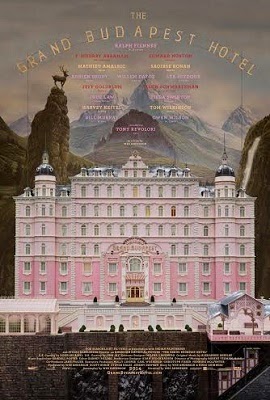
The Grand Budapest Hotel--Wes Anderson’s latest is set in another of his seamlessly-imagined alternative realities. This time, it’s a fortress-like resort hotel in a mountainous eastern-European nation. At the core of a couple of nesting-doll-like frame stories, the main action concerns the adventures of the Grand Budapest’s hapless but unflappable concierge Gustave H. (Ralph Fiennes) and his sidekick, the neophyte lobby-boy Zero Moustafa, charmingly played by Tony Revolori as a boy. F. Murray Abraham plays Zero’s older self, telling the story in the 1960s to a young writer (Jude Law) staying at the now-shabby hotel.

Gustave sees his duties as including gigolo services to the hotel’s wealthy, elderly—in some cases octogenarian—female guests. When he is implicated in the murder of one of these ladies—who has left him an impressive legacy—he and Zero are chased across “Zubrowka” by the sinister agent (Willem Dafoe) of her rotten son (Adrien Brody).

This is, I think, about as simply as the plot can be explained. There are dozens of characters, all manner of intrigues, subplots, chases, gun battles, romances, delicious-looking baked goods, and eccentric characterizations by a cast that includes Tilda Swinton, Jeff Goldblum, Bill Murray, Harvey Keitel, Saoirise Ronan, Bob Balaban, Edward Norton, Mathieu Amalric, Jason Schwartzman and others, all in good form. Fiennes gives maybe his funniest and most endearing performance. It’s the usual Anderson shtick, and if, like me, you buy into his visions, you’ll probably find The Grand Budapest Hotel a delight.

Or mostly a delight, anyway. Grand Budapest is slightly marred, or at least was marred for me, by odd touches of violence—fingers severed by a sliding door, prison guards massacred during an escape, a casually murdered pet—that feel jarringly out-of-key with the general atmosphere of stylized whimsy. Other Anderson films have shown this trait—the arrow killing the dog in Moonrise Kingdom, for instance, or the fatal helicopter crash in The Life Aquatic with Steve Zissou. I’ve always guessed that it’s Anderson trying to force some dramatic gravity into his fictions, to keep them from seeming too trivial.

He probably felt even more pressure in this direction with The Grand Budapest Hotel, because of the setting and the period. On the whole, Europe in the mid-20th Century was no picnic, and since there are no Nazis or Fascists in the movie, the gruesome touches in The Grand Budapest Hotel may have been the director’s attempt to reassure the audience (especially its older members) that he knows this.

But this doesn’t seem any more substantial than anything else in the film—just less good-natured. F. Murray Abraham’s magnificent voice, narrating from weary decades later, carries all the poignant melancholy the movie needed to offset its lightness. The Grand Budapest Hotel is the work of mature master confectioner; its violence seems self-consciously scribbled on its surface, by Anderson’s adolescent inner vandal.


Raze—Violence is also the issue in this exploitation melodrama, opening today and playing this week at Filmbar Phoenix. It stars the marvelous actress and stuntwoman Zoe Bell, best known for Tarantino’s Death Proof, as Sabrina, one of a bunch of women who have found themselves abducted and imprisoned in an underground bunker and forced to fight each other, mano a mano, to the death, in an elimination tournament.

They’re told that if they die, their loved ones will be murdered, and the survivors are shown videos to prove it. Running this vile spectacle is a husband-and-wife team (Doug Jones and Sherilyn Fenn) of unctuous sickos; the audience, watching on video monitors, are rich scumbags.

I sat there watching this film, directed by Josh C. Waller from a script by Robert Beaucage, wondering why it seemed so toxically more vicious than innumerable action films with very similar premises, in most of which the combatants were male—just last year, for instance, I enjoyed the Keanu Reeves-directed Man of Tai Chi, the plot of which, in bare outline, is close to identical. Was my reflexive revulsion to Raze just cultural Victorianism because the cast was distaff?

It can’t have been only that, because while I don’t much like the Hunger Games flicks, which also employ this idea and a warrior heroine, I’m not appalled by them in the same way I was by this film. Perhaps it’s because the fight scenes in Raze are so furiously savage and concentrated, and the actresses—among them Tracie Thoms, Bell’s costar from Death Proof—give off a despairing sense of empathy for the opponents they have little choice but to pummel. Anyway, while I found the first two-thirds of Raze more grueling than fun, it doesn’t seem fair to censure a movie for making hideous violence seem hideous.

Based on this description, your own tastes should tell you if Raze is for you. I wouldn’t quite call it torture porn, but it carries some of that genre’s dismal stink. In any case, on its own terms, it’s effective. When (spoiler alert!) Sabrina at last gets around to some vengeance against her captors, I can’t claim I’m sufficiently pure-hearted not to have enjoyed it.

Friday, March 9, 2012

RED & CIRCUSES

Maybe the highest compliment that can be paid to John Carter, the long-awaited version of A Princess of Mars by Edgar Rice Burroughs, is that it looks just like it ought to look. Again & again, watching it, I was struck by how seamlessly the filmmakers had captured the visual flavor of the cover paintings of ‘70s-era sci-fi-fantasy paperbacks, by the likes of Frank Frazetta & Boris Vallejo & the Brothers Hildebrandt & James Bama.


These covers, often far more than the reprinted pulp tales from a generation or two earlier that they enclosed, had an effect on the imaginative landscape of Boomer-era boys that shouldn’t be underestimated, & the degree to which John Carter brings them to life is no small achievement. The green, six-limbed Tharks, the elite Red Martians, the rampaging White Apes, the cityscapes, the flying machines, even the hero’s endearing dog-like companion Woola—all of them struck this Burroughs reader as just right visually, & the battles, duels & gladiatorial combats are excitingly staged by director Andrew Stanton.


This makes it all the more disappointing to report that the movie isn’t the knockout that it wants to be. It’s terrific in stretches, but overall it’s tiring, with little of the book’s hearty, free-wheeling sense of storytelling panache.

Originally serialized as Under the Moons of Mars in 1912, A Princess of Mars was enormously influential on popular fiction in the 20th Century—even more so, possibly, than that later & more iconic Burroughs yarn Tarzan of the Apes. It tells the story of a former Confederate officer, John Carter, who, under attack by Apaches while prospecting in the Arizona Territory, suddenly finds himself mysteriously transported to the surface of the planet Mars, or “Barsoom” as it’s called by its inhabitants.

It’s a dying desert world, peopled by perpetually warring tribes of various bizarre races. Carter is caught up in these conflicts, & the lower gravity, coupled with the intrepidity & brash, boyish courage common to Burroughs heroes, makes him a virtual superman, & thus a legendary warrior among the Martians. He becomes an ally/friend of the fierce but honorable Thark chieftan Tars Tarkas, & also with the loyal Thark female Sola, & he also finds love with the beautiful Dejah Thoris, Princess of Helium.

Silly as all this sounds—& is—this rambling adventure narrative can give a heart-lifting delight. The movie, for all its craft, & for all its diligence in tidying up the source material’s 19th-Century chauvinisms, doesn’t come close. It’s badly overlong, & while the dialogue is intelligent, the screenwriters—Stanton, Mark Andrews & Michael Chabon are credited—weigh down the movie with layers of confusing, unnecessary & wearyingly “grown-up” exposition & backstory.

In this way John Carter is, regrettably, very much like the latter-day Star Wars trilogy. As with those films, the filmmakers seem to have been so intent on not treating the material as kid stuff that they forgot that kid stuff was exactly what we wanted from it—& just what Burroughs always gave us.

Another part of the disappointment may be that Taylor Kitsch, who plays Carter, isn’t quite up to it. He has a fine physique but a callow, somehow unmemorable beauty & no particular presence as an actor. The character is saddled, again unnecessarily, with a tragic backstory in the spaghetti-western vein, & he speaks in the same manner as Christian Bale in The Dark Night, that growl by which unconfident young leading men of our era try to project heartsick manliness, but which really just makes them sound like they need a lozenge.

One of Kitsch’s supporting players, James Purefoy as the valiant Kantos Kan, might have done better with the title role; he has a relaxed, swashbuckling charm. On the other hand, Lynn Collins fits the role of Dejah Thoris, here admirably more Amazon than damsel in distress, perfectly—gorgeous & regal, yet likable.


It’s especially gratifying that in modern-day Hollywood, Collins was entrusted with a romantic lead at the crone-like age of…34.