Check out my review, on Phoenix Magazine online, of All is True, with Kenneth Branagh as William Shakespeare.
Have a great weekend one and all!
Showing posts with label JUDI DENCH. Show all posts
Saturday, May 18, 2019
Monday, November 13, 2017
THE RAILS OF JUSTICE
Now in theaters:
Murder on the Orient Express—Sidney Lumet’s tautly made 1974 version of Agatha Christie’s 1934 novel, with Albert Finney as Belgian master detective Hercule Poirot, is a favorite of mine, and I admit I saw no pressing need to remake it. But remade it has been, in a manner sufficiently different from the original that it can be enjoyed on its own terms.
The new version is directed by Kenneth Branagh, who also assumes the role of Poirot. As before, a shady character gets bumped off in a sleeping car of the famed luxury line, which used to run all the way from Istanbul to Paris. The train is derailed by an avalanche somewhere in Croatia, and Poirot, who had been hoping for a quiet holiday, is pressed into service to identify the guilty party from among the shifty types aboard before the trip is back on track.
The cast ranges from Johnny Depp to Judi Dench, Josh Gad to Penelope Cruz, Willem Dafoe to Derek Jacobi, Daisy Ridley to Leslie Odom, Jr. to Michelle Pfeiffer, among others, and they let it rip. Offsetting this is Branagh’s impressively reserved, melancholy OCD turn as Poirot.
As director, Branagh works in his characteristically flamboyant style, sweeping from one melodramatic flourish to the next, even adding in some fights and gunplay. This won’t be to the taste of every Christie aficionado, but I enjoyed it. I also enjoyed screenwriter Michael Green’s distaste for the casual racism that Christie, to judge from her books, would have regarded as quite proper.
But the real stars, perhaps, of this Orient Express are, first, Branagh’s mesmerizing mustache, and second, the lushness of the production—cinematography by Haris Zambarloukos, costumes by Alexandra Byrne, music by Patrick Doyle. The movie may leave you in the mood for a leisurely holiday by train. Allowing for the odd murder or avalanche, it looks like a great time.
Murder on the Orient Express—Sidney Lumet’s tautly made 1974 version of Agatha Christie’s 1934 novel, with Albert Finney as Belgian master detective Hercule Poirot, is a favorite of mine, and I admit I saw no pressing need to remake it. But remade it has been, in a manner sufficiently different from the original that it can be enjoyed on its own terms.
The new version is directed by Kenneth Branagh, who also assumes the role of Poirot. As before, a shady character gets bumped off in a sleeping car of the famed luxury line, which used to run all the way from Istanbul to Paris. The train is derailed by an avalanche somewhere in Croatia, and Poirot, who had been hoping for a quiet holiday, is pressed into service to identify the guilty party from among the shifty types aboard before the trip is back on track.
The cast ranges from Johnny Depp to Judi Dench, Josh Gad to Penelope Cruz, Willem Dafoe to Derek Jacobi, Daisy Ridley to Leslie Odom, Jr. to Michelle Pfeiffer, among others, and they let it rip. Offsetting this is Branagh’s impressively reserved, melancholy OCD turn as Poirot.
As director, Branagh works in his characteristically flamboyant style, sweeping from one melodramatic flourish to the next, even adding in some fights and gunplay. This won’t be to the taste of every Christie aficionado, but I enjoyed it. I also enjoyed screenwriter Michael Green’s distaste for the casual racism that Christie, to judge from her books, would have regarded as quite proper.
But the real stars, perhaps, of this Orient Express are, first, Branagh’s mesmerizing mustache, and second, the lushness of the production—cinematography by Haris Zambarloukos, costumes by Alexandra Byrne, music by Patrick Doyle. The movie may leave you in the mood for a leisurely holiday by train. Allowing for the odd murder or avalanche, it looks like a great time.
Friday, September 29, 2017
VICTORIA IS HERS
Opening this weekend:
Victoria & Abdul--Judi Dench returns to the role of Queen Victoria in this jaunty historical drama, which serves as a sequel to 1997's Mrs. Brown. Both films have roughly the same point: That poor old Vickie, famed for her dour asperity, was as capable as any schoolgirl of developing painful crushes, even into her dotage.
In Mrs. Brown her favorite was John Brown (played by Billy Connolly), a Scottish groom who had the temerity to treat her like an adult human during her lonely widowhood. The naughty nickname was bestowed upon her, behind her back, by the courtiers and lackeys who were, essentially, her jailers. In this new film, set many years later in the last stretch of her life, she develops an infatuation with an Indian servant named Abdul Karim (Ali Fazal), and the same sniggering, disapproving lot refer to him as "The brown John Brown."
He's one of two Indian Muslims sent to make a ceremonial presentation to Victoria who, stuporous with boredom, happens to glance up and notice him. Later she pronounces "I thought the tall one was terribly handsome" and requests him as a personal manservant. Eventually he becomes her "Munshi," or teacher, tutoring her in Urdu and accompanying her on trips. Her family--especially her son and heir apparent Edward (Eddie Izzard)--and the servants grow increasingly scandalized over the relationship. His less dreamy fellow flunky Mohammed (the dryly fatalistic Adeel Akhtar) likes it no better, calling Abdul an "Uncle Tom" and predicting disaster.
A sly, winking title at the beginning of the film admits that this is a "mostly" true story, but there really was an Abdul Karim, he really did become close to Victoria in the last decade and a half of her life, and it really did drive those around her crazy. An attempt was made to destroy most of the correspondence and other records of the relationship after the Queen's death, but a diary survived and was published in 2010.
The director is Stephen Frears, a master of this sort of thing, and he keeps it bouncing along merrily, even though much of the story is sad, from the point of view of both title characters. Dench makes us see, once again, the appalling personal powerlessness that was the price, for a woman of passionate nature, of serving as the figurehead of that particular crime family. Fazal, a Bollywood star, is harder to read. The smiling, unctuous Abdul does indeed seem like a bit of an Uncle Tom, and it's hard to see whether he's a calculating climber, a sincerely besotted gull, or a heroic self-appointed ambassador of his culture. Or a bit of all three?
It's also hard to see exactly what Frears and screenwriter Lee Hall want us to take away from this interesting but enigmatic historical episode. Is it the story of a woman, isolated all her life at the heart of an Empire, getting an improbable belated broadening, or of her getting worked by a conman? Karim lived lavishly for a time, at Victoria's insistence, and was accused, among other things, of steering Victoria to sympathy with Muslims over Hindus.
Again, these are not mutually exclusive possibilities, but the way the movie declines to dig too deeply into them leaves it less satisfying than Mrs. Brown. All the same, it's perfectly enjoyable, in an undemanding, Masterpiece Theatre sort of way. Dench is always worth watching, Fazal is charming, Izzard is impressive as the furious "Bertie" and there are nice supporting turns by Olivia Williams, Michael Gambon, Fenella Woolgar and the late Tim Piggot-Smith, whose last film this was. Simon Callow also pops up, in an amusing cameo as Puccini, so if you like the sort of movie where Simon Callow might pop up in a cameo as Puccini, this is probably for you.
Woodshock--With the abundance of redwood trunks, wooden paneling and cut lumber, I began to wonder if "woodshock" might be a condition into which this movie could put you. In shot after shot, Theresa (Kirsten Dunst) wanders languorously and depressively, usually wearing a white camisole, around her mother's beautiful old house in northern California, or among the titanic trees nearby, caressing the wooden surfaces.
Near the beginning, we see Theresa use a vial of some unnamed drug to assist her terminally ill mother in ending her life. Seemingly poleaxed by grief, she nonetheless returns to work at a medical marijuana emporium. Trouble ensues, first when she attempts another such mercy killing, and later when she starts smoking the lethal stuff herself, and grows increasingly paranoid.
Dunst is good, intense without hamminess and with a low-key, gentle manner that's believable and touching. But Dunst is always good, has been ever since she was a kid. Alas, Woodshock isn't the sort of movie that can be carried by a fine lead performance alone. It's the feature debut of Rodarte fashion designers Kate and Laura Mulleavy, and it's too self-consciously an exercise in directorial style to work as a vehicle for a performance.
Peter Flinckenberg's gauzy cinematography gives the picture a lovely look, but the persistently ominous score and the Easy Rider-like flash-cutting give it the unearned portentousness of a student film, stretched out wearyingly to feature length. It's also more than a little reminiscent of cautionary drug movies of earlier eras, like Psych-Out or The Trip, minus the energy. I kept waiting for a scene at a hippie club, with low-angle, solarized shots of The Seeds or Strawberry Alarm Clock jamming. Couldn't have hurt.
Victoria & Abdul--Judi Dench returns to the role of Queen Victoria in this jaunty historical drama, which serves as a sequel to 1997's Mrs. Brown. Both films have roughly the same point: That poor old Vickie, famed for her dour asperity, was as capable as any schoolgirl of developing painful crushes, even into her dotage.
In Mrs. Brown her favorite was John Brown (played by Billy Connolly), a Scottish groom who had the temerity to treat her like an adult human during her lonely widowhood. The naughty nickname was bestowed upon her, behind her back, by the courtiers and lackeys who were, essentially, her jailers. In this new film, set many years later in the last stretch of her life, she develops an infatuation with an Indian servant named Abdul Karim (Ali Fazal), and the same sniggering, disapproving lot refer to him as "The brown John Brown."
He's one of two Indian Muslims sent to make a ceremonial presentation to Victoria who, stuporous with boredom, happens to glance up and notice him. Later she pronounces "I thought the tall one was terribly handsome" and requests him as a personal manservant. Eventually he becomes her "Munshi," or teacher, tutoring her in Urdu and accompanying her on trips. Her family--especially her son and heir apparent Edward (Eddie Izzard)--and the servants grow increasingly scandalized over the relationship. His less dreamy fellow flunky Mohammed (the dryly fatalistic Adeel Akhtar) likes it no better, calling Abdul an "Uncle Tom" and predicting disaster.
A sly, winking title at the beginning of the film admits that this is a "mostly" true story, but there really was an Abdul Karim, he really did become close to Victoria in the last decade and a half of her life, and it really did drive those around her crazy. An attempt was made to destroy most of the correspondence and other records of the relationship after the Queen's death, but a diary survived and was published in 2010.
The director is Stephen Frears, a master of this sort of thing, and he keeps it bouncing along merrily, even though much of the story is sad, from the point of view of both title characters. Dench makes us see, once again, the appalling personal powerlessness that was the price, for a woman of passionate nature, of serving as the figurehead of that particular crime family. Fazal, a Bollywood star, is harder to read. The smiling, unctuous Abdul does indeed seem like a bit of an Uncle Tom, and it's hard to see whether he's a calculating climber, a sincerely besotted gull, or a heroic self-appointed ambassador of his culture. Or a bit of all three?
It's also hard to see exactly what Frears and screenwriter Lee Hall want us to take away from this interesting but enigmatic historical episode. Is it the story of a woman, isolated all her life at the heart of an Empire, getting an improbable belated broadening, or of her getting worked by a conman? Karim lived lavishly for a time, at Victoria's insistence, and was accused, among other things, of steering Victoria to sympathy with Muslims over Hindus.
Again, these are not mutually exclusive possibilities, but the way the movie declines to dig too deeply into them leaves it less satisfying than Mrs. Brown. All the same, it's perfectly enjoyable, in an undemanding, Masterpiece Theatre sort of way. Dench is always worth watching, Fazal is charming, Izzard is impressive as the furious "Bertie" and there are nice supporting turns by Olivia Williams, Michael Gambon, Fenella Woolgar and the late Tim Piggot-Smith, whose last film this was. Simon Callow also pops up, in an amusing cameo as Puccini, so if you like the sort of movie where Simon Callow might pop up in a cameo as Puccini, this is probably for you.
Woodshock--With the abundance of redwood trunks, wooden paneling and cut lumber, I began to wonder if "woodshock" might be a condition into which this movie could put you. In shot after shot, Theresa (Kirsten Dunst) wanders languorously and depressively, usually wearing a white camisole, around her mother's beautiful old house in northern California, or among the titanic trees nearby, caressing the wooden surfaces.
Near the beginning, we see Theresa use a vial of some unnamed drug to assist her terminally ill mother in ending her life. Seemingly poleaxed by grief, she nonetheless returns to work at a medical marijuana emporium. Trouble ensues, first when she attempts another such mercy killing, and later when she starts smoking the lethal stuff herself, and grows increasingly paranoid.
Dunst is good, intense without hamminess and with a low-key, gentle manner that's believable and touching. But Dunst is always good, has been ever since she was a kid. Alas, Woodshock isn't the sort of movie that can be carried by a fine lead performance alone. It's the feature debut of Rodarte fashion designers Kate and Laura Mulleavy, and it's too self-consciously an exercise in directorial style to work as a vehicle for a performance.
Peter Flinckenberg's gauzy cinematography gives the picture a lovely look, but the persistently ominous score and the Easy Rider-like flash-cutting give it the unearned portentousness of a student film, stretched out wearyingly to feature length. It's also more than a little reminiscent of cautionary drug movies of earlier eras, like Psych-Out or The Trip, minus the energy. I kept waiting for a scene at a hippie club, with low-angle, solarized shots of The Seeds or Strawberry Alarm Clock jamming. Couldn't have hurt.
Friday, November 6, 2015
BROWN. CHARLIE BROWN.
Opening this weekend:
The Peanuts Movie—Charlie Brown is trying to fly a kite in winter, on the theory that the Kite-Eating Tree will be dormant. The chaos that ensues is interrupted by the arrival of a new kid moving in across the street from his house. This turns out be a Little Red-Haired Girl, and once Our Hero gets a look at her, he’s in love.
The trouble is, we get a look at her too. It’s true that the Little Red-Haired Girl was shown, very ill-advisedly, in a couple of the later Peanuts movie and TV cartoons, but she was kept offstage in the strip, and she should have been here, too. Showing the Little Red-Haired Girl is like showing Maris on Frasier or Howard’s Mom on The Big Bang Theory or Charlie on Charlie’s Angels or Carlton the Doorman on Rhoda.
This feature version of the greatest American comic strip—and one of the great achievements in 20th-Century literature—is very cute. It’s visually inventive from beginning to end. It has good values at its core. And it doesn’t vulgarize its source material, at least not too much—not nearly as much, certainly, as some of the terrible Peanuts TV cartoons that were made while Charles M. Schultz was alive, presumably with his blessing.
But The Peanuts Movie is still more miss than hit, or at least it was for me. It could be that I’m too close to Peanuts—the strip is a big part of why I fell in love with reading, and I still take my volumes down from the shelf frequently. I’ve been reading and rereading the best vintages of Peanuts (roughly the late ‘50s to the mid ’70s) all my life, and this movie, produced by Craig Schultz (son of Charles) from a story of his devising, doesn’t feel like Peanuts to me. It’s almost Peanuts.
The misstep with the Little Red-Haired Girl isn’t the only one, alas. There’s too much rich texture—to Lucy’s hair, to Charlie Brown’s shoes, to the countryside over which Snoopy flies in search of the Red Baron. Peanuts was an austere world of lines and dots and stock phrases from which Schultz wrung an astonishing half-century’s worth of variations; this movie tries to fill in the details he let our minds fill in.
More disappointingly, The Peanuts Movie turns Charlie Brown from a mythic figure—a loser who strives mightily against his fate as a loser, and doesn’t overcome it—into a standard kids-movie underdog who triumphs. It’s true that he triumphs for the best of reasons—his selflessness and honesty—but it still robs him of his neurotic complexity and his pained, unrecognized heroism.
“Winning is great,” Schultz once observed, “but it isn’t funny.” The unflinching moral of Peanuts is that some people really are born losers, and that this sucks for them, but it doesn’t mean that their lives are without value. The first Peanuts movie, 1969’s A Boy Named Charlie Brown, ended on this note, but it’s not the sort of thing that the makers of a big-budget contemporary animated movie can embrace.
This, maybe, is why the meandering story lacks tension and emotional weight. When the Charlie Brown of the strip or the earlier TV cartoons said “Rats!” or was told “Boy, are you stupid, Charlie Brown!” it landed like a blow. The Peanuts Movie isn’t a disgrace, but it pulls its punches. It’s in 3-D, but it has less depth than a line drawing.
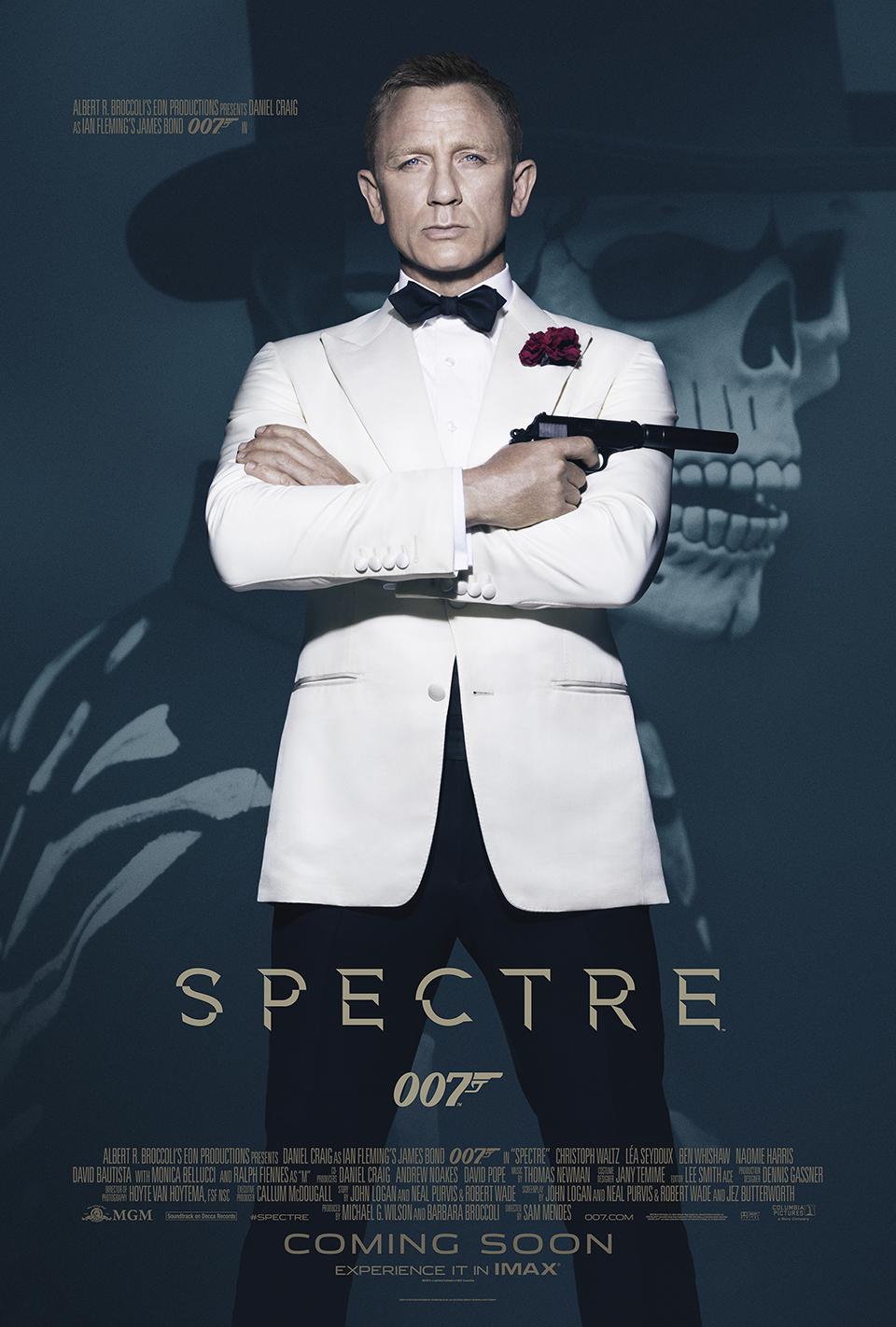
Spectre—James Bond, it could be argued, is sort of the anti-Charlie Brown: confident, assured, decisive, in command, and always a winner with the ladies, Red-Haired and otherwise. It’s only since Daniel Craig took over the role that the Bond movies have begun to seriously explore the idea that he’s no less neurotic or unhappy for all that.
This new one takes 007 from Mexico City to Rome to Austria to Tangier and back to London, chasing down a final tip from the late M (Judi Dench) that leads to an old enemy (Christoph Waltz). Meanwhile the new M (Ralph Fiennes) is struggling to keep a bureaucrat from shutting down the Double-0 program and, incidentally, turning the world into one big cyber-surveillance police state. Q (Ben Whishaw) and Moneypenny (charming Naomie Harris) get caught up in the intrigue this time too.
Watching the old Bond pictures, with their excesses and chauvinisms, used to feel like a Paleolithic indulgence—like letting yourself enjoy something that was bad for you, and probably bad for the world. The Bonds featuring Craig, with his wearily amused old-shoe face and his effortless poise, seemed to be trying for more emotional and moral depth.
Until this one, that is. Despite the relevance of the supposed theme to current civil rights concerns, these are old-fashioned Bond antics—preposterously overscaled set-piece action scenes, women succumbing to 007’s charms, urbane courtesies between Bond and his enemies. It’s also way overlong.
Having said that, I mostly enjoyed Spectre anyway. Director Sam Mendes doesn’t ask us to take the proceedings too seriously—though it’s less overtly facetious, it’s not much less cornball than the Roger Moore Bonds—so I just enjoyed it for its old-fashioned movie serial silliness.
Also, Monica Bellucci appears as an assassin’s widow with whom Bond hooks up. It’s a brief role, but a little Monica Bellucci is better than no Monica Bellucci, I always say.
Plus, the title sequence features a really cool octopus.
The Peanuts Movie—Charlie Brown is trying to fly a kite in winter, on the theory that the Kite-Eating Tree will be dormant. The chaos that ensues is interrupted by the arrival of a new kid moving in across the street from his house. This turns out be a Little Red-Haired Girl, and once Our Hero gets a look at her, he’s in love.
The trouble is, we get a look at her too. It’s true that the Little Red-Haired Girl was shown, very ill-advisedly, in a couple of the later Peanuts movie and TV cartoons, but she was kept offstage in the strip, and she should have been here, too. Showing the Little Red-Haired Girl is like showing Maris on Frasier or Howard’s Mom on The Big Bang Theory or Charlie on Charlie’s Angels or Carlton the Doorman on Rhoda.
This feature version of the greatest American comic strip—and one of the great achievements in 20th-Century literature—is very cute. It’s visually inventive from beginning to end. It has good values at its core. And it doesn’t vulgarize its source material, at least not too much—not nearly as much, certainly, as some of the terrible Peanuts TV cartoons that were made while Charles M. Schultz was alive, presumably with his blessing.
But The Peanuts Movie is still more miss than hit, or at least it was for me. It could be that I’m too close to Peanuts—the strip is a big part of why I fell in love with reading, and I still take my volumes down from the shelf frequently. I’ve been reading and rereading the best vintages of Peanuts (roughly the late ‘50s to the mid ’70s) all my life, and this movie, produced by Craig Schultz (son of Charles) from a story of his devising, doesn’t feel like Peanuts to me. It’s almost Peanuts.
The misstep with the Little Red-Haired Girl isn’t the only one, alas. There’s too much rich texture—to Lucy’s hair, to Charlie Brown’s shoes, to the countryside over which Snoopy flies in search of the Red Baron. Peanuts was an austere world of lines and dots and stock phrases from which Schultz wrung an astonishing half-century’s worth of variations; this movie tries to fill in the details he let our minds fill in.
More disappointingly, The Peanuts Movie turns Charlie Brown from a mythic figure—a loser who strives mightily against his fate as a loser, and doesn’t overcome it—into a standard kids-movie underdog who triumphs. It’s true that he triumphs for the best of reasons—his selflessness and honesty—but it still robs him of his neurotic complexity and his pained, unrecognized heroism.
“Winning is great,” Schultz once observed, “but it isn’t funny.” The unflinching moral of Peanuts is that some people really are born losers, and that this sucks for them, but it doesn’t mean that their lives are without value. The first Peanuts movie, 1969’s A Boy Named Charlie Brown, ended on this note, but it’s not the sort of thing that the makers of a big-budget contemporary animated movie can embrace.
This, maybe, is why the meandering story lacks tension and emotional weight. When the Charlie Brown of the strip or the earlier TV cartoons said “Rats!” or was told “Boy, are you stupid, Charlie Brown!” it landed like a blow. The Peanuts Movie isn’t a disgrace, but it pulls its punches. It’s in 3-D, but it has less depth than a line drawing.
Spectre—James Bond, it could be argued, is sort of the anti-Charlie Brown: confident, assured, decisive, in command, and always a winner with the ladies, Red-Haired and otherwise. It’s only since Daniel Craig took over the role that the Bond movies have begun to seriously explore the idea that he’s no less neurotic or unhappy for all that.
This new one takes 007 from Mexico City to Rome to Austria to Tangier and back to London, chasing down a final tip from the late M (Judi Dench) that leads to an old enemy (Christoph Waltz). Meanwhile the new M (Ralph Fiennes) is struggling to keep a bureaucrat from shutting down the Double-0 program and, incidentally, turning the world into one big cyber-surveillance police state. Q (Ben Whishaw) and Moneypenny (charming Naomie Harris) get caught up in the intrigue this time too.
Watching the old Bond pictures, with their excesses and chauvinisms, used to feel like a Paleolithic indulgence—like letting yourself enjoy something that was bad for you, and probably bad for the world. The Bonds featuring Craig, with his wearily amused old-shoe face and his effortless poise, seemed to be trying for more emotional and moral depth.
Until this one, that is. Despite the relevance of the supposed theme to current civil rights concerns, these are old-fashioned Bond antics—preposterously overscaled set-piece action scenes, women succumbing to 007’s charms, urbane courtesies between Bond and his enemies. It’s also way overlong.
Having said that, I mostly enjoyed Spectre anyway. Director Sam Mendes doesn’t ask us to take the proceedings too seriously—though it’s less overtly facetious, it’s not much less cornball than the Roger Moore Bonds—so I just enjoyed it for its old-fashioned movie serial silliness.
Also, Monica Bellucci appears as an assassin’s widow with whom Bond hooks up. It’s a brief role, but a little Monica Bellucci is better than no Monica Bellucci, I always say.
Plus, the title sequence features a really cool octopus.
Friday, March 6, 2015
SETTLING FOR SECOND BEST
Opening this week:
The Second Best Exotic Marigold Hotel—This sequel to the
easygoing 2012 comedy about aging Brits retiring to a crumbling but comfortable
hotel in Jaipur, India doesn’t stretch the material
very far. It’s just more of the same, with most of the stars—Judi Dench, Maggie
Smith, Bill Nighy, Celia Imrie, Ronald Pickup, Penelope Wilton and Diana
Hardcastle—returning for more mild antics.
Dev Patel is back too, as the overenthusiastic young
manager, along with the imposing Lillete Dubey as his stern but attractive mother
and Tina Desae as his gorgeous fiancée. Richard Gere also turns up as a mystery
man at the hotel, presumably a bone tossed to the American market.
So there are new romances and adventures and intrigues. In
perhaps the cleverest of them, ladies' man Pickup comes to suspect that he may
have inadvertently taken out a hit on his girlfriend—this strand could actually
be a solid basis for a pretty good noir thriller.
But we’re never asked to take it seriously here. Nothing too
upsetting happens, and the movie climaxes with a big Bollywood-style dance to
that irresistible music.
It’s no big deal, but you read that cast, right? The movie
almost can’t be a complete waste with any of them in it, let alone all.
Around midpoint, Dench and Smith exchange a few commonplace
lines, with the subtext that both of them know a piece of difficult news that
one isn’t discussing. All the mastery that these two have accumulated over
their careers is there, in the steely compassion undergirding this short scene.
It made Second Best Exotic worth sitting through all by itself
Wednesday, November 27, 2013
HOW DO YOU SOLVE A PROBLEM LIKE PHILOMENA?
Philomena Lee was a teenager in rural and very Catholic Ireland when she got pregnant in the early ‘50s. She was turned over to the nuns and, after delivering her son Anthony, she and her fellow unmarried teen mothers were kept in the convent as, essentially, slave labor, while their kids were adopted—sold, essentially—to any Catholic who could come up with the sizable adoption fee. In 1955, Anthony was taken to America, along with another little girl from the convent. Philomena had been made to sign a document renouncing any claim on him.
Philomena later married, had other kids, and had a successful career as a nurse, but needless to say, she never forgot her first child. She tried several times to get information about him from the convent and was denied each time. Eventually a journalist named Martin Sixsmith took an interest in her case, and the two of them travelled to the U.S. where they made startling discoveries about the boy. The result was a book, The Lost Child of Philomena Lee (Sixsmith also wrote a summary of the story for The Guardian in 2009, with the True Confessions-ish title “The Catholic Church Stole My Child.”).
If this story were an old-school stage melodrama or a TV soap opera, it would seem corny and overwrought, down to its tear-jerking final twist. But Philomena, the movie version, isn’t even a little depressing. The director, Stephen Frears, brilliantly treats this real-life tragedy as an odd couple comedy.
Judi Dench plays the gabby, cheery Philomena, an intelligent but unpretentious woman, unfiltered but so warm that she doesn’t give offense to those she chats up. Her openhearted, un-ironic manner wears a bit on Sixsmith—an educated, sophisticated but oddly unlikable cold fish played by Steve Coogan, who also co-wrote the adaptation of the Sixsmith book.
The bracing, self-deprecating wit of the movie helps us manage our fury at the Church’s crimes against Philomena and her son, and God knows how many other families. Sixsmith isn’t able to contain his; his journalistic objectivity dissolves as he unravels the final mystery about Philomena’s son in the climactic scenes.
Yet Philomena keeps her magnanimity to the end, and Dench leaves us with a sense of awe at the grandness of this woman’s soul, even while she keeps on making us laugh. After seeing her so many times as Queen Victoria and James Bond’s boss and other such dour roles, it’s great to see her in what can only be called a lighter vein.
While it isn’t the most remarkable piece of filmmaking I’ve seen this year—the documentary The Act of Killing currently holds that title, and I doubt it will be unseated—Philomena is, I think, the movie I’ve most enjoyed so far in 2013. As cinema craft it’s conventional but polished, and the leads are sublime. If you’re like me, the critical clichĂ© “You’ll laugh, you’ll cry” applies.
Philomena later married, had other kids, and had a successful career as a nurse, but needless to say, she never forgot her first child. She tried several times to get information about him from the convent and was denied each time. Eventually a journalist named Martin Sixsmith took an interest in her case, and the two of them travelled to the U.S. where they made startling discoveries about the boy. The result was a book, The Lost Child of Philomena Lee (Sixsmith also wrote a summary of the story for The Guardian in 2009, with the True Confessions-ish title “The Catholic Church Stole My Child.”).
If this story were an old-school stage melodrama or a TV soap opera, it would seem corny and overwrought, down to its tear-jerking final twist. But Philomena, the movie version, isn’t even a little depressing. The director, Stephen Frears, brilliantly treats this real-life tragedy as an odd couple comedy.
Judi Dench plays the gabby, cheery Philomena, an intelligent but unpretentious woman, unfiltered but so warm that she doesn’t give offense to those she chats up. Her openhearted, un-ironic manner wears a bit on Sixsmith—an educated, sophisticated but oddly unlikable cold fish played by Steve Coogan, who also co-wrote the adaptation of the Sixsmith book.
The bracing, self-deprecating wit of the movie helps us manage our fury at the Church’s crimes against Philomena and her son, and God knows how many other families. Sixsmith isn’t able to contain his; his journalistic objectivity dissolves as he unravels the final mystery about Philomena’s son in the climactic scenes.
Yet Philomena keeps her magnanimity to the end, and Dench leaves us with a sense of awe at the grandness of this woman’s soul, even while she keeps on making us laugh. After seeing her so many times as Queen Victoria and James Bond’s boss and other such dour roles, it’s great to see her in what can only be called a lighter vein.
While it isn’t the most remarkable piece of filmmaking I’ve seen this year—the documentary The Act of Killing currently holds that title, and I doubt it will be unseated—Philomena is, I think, the movie I’ve most enjoyed so far in 2013. As cinema craft it’s conventional but polished, and the leads are sublime. If you’re like me, the critical clichĂ© “You’ll laugh, you’ll cry” applies.
Tuesday, February 12, 2013
PAPAL SYRUP
Pope Benny is retiring! For a good read during the upcoming Conclave, you might consider that wacky Papal novel Hadrian VII.
The early chapters of Hadrian VII are set in squalor familiar to the author, Frederick Rolfe. The central character of this 1904 curio (available on amazon) is an English hack writer named George Arthur Rose, a Catholic convert and a washed-out aspirant to the priesthood living in seedy suburban poverty, nursing imperious pretensions of both aristocratic and ecclesiastical grandeur, along with a variety of personal grudges.
All of the above applied to Rolfe, who published under the misleading pseudonyms "Fr. Rolfe" and "Baron Corvo," and who died in obscurity in 1913. He wasn't discovered as an important literary figure until two decades later, when he became the subject of The Quest for Corvo, A.J.A. Symons' admired 1934 "experiment in biography."
But if Hadrian, Rolfe's most famous work, starts like a gritty Grub Street tale, it soon takes off into unexpected splendors. By an alignment of events generously described as providential, George Arthur Rose finds himself ordained a priest. Then, attending at the Conclave, he finds himself elected Pope.
He accepts this meteoric rise without astonishment, and quickly sets about using the Throne of Peter to reform the Church, to confound the rise of Socialism, to remake the geo-political structure of Europe, and, most importantly, to bring a simple, tasteful style of dress and accessorizing back to the Papacy. Hadrian (he takes the name of a previous English Pope) seems to be, to the Vatican , roughly what Jackie Kennedy was to the White House.
At its heart, Hadrian VII is unmistakably a daydream, akin to that of the dowdy woman imagining herself discovered as the next screen goddess, or the bleacher bum pressed into service as a Major League pitcher. It’s an unusually literate and complex daydream, however, from a frustrated and obsessive but talented megalomaniac.
It’s difficult to know whether the self-importance, the naivetĂ©, and the reactionary bile of the politics are meant to be taken satirically or in earnest—possibly Rolfe himself didn’t know. The dense, verbose style and the fixation on Pontifical minutiae make for some exhausting slogs—there are sentences like “They were tolutiloquent in expressing horror at the impiety of mob-rule which had deprived them of the right to military salutes ordained by the Concordat” which make one cry uncle.
But once you get the hang of the self-consciously mannered prose and the nutty worldview, Hadrian becomes funny and fascinating and—especially in the context of the author’s story—touching. But of course it can’t be taken seriously—the premise is about as likely as, say, an Austrian body-builder and movie actor becoming the Governor of California.
Out on DVD today is the Bond movie Skyfall, which won Outstanding British Film at the BAFTA awards this weekend. Slightly surprising, but by no means undeserved—this is a terrific actioner, and the first Bond film I can remember finding at least a little bit moving. It had a remarkable dramatic tactic: Bond fails at almost everything he tries to accomplish here, and you’re left feeling genuine pity for him.
Labels:
007,
BARON CORVO,
DANIEL CRAIG,
FR. ROLFE,
HADRIAN VII,
JAMES BOND,
JAVIER BARDEM,
JUDI DENCH,
PAPAL RESIGNATION,
SKYFALL
Friday, November 11, 2011
G-MAN
One of the more alarming things I notice, as my half-century mark approaches, is how many people I’ve watched not only grow up from childhood, but turn the corner & begin the march toward middle-age themselves. There aren’t many more striking examples of this than Leonardo DiCaprio.
I remember when he was the little kid on Growing Pains, & the period when he appeared in movies like The Quick and the Dead & Total Eclipse & his voice had that grating, screechy sound to it, & then his relatively dignified tenure as a teen idol in the wake of Titanic. I never thought I’d be able to take him seriously as anyone older than twenty-three, but within a few years there he was, fine as Howard Hughes in Scorcese’s The Aviator, & over The Departed & Shutter Island & Inception & others he gradually stopped being an overgrown ingĂ©nue & became an intelligent, substantive leading man.
Now, at 37, DiCaprio plays the title character in J. Edgar, Clint Eastwood’s episodic biopic of the FBI dark lord. In much of his footage he clumps around his office, dictating his memoirs to a string of subordinates, his boyish, full-cheeked features buried under jowly, chalky-skinned old-age makeup. Hard as it is to believe, Leonardo DiCaprio doesn’t seem ridiculous playing a man in his seventies.
He’s just as believable playing Hoover in his twenties, scooting around D.C. in 1919 on a bicycle, stalking communists for the Department of Justice, or struggling, against a ham-fisted tradition, to get some semblance of scientific method into American criminal investigations, or gingerly negotiating with his steely mother (Judi Dench) for her approval. By this account, Edgar doesn’t seem to have had much of a father figure; his old man, played in a very brief but memorable turn by Jack Donner, seems to have wandered in from a Gothic horror movie.
We see the middle-vintage Hoover, gradually amassing power with the help of his platonic Lady Macbeth, Helen Gandy (Naomi Watts), or bonding with his inseparable deputy Clyde Tolson (Armie Hammer), & eventually learning how to politely blackmail Attorneys General & Presidents. In a quiet way, DiCaprio gives Hoover a complex character—he truly believes in & aspires to his own wholesome-gangbuster vision, but he also knows very well that he’s faking it, & it terrifies him.
Aside from the performances of DiCaprio & his costars, J. Edgar is less successful—it’s a hurried, harried, cluttered chronicle history, fast-paced without any particular dramatic urgency. Eastwood is skillful enough, & Hoover’s story is astounding enough, that the film can’t fail to be interesting & watchable. But the script, by Dustin Lance Black, is a lesser piece of work than his screenplay for Milk. Black & Eastwood hustle us, with little context, past some of the more colorful Hoover highlights—Emma Goldman, Bruno Hauptmann, Alvin Karpis. But the movie’s real interest is Hoover’s personal life, particularly as regards his longtime companion Tolson.
Though the depictions of Hoover & Tolson’s intimate life are necessarily speculative, Black & Eastwood remain mum as to whether their relationship was ever consummated. Still, the movie’s best scenes are built on what seems reasonably evident, even from their public life: that they were a married couple. The relevance of this, from Black & Eastwood’s point of view, is presumably that Hoover’s style as Director of the FBI—his bullying, secretive paranoia, his intense image-consciousness—arose inevitably from his psychology as a closeted man. This is the hypothesis which occurs to many of us armchair shrinks from reading even a superficial account of Hoover’s career, so I don’t know that it qualifies as any great insight by itself.
It does link to a great & terribly relevant subject, though: that part of the American national psyche that allowed Hoover to thrive for so long. This, I’m afraid, is just what the movie misses, & it’s why J. Edgar, though well-made & rich in period detail, never really becomes an epic. The movie is never deliberately campy—there is a crossdressing scene, but strikingly it comes at a solemn, tragic moment—and I appreciated that Eastwood & Black don’t mock Hoover for the pain & misery that, perhaps, helped to produce his outrages. But I don’t know that their movie ever fully acknowledges the pain & misery that he inflicted on others.
I remember when he was the little kid on Growing Pains, & the period when he appeared in movies like The Quick and the Dead & Total Eclipse & his voice had that grating, screechy sound to it, & then his relatively dignified tenure as a teen idol in the wake of Titanic. I never thought I’d be able to take him seriously as anyone older than twenty-three, but within a few years there he was, fine as Howard Hughes in Scorcese’s The Aviator, & over The Departed & Shutter Island & Inception & others he gradually stopped being an overgrown ingĂ©nue & became an intelligent, substantive leading man.
He’s just as believable playing Hoover in his twenties, scooting around D.C. in 1919 on a bicycle, stalking communists for the Department of Justice, or struggling, against a ham-fisted tradition, to get some semblance of scientific method into American criminal investigations, or gingerly negotiating with his steely mother (Judi Dench) for her approval. By this account, Edgar doesn’t seem to have had much of a father figure; his old man, played in a very brief but memorable turn by Jack Donner, seems to have wandered in from a Gothic horror movie.
We see the middle-vintage Hoover, gradually amassing power with the help of his platonic Lady Macbeth, Helen Gandy (Naomi Watts), or bonding with his inseparable deputy Clyde Tolson (Armie Hammer), & eventually learning how to politely blackmail Attorneys General & Presidents. In a quiet way, DiCaprio gives Hoover a complex character—he truly believes in & aspires to his own wholesome-gangbuster vision, but he also knows very well that he’s faking it, & it terrifies him.
Aside from the performances of DiCaprio & his costars, J. Edgar is less successful—it’s a hurried, harried, cluttered chronicle history, fast-paced without any particular dramatic urgency. Eastwood is skillful enough, & Hoover’s story is astounding enough, that the film can’t fail to be interesting & watchable. But the script, by Dustin Lance Black, is a lesser piece of work than his screenplay for Milk. Black & Eastwood hustle us, with little context, past some of the more colorful Hoover highlights—Emma Goldman, Bruno Hauptmann, Alvin Karpis. But the movie’s real interest is Hoover’s personal life, particularly as regards his longtime companion Tolson.
Though the depictions of Hoover & Tolson’s intimate life are necessarily speculative, Black & Eastwood remain mum as to whether their relationship was ever consummated. Still, the movie’s best scenes are built on what seems reasonably evident, even from their public life: that they were a married couple. The relevance of this, from Black & Eastwood’s point of view, is presumably that Hoover’s style as Director of the FBI—his bullying, secretive paranoia, his intense image-consciousness—arose inevitably from his psychology as a closeted man. This is the hypothesis which occurs to many of us armchair shrinks from reading even a superficial account of Hoover’s career, so I don’t know that it qualifies as any great insight by itself.
It does link to a great & terribly relevant subject, though: that part of the American national psyche that allowed Hoover to thrive for so long. This, I’m afraid, is just what the movie misses, & it’s why J. Edgar, though well-made & rich in period detail, never really becomes an epic. The movie is never deliberately campy—there is a crossdressing scene, but strikingly it comes at a solemn, tragic moment—and I appreciated that Eastwood & Black don’t mock Hoover for the pain & misery that, perhaps, helped to produce his outrages. But I don’t know that their movie ever fully acknowledges the pain & misery that he inflicted on others.
Subscribe to:
Posts (Atom)