Showing posts with label JAMES BOND. Show all posts

Friday, March 3, 2023

SPY CANDY

Opening this weekend...

Operation Fortune: Ruse de Guerre--Bad guys have stolen some horrible world-threatening thingy from a laboratory, and initially British Intelligence isn't even sure what it is. Not to worry, though--luxury-loving man of action Orson Fortune, played by Jason Statham, is placed on the case, with a high-tech team assisting him.

The McGuffin, when we finally learn what it is, turns out to be disappointingly vague and prosaic. The ride to retrieve it, however, directed by Guy Ritchie from a script by Ivan Atkinson, Marn Davies and the director, is pretty enjoyable, in the usual headlong Ritchie manner. We're zipped from one exotic location to another, Morocco and Madrid and Turkey and more, via private planes and yachts and villas, and there are shootouts and car chases and helicopter duels. It's swanky, with an edge of irony and plenty of violence to distance us from the shallow glamour.

All of  which is to say, Operation Fortune is essentially an off-brand Bond flick, and a sufficiently skilled one to offer an amusing, relaxing couple of hours free of substance and ethics. Despite Ritchie's assured technique, the real appeal is the cast. Statham shrewdly keeps it low-key and lets his costars shine: Cary Elwes as Orson's nettled boss, Eddie Marsan as the boss's boss and Bugzy Malone as Orson's stalwart sidekick.

Josh Hartnett, whose existence I had largely forgotten, has a nice turn as a Hollywood star pressed into service on the mission, and Aubrey Plaza is appealingly insouciant as a slinky computer whiz, complete with closeups of her lips as she purrs directions into a mic. She reminded me of Adrienne Barbeau as the deejay in The Fog.

The standout in the company, however, is Hugh Grant as the cockney billionaire arms dealer that Fortune's team targets. It's surprising how flexible Grant's diffident persona has proven; what's even more striking is that, even as this callous, corruption-encrusted vulgarian, he still manages to be likable.

Friday, May 22, 2020

AIN'T LIFE GRANDMA

Another selection in the Steve Weiss "No Festival Required" virtual cinema...


Lucky Grandma--Grandma Wong's fortune teller pronounces that her luck looks uncommonly auspicious, and at first the prophecy seems true: She returns from a bus trip to a casino to her little apartment in New York's Chinatown with a bagful of cash. The trouble is, a local gang thinks the money belongs to them and sends goons to intimidate her. Grandma Wong hires a bodyguard, Big Pong, from a rival gang, but she's still in danger.

The title character here is played by Tsai Chin, best known to American audiences as a "Bond girl" in You Only Live Twice, though I tend to remember her as Lin Tang, daughter of Christopher Lee's Fu Manchu. Stripped of glamour in her mid-eighties, she has an exhilarating furiousness as the crabby, disappointed yet still determined Grandma, trudging the streets with a cigarette constantly dangling from her lips. It's one of those marvelous near-minimalist performances that elderly actors sometimes give, at the stage of their careers when they've finally internalized the idea that less is more: Tsai Chin gets more punch with a slight widening of her eyes or tightening of her frown than a younger actor would with ten times the emoting.


Aside from her formidable performance, and that of the mountainous Corey Ha as sweet, slow-moving Big Pong--he's amusingly contrasted with the tiny Tsai Chin as he follows her down the street--Lucky Grandma is a taut, snappily-edited noir, directed by Sasie Sealy from a script she wrote with Angela Cheng. It's funny but never quite farcical, with a sense of genuine peril and some touching, reflective moments toward the end. Also, Andrew Orkin's menacingly percussive, unhurried music is the best film score I've heard so far this year.

Thursday, May 26, 2016

CATO INSTITUTE

RIP to Burt Kwouk, passed on 85.


No doubt best known as “Cato” in the Pink Panther series, Kwouk shared the screen with icons ranging from James Bond to Fu Manchu throughout his long career.

So, just because Kwouk is in it…

Monster-of-the-Week: …this week’s honoree is this creepy mutant from 1965’s Curse of the Fly


Friday, November 6, 2015

BROWN. CHARLIE BROWN.

Opening this weekend:


The Peanuts MovieCharlie Brown is trying to fly a kite in winter, on the theory that the Kite-Eating Tree will be dormant. The chaos that ensues is interrupted by the arrival of a new kid moving in across the street from his house. This turns out be a Little Red-Haired Girl, and once Our Hero gets a look at her, he’s in love.

The trouble is, we get a look at her too. It’s true that the Little Red-Haired Girl was shown, very ill-advisedly, in a couple of the later Peanuts movie and TV cartoons, but she was kept offstage in the strip, and she should have been here, too. Showing the Little Red-Haired Girl is like showing Maris on Frasier or Howard’s Mom on The Big Bang Theory or Charlie on Charlie’s Angels or Carlton the Doorman on Rhoda.

This feature version of the greatest American comic strip—and one of the great achievements in 20th-Century literature—is very cute. It’s visually inventive from beginning to end. It has good values at its core. And it doesn’t vulgarize its source material, at least not too much—not nearly as much, certainly, as some of the terrible Peanuts TV cartoons that were made while Charles M. Schultz was alive, presumably with his blessing.

But The Peanuts Movie is still more miss than hit, or at least it was for me. It could be that I’m too close to Peanuts—the strip is a big part of why I fell in love with reading, and I still take my volumes down from the shelf frequently. I’ve been reading and rereading the best vintages of Peanuts (roughly the late ‘50s to the mid ’70s) all my life, and this movie, produced by Craig Schultz (son of Charles) from a story of his devising, doesn’t feel like Peanuts to me. It’s almost Peanuts.

The misstep with the Little Red-Haired Girl isn’t the only one, alas. There’s too much rich texture—to Lucy’s hair, to Charlie Brown’s shoes, to the countryside over which Snoopy flies in search of the Red Baron. Peanuts was an austere world of lines and dots and stock phrases from which Schultz wrung an astonishing half-century’s worth of variations; this movie tries to fill in the details he let our minds fill in.

More disappointingly, The Peanuts Movie turns Charlie Brown from a mythic figure—a loser who strives mightily against his fate as a loser, and doesn’t overcome it—into a standard kids-movie underdog who triumphs. It’s true that he triumphs for the best of reasons—his selflessness and honesty—but it still robs him of his neurotic complexity and his pained, unrecognized heroism.

“Winning is great,” Schultz once observed, “but it isn’t funny.” The unflinching moral of Peanuts is that some people really are born losers, and that this sucks for them, but it doesn’t mean that their lives are without value. The first Peanuts movie, 1969’s A Boy Named Charlie Brown, ended on this note, but it’s not the sort of thing that the makers of a big-budget contemporary animated movie can embrace.

This, maybe, is why the meandering story lacks tension and emotional weight. When the Charlie Brown of the strip or the earlier TV cartoons said “Rats!” or was told “Boy, are you stupid, Charlie Brown!” it landed like a blow. The Peanuts Movie isn’t a disgrace, but it pulls its punches. It’s in 3-D, but it has less depth than a line drawing.


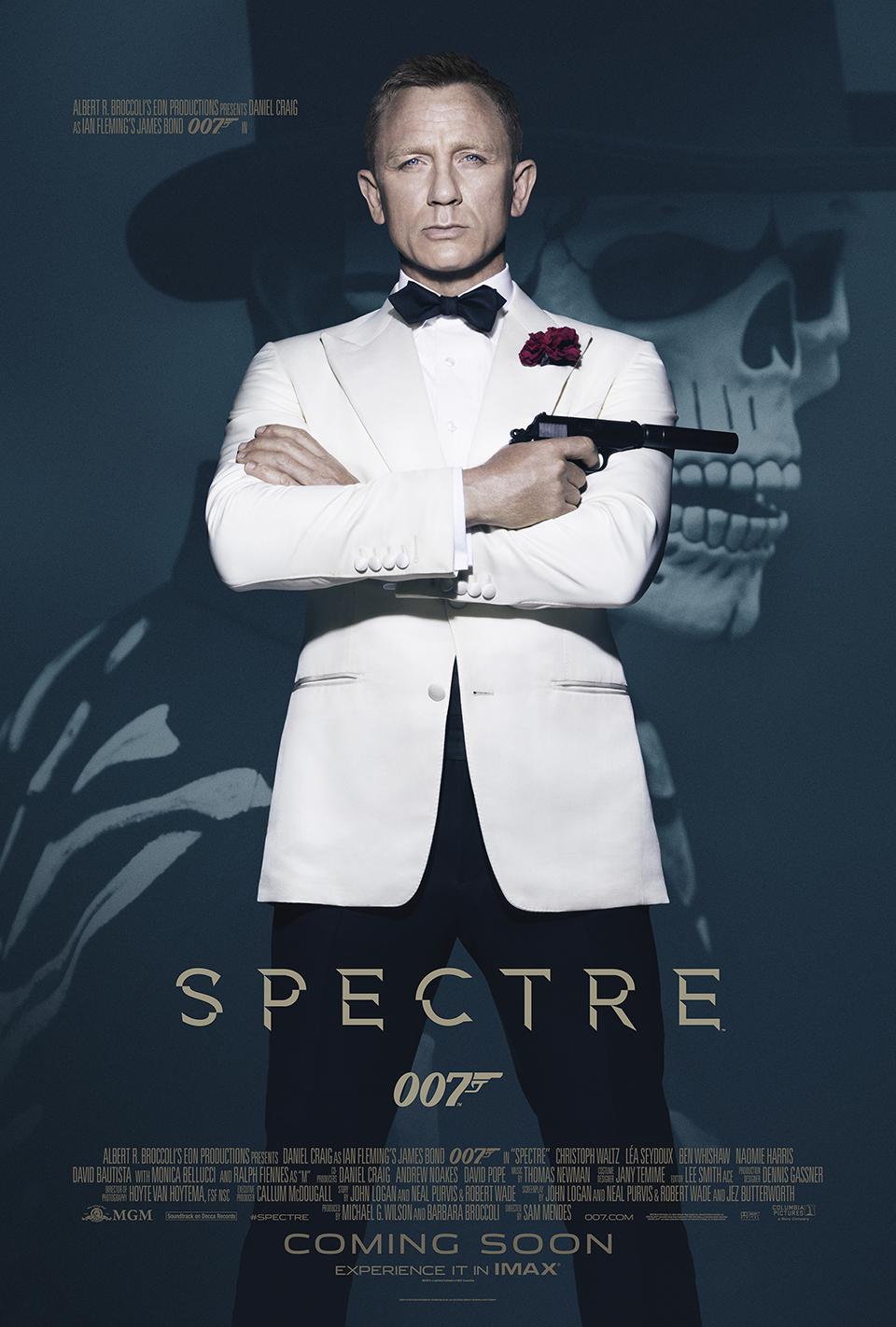
SpectreJames Bond, it could be argued, is sort of the anti-Charlie Brown: confident, assured, decisive, in command, and always a winner with the ladies, Red-Haired and otherwise. It’s only since Daniel Craig took over the role that the Bond movies have begun to seriously explore the idea that he’s no less neurotic or unhappy for all that.

This new one takes 007 from Mexico City to Rome to Austria to Tangier and back to London, chasing down a final tip from the late M (Judi Dench) that leads to an old enemy (Christoph Waltz). Meanwhile the new M (Ralph Fiennes) is struggling to keep a bureaucrat from shutting down the Double-0 program and, incidentally, turning the world into one big cyber-surveillance police state. Q (Ben Whishaw) and Moneypenny (charming Naomie Harris) get caught up in the intrigue this time too.

Watching the old Bond pictures, with their excesses and chauvinisms, used to feel like a Paleolithic indulgence—like letting yourself enjoy something that was bad for you, and probably bad for the world. The Bonds featuring Craig, with his wearily amused old-shoe face and his effortless poise, seemed to be trying for more emotional and moral depth.

Until this one, that is. Despite the relevance of the supposed theme to current civil rights concerns, these are old-fashioned Bond antics—preposterously overscaled set-piece action scenes, women succumbing to 007’s charms, urbane courtesies between Bond and his enemies. It’s also way overlong.

Having said that, I mostly enjoyed Spectre anyway. Director Sam Mendes doesn’t ask us to take the proceedings too seriously—though it’s less overtly facetious, it’s not much less cornball than the Roger Moore Bonds—so I just enjoyed it for its old-fashioned movie serial silliness.

Also, Monica Bellucci appears as an assassin’s widow with whom Bond hooks up. It’s a brief role, but a little Monica Bellucci is better than no Monica Bellucci, I always say.

Plus, the title sequence features a really cool octopus.

Thursday, September 11, 2014

MOSS APPEAL

RIP to the titanic Richard Kiel, passed on at 74. The 7-foot-plus fellow is of course best remembered as the indefatigable and curiously endearing “Jaws” in the Bond films The Spy Who Loved Me and Moonraker, and as the title caveman in the 1962 laugh-riot Eegah, but he played innumerable other towering menaces, including…

Monster-of-the-Week: …Pere Malfait, the mossy giant of Cajun lore in “The Spanish Moss Murders,” a 1974 episode of Kolchak: The Night Stalker


This murky still does little justice to the creature’s creepiness in the show.

Tuesday, February 12, 2013

PAPAL SYRUP

Pope Benny is retiring! For a good read during the upcoming Conclave, you might consider that wacky Papal novel Hadrian VII.


The early chapters of Hadrian VII are set in squalor familiar to the author, Frederick Rolfe. The central character of this 1904 curio (available on amazon) is an English hack writer named George Arthur Rose, a Catholic convert and a washed-out aspirant to the priesthood living in seedy suburban poverty, nursing imperious pretensions of both aristocratic and ecclesiastical grandeur, along with a variety of personal grudges.

All of the above applied to Rolfe, who published under the misleading pseudonyms "Fr. Rolfe" and "Baron Corvo," and who died in obscurity in 1913. He wasn't discovered as an important literary figure until two decades later, when he became the subject of The Quest for Corvo, A.J.A. Symons' admired 1934 "experiment in biography."

But if Hadrian, Rolfe's most famous work, starts like a gritty Grub Street tale, it soon takes off into unexpected splendors. By an alignment of events generously described as providential, George Arthur Rose finds himself ordained a priest. Then, attending at the Conclave, he finds himself elected Pope.

He accepts this meteoric rise without astonishment, and quickly sets about using the Throne of Peter to reform the Church, to confound the rise of Socialism, to remake the geo-political structure of Europe, and, most importantly, to bring a simple, tasteful style of dress and accessorizing back to the Papacy. Hadrian (he takes the name of a previous English Pope) seems to be, to the Vatican, roughly what Jackie Kennedy was to the White House.

At its heart, Hadrian VII is unmistakably a daydream, akin to that of the dowdy woman imagining herself discovered as the next screen goddess, or the bleacher bum pressed into service as a Major League pitcher. It’s an unusually literate and complex daydream, however, from a frustrated and obsessive but talented megalomaniac.

It’s difficult to know whether the self-importance, the naiveté, and the reactionary bile of the politics are meant to be taken satirically or in earnest—possibly Rolfe himself didn’t know. The dense, verbose style and the fixation on Pontifical minutiae make for some exhausting slogs—there are sentences like “They were tolutiloquent in expressing horror at the impiety of mob-rule which had deprived them of the right to military salutes ordained by the Concordat” which make one cry uncle.

But once you get the hang of the self-consciously mannered prose and the nutty worldview, Hadrian becomes funny and fascinating and—especially in the context of the author’s story—touching. But of course it can’t be taken seriously—the premise is about as likely as, say, an Austrian body-builder and movie actor becoming the Governor of California.


Out on DVD today is the Bond movie Skyfall, which won Outstanding British Film at the BAFTA awards this weekend. Slightly surprising, but by no means undeserved—this is a terrific actioner, and the first Bond film I can remember finding at least a little bit moving. It had a remarkable dramatic tactic: Bond fails at almost everything he tries to accomplish here, and you’re left feeling genuine pity for him.