Check out my review of Spielberg's newest, Disclosure Day...

...online at Phoenix Magazine.
Opening this weekend:

Indiana Jones and the Dial of Destiny--The first sound we hear is the ticking of a clock. Thus the fifth and valedictory entry in the series about Harrison Ford's globetrotting, whip-cracking archaeologist establishes Time, and its persistent shadow, Mortality, as the theme.
The movie starts with a lengthy and rather splendid act set in France in 1944, with Ford made young via some impressive CGI alchemy. Indy and a brilliant sidekick (Toby Jones) are snooping around a mountain stronghold, trying to filch back some artifacts from the plunder of retreating Nazis, among them a coldly businesslike SS Colonel (Thomas Kretschman) and a reptilian physicist (Mads Mikkelsen) who identifies the title gadget, a clockwork contraption built by Archimedes himself that supposedly can be used for time travel.
From here we fast forward to New York in the late '60s, where Indy is a grumpy and bereaved old man on the verge of retirement from teaching, separated from his beloved Marion, annoyed by the Beatles blasting from the hippie pad neighboring his cluttered apartment. His goddaughter Helena (Phoebe Waller-Bridge), who he affectionately refers to as "Wombat," pulls him into one more adventure, chasing the Dial from Tangiers to the floor of the Mediterranean to Sicily. The unrepentant Nazi prof, who went on to help NASA get to the moon, is looking for the Dial too, with his murderous goons.
The first Indy flick, 1981's Raiders of the Lost Ark, is a favorite of mine; tight and witty and curiously modest, it genuinely felt like a Republic serial of the '40s, maybe directed by William Witney. It was also built around a terrific Jewish joke, with its Nazis arrogantly supposing they could co-opt cosmic Jewish power unscathed. The lavish, overstuffed sequels were enjoyable enough, but all of them fell far short, for me, of that snappy, surefooted original.
Dial of Destiny falls short of the original too, but even so it may be the best of the sequels. It's the first that Steven Spielberg didn't direct; the duties here went to the always proficient James Mangold, who was also among the many screenwriters. And for the first half--the 1944 scenes, and the stuff in '60s-era New York, with Indy on the run against the backdrop of war protestors and astronaut ticker-tape parades--it's sensational.
The trouble is that, like so many contemporary blockbusters, it's outrageously overlong, at least thirty or forty minutes longer than it really needs to be. As MacGuffins go, the Dial doesn't have the same stirring imaginative power and poetry as the Ark, and its implications get the narrative in a little over its head in the later acts. For a story that starts with urgent ticking, the movie manages time very poorly.
Still, there's a lot to like here. Ford is wonderfully on point. He seems to have grown into the curmudgeonly manner that's always been part of his persona, but he's also emotionally present to a surprising degree, truly connecting with the other characters. Mikkelsen is a top-notch, quietly megalomaniacal villain, and Toby Jones, Antonio Banderas and John Rhys-Davies could all have warranted more screen time as Indy's allies, as could Shaunette Renée Wilson as an exasperated U.S. intelligence agent. Ethann Isidore is likable as Helena's street urchin pal.
Maybe best of all is Waller-Bridge's Helena--headlong, fearless, smiling, eyes full of self-delighted mischief. She even shows a hint or two of lewdness, welcome in this largely asexual series. It would be okay with me if they gave her more movies.

Ruby Gillman, Teenage Kraken--At the very least, one must admit that this is a take on teen angst we haven't seen before. Ruby and her family are Krakens, the fearsome tentacled sea creatures of Nordic lore, but they're passing themselves off as humans; Ruby's Mom has a good career as a realtor in a seaside town. Ruby is under orders never to get wet in the ocean, lest her giant Kraken-ness be revealed to her classmates. This means she's forbidden to go to prom, as it's being held on a boat.
Soon enough Ruby (voiced by Lana Condor) learns that her Mom (Toni Collette) and her Grandma (Jane Fonda) are giant Kraken as well, and their backstory includes a feud with the mermaids. Indeed, the story is sort of The Little Mermaid in reverse, with many of the same psychological and sexual subtexts at work. And like an earlier DreamWorks Animation effort, Shrek, the snarky shots at Disney are amusing, in an inside-baseball way.
This movie has a glitzy, primary-color sensibility, like a fever dream after bingeing on My Little Pony and Powerpuff Girls and eating too much cioppino. And it feels about that ephemeral. But it's a sweet-natured fish tale, and undeniably original.
2022 is unlikely, it seems to me, to go down in history as a banner year for popular movies. But even in less auspicious years, there are always some good flicks, and some good or even great scenes or performances in movies that aren't so great overall.
Out of what I saw, here are ten movies that stood out as best for me this past year:
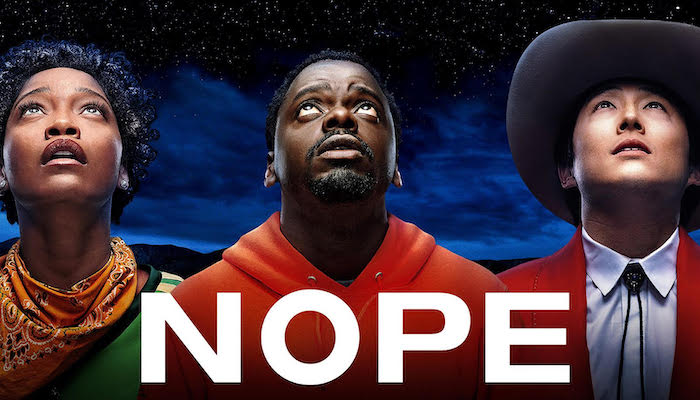
Nope--Jordan Peele's latest is probably the best UFO movie since Close Encounters, though it has a more sinister edge. It's wildly original, funny and creepy sci-fi/horror, yet it also carries the heroic charge of a good western.
Good Night Oppy--This documentary about the Mars rovers Opportunity and Spirit has interesting information about the Red Planet, but it's really about the way the NASA nerds anthropomorphized the robots and fretted over them and cheered them on and ultimately grieved over them. In an entirely unpretentious way, the movie hints at the question of where sentience comes from.
The Duke--This pandemic-delayed release was, I thought, perhaps the most overlooked and delightful movie of the year. Jim Broadbent is splendid as Kempton Bunton, a cab driver, factory worker and anti-television fee protestor who in 1965 confessed to stealing Goya's Portrait of the Duke of Wellington from the National Gallery in London; Helen Mirren is his fed-up wife. The direction, by the late Roger Michell, is warm, graphically lively and period-rich.
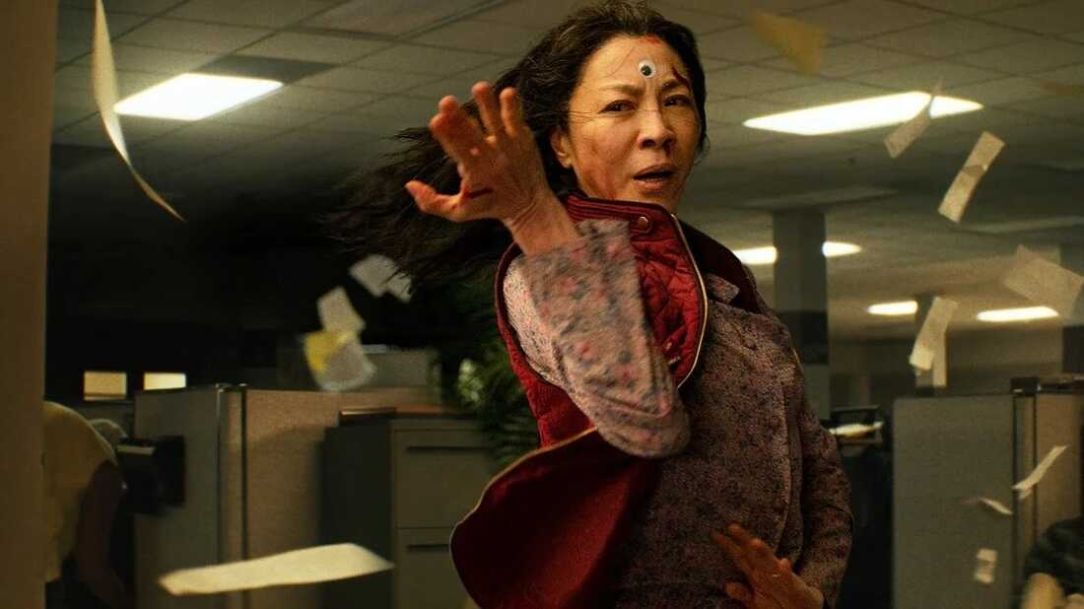
Everything Everywhere All At Once--Family drama, immigrant saga, sly comedy, martial arts actioner, Matrix-style sci-fi adventure and more are mashed-up in this freaky yarn from writer-directors Daniel Kwan and Daniel Scheinert that tries to live up to its title. It's epic, intimate, silly and profound. All at once.
Thirteen Lives--Dramatizing a technically complicated rescue mission in detail, Ron Howard is in his element in this moving account of the rescue of twelve Thai kids and their soccer coach from a flooded cave in 2018. A little tough if you're claustrophobic, but a true feel-good movie.

The Whale--Brendan Fraser gives a luminous, possibly generational performance as Charlie, a morbidly obese English teacher trying to reconnect with his furious estranged daughter. Directed by Darren Aronofsky, the movie is a little heavy and one-note aside from the star, but Fraser's radiance shines through the prosthetics.
Gabby Giffords Won't Back Down--Infuriating because of what Giffords lost when she was shot in 2011; inspirational because of how much she got back, and how courageously she refused to give in to despair. Directors Julie Cohen and Betsy West build the movie around how central music was to Giffords' recovery.
The Fabelmans--In Steven Spielberg's loosely autobiographical coming-of-age yarn, scripted by Tony Kushner, the focus is largely on the parents, beautifully played by Paul Dano and Michelle Williams. The movie isn't a grand slam, but it's fascinating, and it has the best final shot of the year.

Marcel the Shell With Shoes On--This feature expansion of the 2010 viral short by Dean Fleischer-Camp, with Jenny Slate voicing the tiny title character, is sunny and hilarious, but with improbably dramatic and poignant undertones. Isabella Rossellini is exquisite as the voice of Marcel's "Nan."
The Banshees of Inisherin--Martin McDonagh's black comedy about the agonies of friendship goes so sour in its later acts that I almost didn't put it on the list. But the brilliance of the initial conception and, especially, the magnificent acting of Brendan Gleeson, Colin Farrell, Barry Keoghan and Kerry Condon demand its inclusion.
One more list, while I'm at it; for anyone who might unfathomably be interested, here is the embarrassingly short list of books I read this year (as always, it doesn't include short stories, poems, comic books, essays, articles, reviews, automotive manuals, skywriting, menus, fortune cookie fortunes, etc etc)...
The Silent Gondoliers by William Nolan
Sucker's Portfolio by Kurt Vonnegut, Jr.
Orphans of the Sky by Robert A. Heinlein
Saturday Night and Sunday Morning by Alan Sillitoe

The Moon is a Harsh Mistress by Robert A. Heinlein
The Spread by Barry Malzberg
Ben by Gilbert A. Ralston

Player Piano by Kurt Vonnegut, Jr.
The Investigation by Stanislaw Lem
The Werewolf Principle by Clifford D. Simak
Destry Rides Again by Max Brand
In theaters for Thanksgiving (a safe and Happy Thanksgiving, by the way!):

The Fabelmans--It begins with little Sammy Fabelman being taken to his first movie, in New Jersey in 1952. A cautious, slightly fretful 7-year-old, Sammy (Mateo Zoryon Francis-DeFord) is not sure if he's up for the experience; he's heard the people onscreen are gigantic, and the idea worries him. So his adoring parents attempt to reassure him, from opposite sides: his practical-minded, scientific dad Burt (Paul Dano) explains how film works technically, while his whimsical pixie of a mom Mitzi (Michelle Williams) says that movies are beautiful dreams.
The dream in question turns out to be DeMille's The Greatest Show on Earth, and the big train wreck scene hits Sammy's psyche like...well, like a speeding train. He tries to re-create it with the Lionel train set he gets for Hannukah, and later he films his re-creations with a home movie camera.
As you probably know, this is Steven Spielberg's autobiographical coming-of-age movie, scripted by Tony Kushner from a synopsis they worked up together, and made by the usual gang: filmed by Janusz Kaminski with a score by John Williams. The episodes that follow depict the family's life as Burt, a computer genius, chases work in the budding industry from New Jersey to Arizona, where Sammy makes war epics, to northern California, where he encounters anti-Semitic bullies.
Mitzi, who gave up a career as a concert pianist to be a wife and mom, shows signs of restlessness and depression, except when she's interacting with Burt's best friend Bennie (Seth Rogen), or when she impulsively buys a monkey, who she names Bennie. All of these strands are filtered through the growth of the relationship between Sam (Gabriel LaBelle as an older kid) and the art and craft of moviemaking.
Even though he's one of the most commercially successful popular artists in the world, I think that Spielberg has, in a sense, been critically underappreciated for decades. After the initial, unprecedented splash he made with Jaws, Close Encounters of the Third Kind, E.T. and Raiders of the Lost Ark, he went through a slump in the late '80s and early '90s and cranked out some real bummers; cloying, heavy-handed, trying-too-hard stuff like Hook and Always that made him seem like a phony.
I'm not sure that many critics noticed the way he rediscovered and deepened and sharpened his style with the films he's made in recent years, even when their scripts have sometimes been uneven. Works that range with seemingly equal ease from crisp yet almost invisible technique like The Post to Hitchcockian panache like Bridge of Spies to flashy showmanship like West Side Story suggest an artist who has matured, and who might have something interesting to say about his own life.
And so he does, by turning his gaze outward. Sammy is likable enough, but he's not a rich or idiosyncratic protagonist. What's important is his point of view on Burt and Mitzi. Spielberg here dramatizes the anger and terror, the sense of betrayal, that can result when you begin to see your parents--as Sammy does through his footage of them, while editing home movies--not as stock figures in your story but as complex characters in their own.
And Dano and Williams create vivid, warm portraits of imperfect but unconditionally loving people. So does Rogen, and so does Judd Hirsch in a showcase role as a crazy visionary uncle who tells Sammy hard prophetic truths. So do Jeannie Berlin and Robin Bartlett as the Grandmas, and so do the excellent kids who play the younger sisters. So for that matter, does the monkey.
Not everything in The Fabelmans comes off. There's maybe a scene or two more than is needed of Williams sadly playing sad piano, and the stuff with the bullies, who look like they stepped out of Nazi poster art, feels psychologically confused and uneasy. A scene in which Sammy has a fraught confrontation with a bully he's tried to flatter through moviemaking is potentially interesting for what it hints at about the director's willingness to use his art calculatingly, but it thrashes around and fails, somehow, to come into dramatic focus.
On the other hand, the scenes involving Sammy's early romantic encounters are livened up by the hilarious Chloe East as Monica, his both religiously ecstatic and sexually avid girlfriend, who sees Jesus as one more teen heartthrob. While chaste in the typical Spielbergian manner, they offer a peek at the character's, and the director's, bemused reaction to Christianity.
The movie closes with a depiction of Spielberg's familiar anecdote about his first brush with Hollywood greatness. It allows him to end the film with a self-deprecating "meta" joke that also slyly reminds us that what we've just seen, however honestly intended, is nonetheless a carefully curated official story.
Opening this weekend:

West Side Story--The original 1961 film version of the 1957 Broadway musical has aged well, on the whole, but it has aged. The retelling of Romeo and Juliet in New York street gang dress still holds an audience beautifully, and the performances and numbers remain exciting, at their best electrifying. But the depiction of gangs can feel a bit quaint; the Jets, in particular, come across more like the Bowery Boys than like convincingly dangerous hoodlums, and the take on Puerto Rican culture is narrow. The dubbing sounds a little canned at times, and the orchestrations are over-symphonically lush.
That said, it remains a terrific picture, and it was hard to see a pressing need for a remake. But director Steven Spielberg and screenwriter Tony Kushner have given us one, and it's improbably superb, better than the original in some ways (not all), reimagined without laborious "reinterpretation"; new, yet somehow entirely faithful to the material.
It begins with urban renewal--Spielberg's camera gliding down and skulking around the wreckage of the slummy Upper West Side neighborhoods being cleared to make way for the Lincoln Center complex in the late '50s/early '60s. To those unmistakable, teasing opening bites of Leonard Bernstein's score, we see the Jets (Anglo gang) stealing cans of paint and making a sortie into the turf of the Sharks (Puerto Rican gang) for a reason that carries a shocking punch.
From there on, Spielberg and Kushner ingeniously, even playfully dramatize the economic and ethnic shifts that created the gang animosities, and give their movie a specific context that the original, with its almost fairy-tale Montague-and-Capulet conflict, only hints at. Other marginalized figures, like "Anybodys" (non-binary actor Iris Menas), get a deeper treatment here as well.
Stimulating as all this is, it would mean nothing if the music and acting were soulless. But somehow these numbers, some of them repurposed and reset, spring to life. Along with choreographer Justin Peck, Spielberg, again, deserves no small portion of the credit for this; he even gets the cars on the streets into the kinetic rhythms of the tunes.
But the actors are even more potent, most surprisingly in the treacherous lead roles. Who knew Ansel Elgort could sing like that? He plays Tony straightforwardly and guilelessly, and he and tiny newcomer Rachel Zegler, as Maria, throw themselves into their joy at each other with no mannerism or embarrassment, so that their pure and perfect love at first sight, always the difficult part of this story, almost becomes plausible.
Mike Faist brings a haunted undertone to his cocksure manner as Riff, and Ariana DeBose and David Alvarez are knockouts as Anita and Bernardo. If neither of them quite have the febrile glamour and sexiness of Rita Moreno and George Chakiris in the original, well, who could?
Moreno, by the way, appears here, not in a honorary cameo but in a real role--the equivalent of Doc the drugstore proprietor--and she nails it with guts and grace. She gave the best performance in the original, and one of the best here.


