Showing posts with label COLIN FARRELL. Show all posts

Friday, January 20, 2023

CAUGHT '22

2022 is unlikely, it seems to me, to go down in history as a banner year for popular movies. But even in less auspicious years, there are always some good flicks, and some good or even great scenes or performances in movies that aren't so great overall.

Out of what I saw, here are ten movies that stood out as best for me this past year:
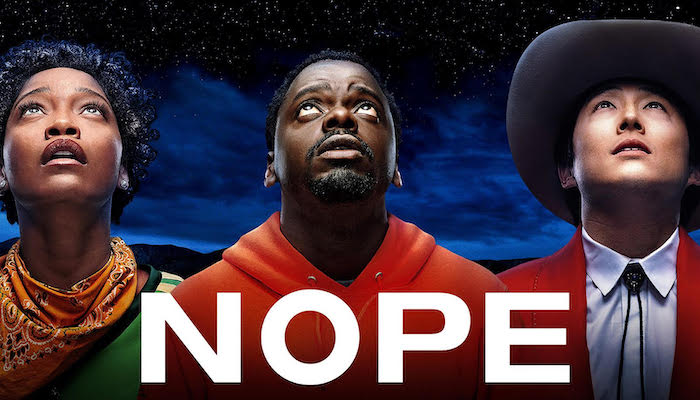
Nope--Jordan Peele's latest is probably the best UFO movie since Close Encounters, though it has a more sinister edge. It's wildly original, funny and creepy sci-fi/horror, yet it also carries the heroic charge of a good western.

Good Night Oppy--This documentary about the Mars rovers Opportunity and Spirit has interesting information about the Red Planet, but it's really about the way the NASA nerds anthropomorphized the robots and fretted over them and cheered them on and ultimately grieved over them. In an entirely unpretentious way, the movie hints at the question of where sentience comes from. 

The Duke--This pandemic-delayed release was, I thought, perhaps the most overlooked and delightful movie of the year. Jim Broadbent is splendid as Kempton Bunton, a cab driver, factory worker and anti-television fee protestor who in 1965 confessed to stealing Goya's Portrait of the Duke of Wellington from the National Gallery in London; Helen Mirren is his fed-up wife. The direction, by the late Roger Michell, is warm, graphically lively and period-rich.
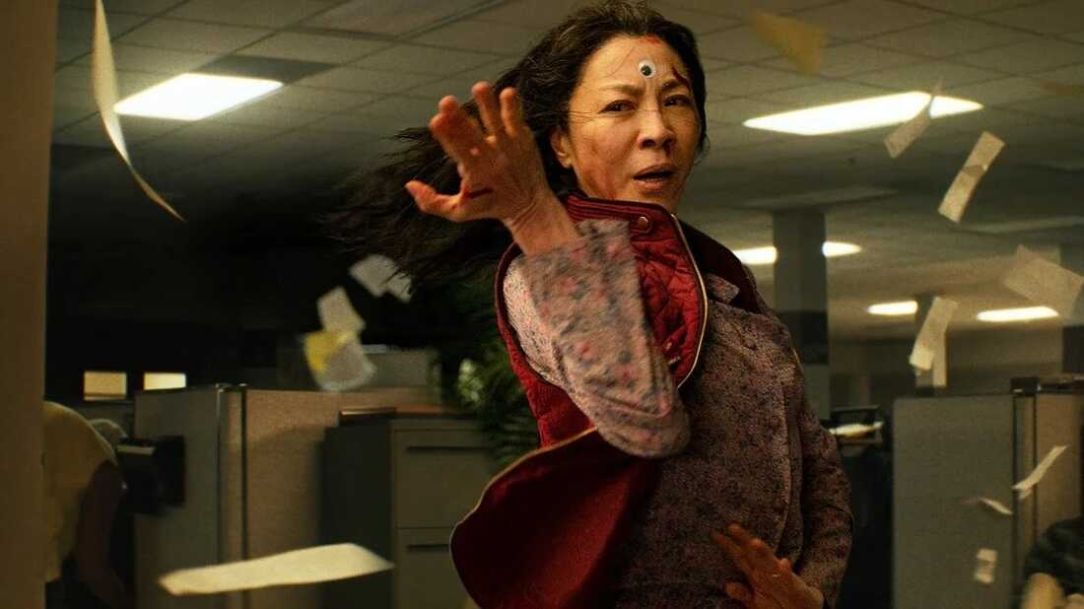
Everything Everywhere All At Once--Family drama, immigrant saga, sly comedy, martial arts actioner, Matrix-style sci-fi adventure and more are mashed-up in this freaky yarn from writer-directors Daniel Kwan and Daniel Scheinert that tries to live up to its title. It's epic, intimate, silly and profound. All at once.

Thirteen Lives--Dramatizing a technically complicated rescue mission in detail, Ron Howard is in his element in this moving account of the rescue of twelve Thai kids and their soccer coach from a flooded cave in 2018. A little tough if you're claustrophobic, but a true feel-good movie.

The Whale--Brendan Fraser gives a luminous, possibly generational performance as Charlie, a morbidly obese English teacher trying to reconnect with his furious estranged daughter. Directed by Darren Aronofsky, the movie is a little heavy and one-note aside from the star, but Fraser's radiance shines through the prosthetics.

Gabby Giffords Won't Back Down--Infuriating because of what Giffords lost when she was shot in 2011; inspirational because of how much she got back, and how courageously she refused to give in to despair. Directors Julie Cohen and Betsy West build the movie around how central music was to Giffords' recovery.

The Fabelmans--In Steven Spielberg's loosely autobiographical coming-of-age yarn, scripted by Tony Kushner, the focus is largely on the parents, beautifully played by Paul Dano and Michelle Williams. The movie isn't a grand slam, but it's fascinating, and it has the best final shot of the year.

Marcel the Shell With Shoes On--This feature expansion of the 2010 viral short by Dean Fleischer-Camp, with Jenny Slate voicing the tiny title character, is sunny and hilarious, but with improbably dramatic and poignant undertones. Isabella Rossellini is exquisite as the voice of Marcel's "Nan."

The Banshees of Inisherin--Martin McDonagh's black comedy about the agonies of friendship goes so sour in its later acts that I almost didn't put it on the list. But the brilliance of the initial conception and, especially, the magnificent acting of Brendan Gleeson, Colin Farrell, Barry Keoghan and Kerry Condon demand its inclusion.

One more list, while I'm at it; for anyone who might unfathomably be interested, here is the embarrassingly short list of books I read this year (as always, it doesn't include short stories, poems, comic books, essays, articles, reviews, automotive manuals, skywriting, menus, fortune cookie fortunes, etc etc)...
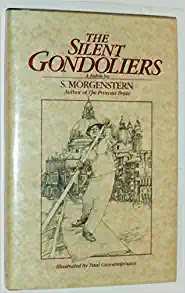
The Silent Gondoliers by William Nolan

Sucker's Portfolio by Kurt Vonnegut, Jr.

Orphans of the Sky by Robert A. Heinlein

Saturday Night and Sunday Morning by Alan Sillitoe

The Moon is a Harsh Mistress by Robert A. Heinlein

The Spread by Barry Malzberg

Ben by Gilbert A. Ralston

Player Piano by Kurt Vonnegut, Jr.

The Investigation by Stanislaw Lem

The Werewolf Principle by Clifford D. Simak

Destry Rides Again by Max Brand

Friday, December 30, 2022

TOXIC CLOUD; TOXIC FRIENDSHIP

Now streaming...

White Noise--Noah Baumbach's adaptation of the Don DeLillo novel begins on the quaint campus of College-On-the-Hill, where mortality-haunted "Hitler Studies" prof Adam Driver lives with his wife Greta Gerwig and their talkative but deadpan blended brood. His wife's pill usage and other academic-life worries are intruded upon when the collision of a train with a tanker truck and the resulting "Airborne Toxic Event" requires the family and their neighbors to flee and take refuge in summer camps, Chinese restaurants and other makeshift shelters. Baumbach's style here seems to pay homage to other directors; the early college scenes suggest the twee formality of Wes Anderson, there's a big dose of the Close Encounters-era Spielberg later on, a hint of Jason Reitman's Juno here or of David Byrne's True Stories there. 

The movie feels large and consequential; there are many funny and fascinating passages, and the '80s period look is colorful. But while the story's elusive ambiguities are intriguing for a while, they gradually start to get irritating, particularly when it moves from the epic-scale first half to the more personal and anticlimactic second half. Still, the cast is strong, Driver is paradoxically both commanding and neurotic in the lead, and Gerwig is a doleful, troublingly erotic presence--at one point Driver's colleague Don Cheadle observes, accurately, that she has "important hair." 

The Banshees of Inisherin--Colm and Padraic live on a bleak island off the coast of Ireland in the 1920s. Artillery fire from the Irish Civil War can be heard from the mainland, but the islanders pay it less attention than they do the trouble that arises when Colm, a fiddler played by Brendan Gleeson, abruptly stops speaking to and socializing with his lifelong companion Padraic, a dairyman played by Colin Farrell. Colm admits, bluntly but without rancor, that he simply finds Padraic intolerably dull, and doesn't want to waste any more time drinking and talking with him when he could be working on his music. He'll still chat amiably with the other islanders, but something about the very presence of the dear, baffled Padraic seems symbolic to Colm of his life being squandered on triviality, and he'll go to extremes to reject it.

The great Martin McDonagh was really on to something here; it starts out as one of the most original, grimly funny and painful takes on friendship in some time. But as the conflict escalates, it's as if the writer-director remembers he's the Martin McDonagh of films like In Bruges and plays like A Behanding in Spokane, and feels obligated to take the story in a gruesome, Grand Guignol direction. It throws the balance off here as it didn't with In Bruges; it sours the movie's comic side and feels psychologically reductive to its tragic side.

Even so, Gleeson and (especially) Farrell are both sublime, as are Kerry Condon as Padraic's sensible sister and Barry Keoghan as his hapless backup friend. McDonagh narrowly missed making a masterpiece here, but these performances are not to be missed.

Friday, August 5, 2022

TRACK STAR

Opening this weekend:

Bullet Train--Brad Pitt plays one of several professional assassins riding the title vehicle on an overnight zip from Tokyo to Kyoto. Dubbed "Ladybug" by his dispatcher (Sandra Bullock), he's a lethal fellow with mad fighting and weapons skills, but he regards himself as a magnet for bad luck, and he's weary of his career and wants more positivity in his life.

This is Pitt in frumpy, glamor-debunking mode, decked out in a bucket hat, drab jacket and sneakers, with horn-rimmed nerd glasses. His manner is pleasant and unassuming; a central joke of the movie is that Ladybug clearly has no wish to hurt anyone. Pitt is very good company here, in the way that only a veteran movie star can be, and as a model for action movie heroes to come I heartily approve.

There are other strong actors here--Aaron Taylor-Young and Brian Tyree Henry as a team of bickering Brit killers, Hiroyuki Sanada and Andrew Koji as father-and-son assassins, Benito A Martinez Ocasio as a vengeful Mexican hit man, Zazie Beetz as a deadly concessions peddler, Joey King as a schoolgirl type with secrets, all chasing a briefcase McGuffin and trying to avoid the wrath of a shadowy Russian gangster known as "The White Death," not mention a pesky (if rather sweet-faced) boomslang snake on the loose. A few big names turn up in amusing cameos.

Yet all of this creditable work doesn't quite add up to a satisfying movie. Directed by David Leitch from a script by Zak Olkewicz adapted from a Japanese novel by Kotaro Isaka, Bullet Train feels like an exercise in nostalgia; it's like one of the innumerable '90s-era knockoffs of Tarantino, Robert Rodriguez or (especially) Guy Ritchie, full of savage yet "ironic" facetious violence and whip pans and cute but bloody flashbacks and characters engaging in detailed discussions of pop culture (Thomas the Tank Engine in this case).

It's well-crafted and perfectly watchable, as long as you aren't too squeamish. But for me, it lacked any real emotional stakes, and the homestretch grows overblown and tediously overextended. Compare it to 2018's underrated Bad Times at the El Royale, another faux-Tarantino throwback that had the same tongue in cheek, but a bit of heart in its chest as well.

Now on Prime  Video:

Thirteen Lives--It's the story of a rescue mission with the number thirteen in the title, and it's directed by Ron Howard. That's a pretty solid recipe for success.

In June of 2018 twelve members of a youth soccer team and their coach went on an outing into a cave in a provincial mountain park in northern Thailand. An unexpected early monsoon hit after they went in, the paths quickly filled up with water, and the boys were trapped, more than two miles into the narrow, twisty passages. The rescue efforts that followed over the next three weeks included participants ranging from Thai Navy Seals to U.S. Military to Brit rescue divers to a Bangkok-based engineer who figured out how to divert rainwater from sinkholes on the mountain, into the agricultural fields below. The movie asserts that more than 5,000 people from 17 countries pitched in.

Howard focuses on the Brits, nicely underplayed played by Colin Farrell, Viggo Mortensen and Tom Bateman, and an Australian diver, played by Joel Edgerton, who was called in because of the specifics of his medical background. Like Howard's best film, Apollo 13, this is a fairly deep dive (sorry about that) into the technical difficulties of the operation, and this attention to detail adds to the suspense rather than dragging on the pace.

The movie's a bit of a harrowing ordeal at times, especially for those of us with a claustrophobic streak, but it's just about impossible not to invest in it emotionally. And while it's inspiring, it may also leave you a little exasperated with our seeming inability to work together for the common good when it's not such an obviously urgent crisis. What a pity it's so hard for us to remember that, in the end, all humankind is one big Thai soccer team, hoping to get out of our respective caves.

Friday, March 4, 2022

A LONG DARK KNIGHT

Opening this weekend...

The Batman--Time for yet another retelling of the tale of the poor little rich boy, orphaned by criminals, who dresses up as a bat and deploys gadgetry to fight crime. This version, we're assured, is "dark." Not colorful and campy, like the '60s-era TV show; not whimsical, like the Tim Burton series of the '80s and '90s; not epic and Wagnerian, like the more recent series featuring the laryngitic Christian Bale. Strange how durable and flexible this silly myth has proven.

This one is indeed dark, both literally and thematically; dim and shadowy and focused on hidden corruption. Directed by Matt Reeves from a script he wrote with Peter Craig, The Batman is set early in the career of Bruce Wayne (Robert Pattinson) as the Caped Crusader. His costume, gizmos and vehicles seem like works in progress, and his Gotham police ally James Gordon (Jeffery Wright) is a Lieutenant, not yet the Commissioner.

Gordon and The Batman are looking for The Riddler (Paul Dano), who is bumping off prominent members of Gotham's law enforcement community, and whose cryptic messages to our hero suggest that he's trying to drag some of the city's slimy secrets into the light. Gotham underworld figures like Carmine Falcone (John Turturro) and The Penguin (Colin Farrell, buried in makeup) are involved, as is young Selina Kyle (Zoe Kravitz), who's investigating the disappearance of her girlfriend. The lithe, acrobatic Selina dresses in cat-like gear and has an apartment full of cats; she is, you might say, a cat woman.

There's a lot to like about the movie. Grieg Fraser's cinematography has a dank and gloomy beauty, and seeing The Batman recoil in fear when he comes to the edge of a tall building or miscalculate a descent and clip himself painfully against an overpass is a highly agreeable counter to the parkour-style effortlessness of so many contemporary action heroes.

The actors are strong, too. Pattinson is low-key, but he has the same sallow, Byronic glamour he's shown in other roles, and he's sympathetic, as is Wright, and Andy Serkis as a fretful Alfred. Turturro and Farrell bring a realistic feel to their mobster parts, and Peter Sarsgaard makes his shady D.A. squirmy and weaselly but also pitiable.

The standouts are Dano and Kravitz; Dano's rather squalid take on the Riddler turns truly scary when he starts stretching his words out into deep, indignant bellows. He seems far less like a movie supervillain and more like the pathetic, yet more terrifying, attempts of real-life crazies to emulate a supervillain (as in Aurora, Colorado). Kravitz brings the movie a much-needed breeze of brisk but breathable fresh air. She's the audience surrogate in the film; despite her feats of derring-do she comes across as more sensible and relatable than anyone else.

Against all of these merits, The Batman is too long. It's way too freakin' long. It's nearly three hours of above-average moviemaking of its kind, but three hours is a heavy dose of shadows and fog. The brooding atmosphere suggests that we're in for devastating, morally challenging revelations, but what we get, while coherent, isn't especially surprising. And then, just as we seem to have gotten to the bottom of the case, the movie tacks on a blowed-up-real-good disaster finale that feels jarringly out of tune with the more intimate crime-story flavor of what has gone before.

I thought that superhero pictures were starting to cure themselves of their straining need to pile on climax after climax, seemingly in frantic fear that audiences will feel that they haven't been given enough for their money. The Batman is a step backward in this regard.

It occurred to me that The Batman feels, in atmosphere and pretensions, exactly like what was so sublimely spoofed by 2017's The Lego Batman Movie. It isn't every day that the target of a parody shows up five years after the parody itself.

Friday, April 9, 2021

ARE WE HAVING FUNGUS YET?

Opening in theaters this weekend:

The Truffle Hunters--Michael Dweck and Gregory Kershaw directed and shot this documentary-ish portrait in the mountain forests of Piedmont, Italy. It chronicles some elderly men who, aided by their dogs, search for and dig up the elusive fungus that commands thousands of Euros per kilo from the upscale restaurant market. The men, some of them in their eighties, are marvelous, peculiar, vital characters, and they bring the movie a warmth and humor that balances the poignant sense that we're seeing a dying culture.

The action shots of these "hunts," sometimes seen from the POV of dog-mounted cameras, are kinetic and exciting; Dweck and Kershaw's static images of the men in their homes, by contrast, are beautifully composed, with Caravaggio-worthy chiaroscuro. The filmmakers are clearly infatuated with these guys and their hearty engagement with the planet, but they also seem aware of the irony that this profession depends on a decadent high-end "foodie" market and the greedy truffle pirates it spawns, who, the hunters complain, are not above poisoning dogs. Nothing in the movie is as strong as the scenes of these hunters bonding with their dogs; as so often in the movies, the dogs steal the show.

Voyagers--A big spaceship is carrying a group of very attractive test tube babies from Earth to a habitable planet almost a century away; their grandchildren are the intended settlers. About the time the gang hits adolescence, they figure out that they're being drugged to keep their hormones in check. They stop taking the drug about the same time they lose their grown-up chaperone (Colin Farrell), with the predictable result: sex and violence. Eventually one wound-up, wild-eyed kid (Fionn Whitehead) forms his own lawless faction; the morose responsible hero and heroine (Tye Sheridan and Lily-Rose Depp) in favor of rules and reason form another, unsurprisingly much smaller.

Written and directed by Neil Burger, this blend of The Blue Lagoon and Lord of the Flies, with agreeable echoes of earnest '70s-era sci-fi spectacles like Silent Running, starts a little slow, but in its second half becomes fairly tense and gripping, with flashes of eroticism. Eventually it starts to take on allegorical resonances too, about how easily reactionary fear-mongering and mob rule can sprout in society, that seem all too relevant these days. The movie's suggestion that the rationalist and democratic impulse is a recessive human trait feels distressingly plausible.

Friday, January 24, 2020

MATTHEW WHIZ

Happy Friday everybody!


Awright, awright, awright, check out my "Friday Flicks" column, online at Phoenix Magazine, for my review of Guy Ritchie's The Gentleman.

Have a great weekend everybody!

Friday, November 18, 2016

MOVEABLE BEASTS

Opening today:


Fantastic Beasts and Where to Find ThemJ. K. Rowling’s 2001 book, proceeds from which benefitted Comic Relief, wasn’t a novel or even a short story. It was part of the Harry Potter universe, a supposed textbook at Hogwart’s, credited to a certain Newt Scamander, on the histories and habits of creatures of myth and folklore.

In her first produced screenplay, Rowling has a spun a tale inspired by this work. In the 1920s, Scamander (Eddie Redmayne) arrives in New York with a suitcase full of fanciful creatures—magically clown-car full of them; some of them, like the rhino-esque Erumpent, are gargantuan. Others, like the stick-insect-like Bowtruckle, are tiny. Others, like the Demiguise, are invisible. Others, like the endearing hedgehog-like Niffler, are compulsively acquisitive where small shiny objects are concerned.

And so on. It isn’t long, of course, before a number of these creatures have escaped the suitcase, and Scamander is faced with rounding them up. But of course, this being Rowling, that’s not all there is to the story. That’s not even half of the story.

The beasts, as it turns out, oddly aren’t the stars of Fantastic Beasts. The movie twists itself into a dauntingly complex, obsessively imagined saga involving the magical authorities of the U.S., including a sort of magicians’ FBI led by the scowling Graves (Colin Farrell). There’s Tina (Kate Waterston), an outcast magical investigator who first arrests, then allies herself with Scamander. There’s an anti-witchcraft sect led by a puritan (Samantha Morton) and staffed by her spooky foster kids. And there’s the object of Scamander’s visit to the Big Apple, a mysterious, destructive being called an “Obscurial.”

Directed by David Yates, who helmed four of the Harry Potter flicks, the movie is an elaborate and impeccable piece of big-studio craft. James Newton Howard’s music evokes an atmosphere of whimsy taken seriously, and the production design and special effects are impressively rich, despite the usual hint of CGI chilliness. As with the Harry Potter movies, I sometimes got a little lost in the plot, but I was consistently entertained.

Despite the handsomeness of the production, and despite Rowling’s infectious storytelling glee, it’s mostly to the credit of the actors that Fantastic Beasts cast its spell even on a muggle like me. Redmayne and Waterston are a delightfully sheepish hero and heroine. The soft-spoken Farrell, stalking around with his eyes on the ground in front of him, makes an intense yet elegantly assured heavy—despite his excellent American accent, he reminded me of James Mason in his darker mode.

But it’s Dan Fogler who really connects with the audience, as Jacob Kowalski, a “no-maj” (American slang for a muggle) baker who gets caught up in the adventure. The central function of Fogler’s character is to be our surrogate—to be astonished, and get things explained to him. But Fogler’s capacity for wonder makes him heroic, and when he’s stunned with love at first sight by Tina’s gorgeous sister Queenie (the singer Alison Sudol), she’s stunned right back. The two of them steal the movie, and that constitutes pretty grand larceny.

Friday, May 20, 2016

LOOK BEAK IN ANGER

Opening this week:

The Angry Birds MovieThe Angry Birds franchise began in 2009 as a video game, the object of which was to launch roly-poly little birds from a slingshot at little green pigs. The pigs have stolen their eggs, you see. The game led to more than a dozen spin-off games, and merchandising ranging from toys to clothes to TV cartoons, and now, inevitably, to this animated feature.

Our hero, voiced by Jason Sudeikis, is Red, the scowling, cardinal-like bird you’ve been seeing on kids’ hats and t-shirts the last few years, if you’ve been paying attention. He lives on an island inhabited by oddly flightless avians—it’s the entire Universe, as far as they know. Most of these birds aren’t inordinately angry, so an outburst, early on, lands Red in court, and he’s sent to an anger management class, where he meets other…well, you know.

Then huge ships arrive filled with green pigs. The guileless birds are taken in by their friendly overtures, except for Red, who’s suspicious of them. He turns out to be right, of course. The pigs steal the island’s eggs, and it’s up to Red and his anger management classmates to rouse the ire of the populace, and lead them to the land of the pigs to try to rescue them from the Pig King’s kettle.

The high-ticket voice cast, which includes the likes of Josh Gad, Danny McBride, Bill Hader, Maya Rudolph, Peter Dinklage and even Sean Penn—amusingly cast as the Angriest of the Birds—more or less ensures that there will be a few laughs. There’s some ingenious visual shtick, too. But overall The Angry Birds Movie is tiring—too many of the gags and situations seem artificially extended, as if the filmmakers knew they didn’t have much story to work with, and were trying to pad for time.

More than this, there’s the whole matter of the theme of anger. Anger is funny. Most comedy is based on some degree of anger. Anger also resonates with children, who feel it intensely but in most cases impotently.

But there’s anger and then there’s anger. There’s legitimate, mature outrage at, say, rudeness or injustice, and then there’s the anger that can arise from annoyance at other people’s cheerfulness, or from changes in our world with which we’re uncomfortable, or simply from daily inconveniences.

We’re all subject to this second sort, of course, and it’s always a good source of comedy. But it shouldn’t be mistaken for wisdom, and I fear that’s how The Angry Birds Movie wants us to see it. I certainly don’t think the film is intentionally reactionary, but I’m also unconvinced that a celebration of anger—resolving itself in war on foreigners—is what our society is most in need of just now. We have plenty of angry birdbrains already. 


 The LobsterHaving been dumped by his wife, David (Colin Farrell) checks into an elegant but cheerless resort hotel for singles. He has forty-five days to find a new partner, and if he fails he’ll be transformed into an animal. This happens often: David shares his room with his dog, who used to be his brother.

David is asked what kind of animal he wants to be if he doesn’t pair off, and he chooses to be a lobster, because of their longevity, and because he loves the sea. The hotel manager congratulates him on his thoughtful choice; the staff’s manner is always one of brisk, patronizing politeness, with contemptuous pity just under the surface.

Compatibility in a relationship is judged by shared impairments—nearsightedness, or a limp, or a tendency to nosebleeds, or sociopathic heartlessness—and people regularly try to feign these limitations to attract a mate. The guest activities include hunts of the neighboring forest, where “Loners”—feral single people—are shot with tranquilizer darts and brought back to undergo their transformations. Bagging a Loner adds days to your stay at the hotel, and thus to your chances of pairing off.

In other words, this is another of those Kafka-lite pop absurdist comedies, sort of a European spin on the likes of Being John Malkovich or Cold Souls. Directed by Yorgos Lanthimos, the Greek known for Dogtooth, from a script he co-wrote with Efthymis Filippou, the film is seamlessly imagined and entirely coherent on its own strange terms.

The pace is a little slow, and it seems to slow down even more in the second half. Other than that, the movie really can’t be faulted in terms of execution. The cast, which includes John C. Reilly, Rachel Weisz, Lea Seydoux, Olivia Colman and the excellent Ben Whishaw, maintain admirably straight faces, and Farrell, remaining quietly shellshocked throughout, makes you care about his plight.

It might even be fair to call The Lobster brilliant, but for all its whimsicality, it isn’t much fun. The atmosphere is dark and desperate, and many scenes are horrifically violent—those sensitive to violence toward animals are particularly warned to leave this one alone.

The premise seems to have arisen from a genuine, vitriolic bitterness toward the societal pressure to pair off, and the implication that those who can’t, or don’t want to, are regarded as subhuman. This avoids coming off as a hipster pose because Lanthimos pointedly shows us that life in the woods among the Loners is no less oppressive—romance and sex are forbidden there, and severely punished.

So The Lobster isn’t sentimental. It fully acknowledges that there’s a price to going it alone, or two-by-two, and that the price can be high either way. It also implies that our motivations, either way, are generally selfish. It’s possible to be both cynical enough to respect this viewpoint and romantic enough to be unable to fully agree with it. In any case, this Lobster, though admirable in many ways, brought me less pleasure than one served with butter and lemon.