Showing posts with label BOOKLIST. Show all posts

Saturday, January 31, 2026

THE HOLE STORY

As January gives way to February, check out the January/February issue of Phoenix Magazine, now on the stands...

It features a story showcasing "Hole-in-the-Wall Wonders"; small, lesser-known Valley eateries. I was proud to be one of the authors; see if you can guess which five entries are the work of Your Humble Narrator.

Also, here's my booklist for 2025:

Typee by Herman Melville

The Wild Party by Joseph Moncure March

Live All You Can: Alexander Joy Cartwright and the Invention of Modern Baseball by Jay Martin

Robert B. Parker's Buried Secrets by Christopher Farnsworth

The Idiot by Fyodor Dostoyevsky

Embarrassingly short this year, all because of Dostoyevsky's The Idiot. I had started that book more than 30 years ago, when I lived in Washington D.C., but I lost it before I was a quarter of the way through and never got another copy. Last May, on impulse, I bought a copy (of a different translation) at a bookstore in California. It took me more than half a year to drag my dull-witted mind through Dostoyevsky's terrible vision. Exasperating, exhausting, harrowing, beautiful.

Friday, January 24, 2025

FLOW CHART

The Oscar nominations came out earlier this week; Your Humble Narrator graciously waited until afterwards to present my Top Ten List for 2024, so as not to make the Academy's announcement an anticlimax. Here, roughly in order of preference, are the ten films that I think I liked best this year:

1. Flow--No movie last year meant quite as much to me as this wordless, visually exquisite animated feline adventure from Latvia.  

2. Conclave--This Vatican melodrama has the sweep of a great silent, but also humane and lovable performances, especially that of Ralph Fiennes.

3. The Bikeriders--Compelling, beautifully shot wheeler held together by the funny, sensible performance of Jodie Comer.

4. Heretic--Comparative religion debate in horror movie form; it goes a bit too gruesome in the homestretch, perhaps, and it's defamatory toward blueberry pie, but Hugh Grant's performance is a tour de force.

5. A Complete Unknown--Dylan's early years make for a conventional but enjoyable and musically rich biopic.

6. Nickel Boys--The horrors of a Florida reform school for boys, and the triumph of friendship, both seen from the point of view of two of the boys. Heartbreaking but thrilling.

7. A Real Pain--Two Jewish cousins from New York go to Poland together to explore their grandmother's Holocaust experience. Kieran Culkin is marvelous as the loud, nervy inappropriate one; writer-director Jesse Eisenberg's performance as the quiet one would be easy to overlook, but he's also terrific.

8. Kneecap--West Belfast lads stir up trouble performing hip hop in Irish, as in the Irish language; hard to resist.

9. Sing Sing--Colman Domingo is a powerhouse at the center of this drama about the Rehabilitation Through the Arts program at the title correctional facility; many of his superb costars are actual veterans of the program.

10. Anora--Brooklyn sex worker marries Russian oligarch's playboy son and imagines it's forever. The movie goes on too long and has a few complications too many, but it's ruefully funny, and Mikey Madison is great in the title role.

A few other titles that I found worth watching in 2024: The Fire Inside, Love Lies Bleeding, Furiosa: A Mad Max Saga, Queer, My Old Ass, Between the Temples, Saturday Night, Thelma, Challengers, Beetlejuice Beetlejuice, Kingdom of the Planet of the Apes, the long-belated Pitch People and Francis Ford Coppola's infuriating yet inspiring Megalopolis. It's also important to note that there are many other major flicks, notably The Brutalist, The SubstanceWicked, Hard Truths, The Last Showgirl and September 5, that I haven't caught up with yet.

You can check out my short article, online at Phoenix Magazine, on this year's Chandler International Film Festival, running today through February 2.

Finally, for the kind few who might possibly care, here's the embarrassingly short list of books I read in 2024 (excluidng, as always, short stories, articles, poems, comics, fridge magnets, instruction manuals, road signs and stuff I'm re-reading):

The Great Time Machine Hoax by Keith Laumer

Prequel: An  American Fight Against Fascism by Rachel Maddow

Godzilla and Godzilla Raids Again by Shigeru Kayama

Eneas Africanus by Harry Stillwell Edwards

Billy Summers by Stephen King

Playback by Raymond Chandler

Bound to Rise by Horatio Alger, Jr.

My Childhood by Maxim Gorky

She'll Never Get Off the Ground by Robert J. Serling


Wednesday, January 17, 2024

THE BOOK WAS BETTER

One more list for 2023: Time once again to post the list of books I moved my lips to during the year just past. As always, this doesn't include articles, short stories, comic books, poems, cereal boxes, Bazooka Joe wrappers, road signs, scoreboards, skywriting, graffiti, or "the room":


N or M? by Agatha Christie

Anti-Semite and Jew by Jean-Paul Sartre

The Long March by William Styron

Hyperion by Friedrich Hölderlin

Are You There God? It's Me, Margaret by Judy Blume

Understudy for Death by Charles Willeford

The Coven by E. Howard Hunt

What Makes Sammy Run? by Budd Schulberg

Once Upon a Time in Hollywood by Quentin Tarantino

The Making of Another Major Motion Picture Masterpiece by Tom Hanks

The White Mountains by John Christopher

The City of Gold and Lead by John Christopher

The Pool of Fire by John Christopher

As usual, I must start by sheepishly noting how embarrassingly short this list is; nowhere near the optimistic length I was hoping for at the beginning of the year. But it was still a fine year's reading, kicking off with the appallingly still-relevant Anti-Semite and Jew, one of several books I pulled off the shelves at my late sister's house in Virginia as momentos when The Kid and I were back there in January for her's and my brother-in-law's funeral (my sister and her husband died less than a month apart).

The only book-length work I've ever read by Sartre, it offers, in its earlier chapters, the best, most concise distillation of the bigoted mindset that I've ever read. In the later chapters Sartre gets pretty deep in the weeds about the motivations of "inauthentic" Jews in ways that seemed to me presumptuous. But it's still an extraordinary read.

Another I pulled from my sister's shelves was Budd Shulberg's What Makes Sammy Run? This turned out to be the first of three novels in a row I read about moviemaking, all by inarguable Hollywood insiders. The title character of Schulberg's famous 1941 yarn is the conniving Brooklyn-born hustler Sammy Glick, who runs up the ladder from newspaper copy boy to studio mogul, exploiting and stepping on everybody in his path.

Supposedly Sam Goldwyn offered Schulberg money to keep the book from being made into a movie; it remains unproduced as a feature to this day, though it was done as an early TV play and a successful Broadway musical. Goldwyn is said to have called it "doublecrossing the Jews," though as Schulberg pointed out, most of Sammy's victims in the story are also Jewish. In any case, Sammy's deviousness and sociopathic mendacity are an American archetype that transcends race. My biggest take-away from the book was that, bad as Sammy is, he's still less odious than our 45th President.

Tarantino's Once Upon a Time in Hollywood is his 2021 reimagining, as a popular '70s-era paperback, of his own 2019 movie set in Tinseltown (and elsewhere) in 1969. As with the movie, it freely mixes real-life figures with fictitious characters, movies, TV shows and incidents, sometimes ridiculing sacred cows (Bruce Lee, most notably), sometimes forging into the realm of alternate history.

The book is not, however, a "novelization" in the usual sense; though he uses the same characters as in the movie, he presents them mostly in different episodes. The boyish wishful-thinking fantasy of revisionist violence with which he climaxes the film is referred to only in passing in the novel, around mid-point, while backstories and interior perspectives are explored in detail. I loved the film, but even if you didn't, you might like the book; I think I liked it a little better.

There's a sort of guileless stylistic freedom with which Tarantino writes prose fiction that I found highly enviable. For instance, throughout the novel he keeps describing a (fictitious) episode of the (real) '60s TV show Lancer on which his faded cowboy star hero has a juicy guest role as a villain. As Tarantino omnisciently describes the episode's plot, and warms to it, said plot gradually, and seemingly without conscious transition, takes over the narrative so that we no longer seem to be reading a story-within-a-story; we're just reading a good ripping western yarn.

Then when we shift back to the Hollywood story, it seems similarly artless and unfussy. This unpretentious feel may, of course, be an effect that Tarantino carefully worked to attain. But I doubt it; I think he's just lucky enough not to know better; blessedly unfettered by the "rules" of fiction writing.

Third in my unofficial Hollywood trilogy was The Making of Another Major Motion Picture Masterpiece by Tom Hanks. This one, which traces the genesis, development and shooting of a big-budget superhero flick based on a '60s-era underground comic, is also stuffed with stories-within-the-story, including two well-done fake vintage comic books, one a gung-ho '40s WWII-era flamethrower tale and the other a parody of it from the San Francisco underground scene of the '60s.

I understand the reviews for this shaggy-dog debut novel were cool at best, but I really enjoyed it. As drama it's a little mild, admittedly, with most of the characters, and especially the movie's good guy director, behaving quite respectfully and decently toward each other in a distinctly Hanksian manner. I found this sort of refreshing, and the author's digressions and obsessively-imagined worlds came to life for me. The book's overriding point seems to be that movies are made not so much by visionary artists as by relentless problem solvers.

Perhaps not surprisingly, therefore, his most vivid creation is his portrait of an insufferable young actor who's cast in the male lead and instantly paralyzes the production with his raging narcissism and unprofessionalism. The novel could have used more of this guy, and inevitably it makes you wonder if Hanks was thinking of anybody in particular.

Also, I appreciated that Hanks threw a shout-out to my beloved hometown of Erie, Pennsylvania (where he also set his directorial debut That Thing You Do!). 

Elsewhere on this blog I commented on The Coven by E. Howard Hunt and William Styron's The Long March. My year-end choice was more relaxing; I finally got around to John Christopher's "Tripods" trilogy of The White MountainsThe City of Gold and Lead and The Pool of Fire, which I'd been curious about since elementary school. Good stuff; I would have enjoyed them greatly back in my younger days. That's what I get for being lazy.

I also took on Hölderlin's Hyperion (1797), which, like The Long March, I picked up at the VNSA book sale. It's a philosophical yarn--it probably influenced Nietzche and Heidegger more than it did other novelists--written in a heightened poetic language, hence pages and pages of rhapsodizing about Love and Nature and the Beauty of Greece (where Hölderlin never set foot) and the superiority of classical Greek culture to modern culture. It can wear you down after a while, even if you more or less share his feelings.

A sample: At one point the titular hero is holding forth to his lover Diotima:

“‘Let me,’ I cried, ‘let me be yours, let me forget myself, let all the life of the body and spirit in me fly but to you; but to you, in blissful, endless contemplation! O Diotima! So did I once stand, too, before the shadowy divine image that my love created for itself; before the idol of my lonely dreams; I nourished it faithfully; I animated it with my life, with my heart’s hopes I refreshed it, warmed it, but it gave me nothing save what I had given, and when I had become impoverished, it left me poor; and now! Now I have you in my arms and I feel the breath of your breast, and feel your eyes in mine, your beautiful presence flows into all my senses, and I can bear it, now I possess all that is most glorious, and tremble no longer, yes! Truly I am not he who I was, Diotima! I have become like you, and divinity plays with divinity like children playing together!’”

To which Diotima replies:

“‘But try to be a little calmer,’ she said.”

That was my favorite line in the book.

Friday, January 20, 2023

CAUGHT '22

2022 is unlikely, it seems to me, to go down in history as a banner year for popular movies. But even in less auspicious years, there are always some good flicks, and some good or even great scenes or performances in movies that aren't so great overall.

Out of what I saw, here are ten movies that stood out as best for me this past year:

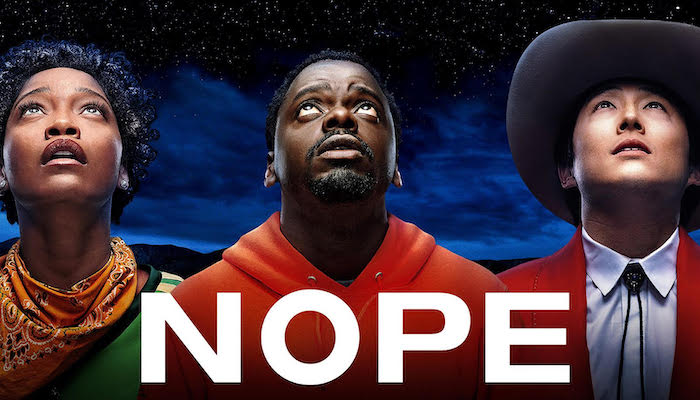
Nope--Jordan Peele's latest is probably the best UFO movie since Close Encounters, though it has a more sinister edge. It's wildly original, funny and creepy sci-fi/horror, yet it also carries the heroic charge of a good western.

Good Night Oppy--This documentary about the Mars rovers Opportunity and Spirit has interesting information about the Red Planet, but it's really about the way the NASA nerds anthropomorphized the robots and fretted over them and cheered them on and ultimately grieved over them. In an entirely unpretentious way, the movie hints at the question of where sentience comes from. 

The Duke--This pandemic-delayed release was, I thought, perhaps the most overlooked and delightful movie of the year. Jim Broadbent is splendid as Kempton Bunton, a cab driver, factory worker and anti-television fee protestor who in 1965 confessed to stealing Goya's Portrait of the Duke of Wellington from the National Gallery in London; Helen Mirren is his fed-up wife. The direction, by the late Roger Michell, is warm, graphically lively and period-rich.

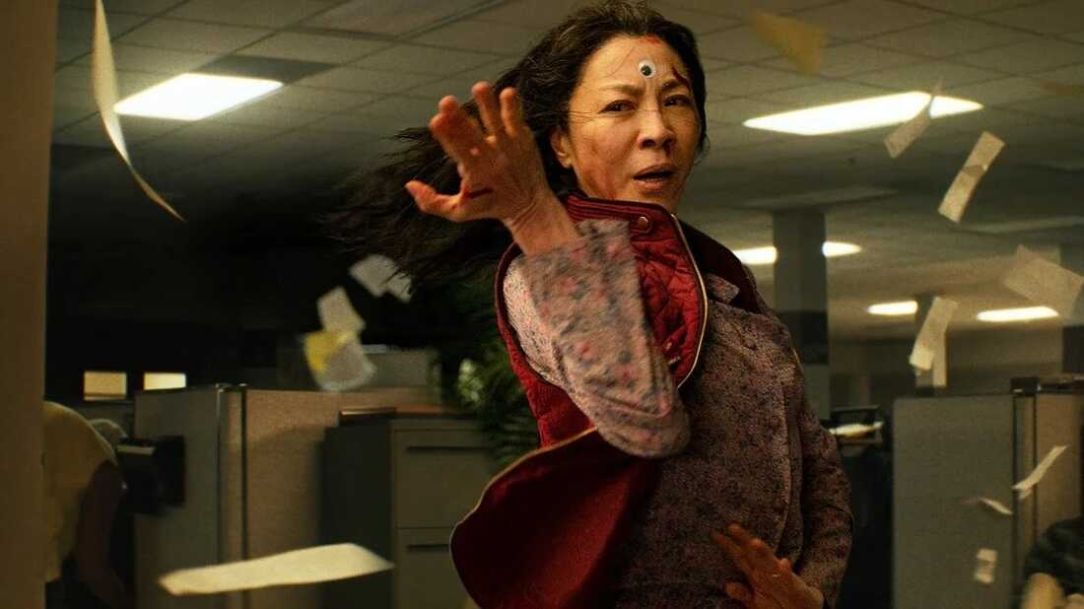
Everything Everywhere All At Once--Family drama, immigrant saga, sly comedy, martial arts actioner, Matrix-style sci-fi adventure and more are mashed-up in this freaky yarn from writer-directors Daniel Kwan and Daniel Scheinert that tries to live up to its title. It's epic, intimate, silly and profound. All at once.

Thirteen Lives--Dramatizing a technically complicated rescue mission in detail, Ron Howard is in his element in this moving account of the rescue of twelve Thai kids and their soccer coach from a flooded cave in 2018. A little tough if you're claustrophobic, but a true feel-good movie.

The Whale--Brendan Fraser gives a luminous, possibly generational performance as Charlie, a morbidly obese English teacher trying to reconnect with his furious estranged daughter. Directed by Darren Aronofsky, the movie is a little heavy and one-note aside from the star, but Fraser's radiance shines through the prosthetics.

Gabby Giffords Won't Back Down--Infuriating because of what Giffords lost when she was shot in 2011; inspirational because of how much she got back, and how courageously she refused to give in to despair. Directors Julie Cohen and Betsy West build the movie around how central music was to Giffords' recovery.

The Fabelmans--In Steven Spielberg's loosely autobiographical coming-of-age yarn, scripted by Tony Kushner, the focus is largely on the parents, beautifully played by Paul Dano and Michelle Williams. The movie isn't a grand slam, but it's fascinating, and it has the best final shot of the year.

Marcel the Shell With Shoes On--This feature expansion of the 2010 viral short by Dean Fleischer-Camp, with Jenny Slate voicing the tiny title character, is sunny and hilarious, but with improbably dramatic and poignant undertones. Isabella Rossellini is exquisite as the voice of Marcel's "Nan."

The Banshees of Inisherin--Martin McDonagh's black comedy about the agonies of friendship goes so sour in its later acts that I almost didn't put it on the list. But the brilliance of the initial conception and, especially, the magnificent acting of Brendan Gleeson, Colin Farrell, Barry Keoghan and Kerry Condon demand its inclusion.

One more list, while I'm at it; for anyone who might unfathomably be interested, here is the embarrassingly short list of books I read this year (as always, it doesn't include short stories, poems, comic books, essays, articles, reviews, automotive manuals, skywriting, menus, fortune cookie fortunes, etc etc)...

The Silent Gondoliers by William Nolan

Sucker's Portfolio by Kurt Vonnegut, Jr.

Orphans of the Sky by Robert A. Heinlein

Saturday Night and Sunday Morning by Alan Sillitoe

The Moon is a Harsh Mistress by Robert A. Heinlein

The Spread by Barry Malzberg

Ben by Gilbert A. Ralston

Player Piano by Kurt Vonnegut, Jr.

The Investigation by Stanislaw Lem

The Werewolf Principle by Clifford D. Simak

Destry Rides Again by Max Brand

Thursday, January 6, 2022

DISHING

The January issue of Phoenix Magazine...

...features this year's picks for "The 101 Best Dishes in the Valley." Your Humble Narrator is proud to have been one of the authors; see if you can guess my six contributions.

Below, for anyone who might remotely care, is the list of books I finished over this past year. It's an embarrassingly short list this time--not even a book a month!--and for a rather embarrassing reason: I found that my maturity level, already questionable, regressed this year, and I started devouring old comic books to a degree that cut into more substantive reading (I also lost most of a month due to an illness that left me unable to focus on reading, including a weeklong hospital stay in isolation with no reading material).

Still, there were some rich experiences; I finally got around to Babbitt, for instance, having come across an old Signet Classics copy in the take-a-book-leave-a-book shelf at a Rita's Italian Ice joint. What an extraordinary work, and later I came across a fascinating detail about the book's influence. Apparently J.R.R. Tolkien, of all freaking people, was among its admirers; he claimed that the word "Hobbit" derived from "Babbitt" because "Babbitt has the same bourgeois smugness that hobbits do. His world is the same limited place.

Anyway, here's my limited reading list:

A Journal of the Plague Year by Daniel Defoe

1922 by Stephen King

The Colorado Kid by Stephen King

The Son of Tarzan by Edgar Rice Burroughs

Cat's Cradle by Kurt Vonnegut, Jr.

The Case Against Satan by Ray Russell

Babbitt by Sinclair Lewis

The Gnomobile by Upton Sinclair

Calendar of Crime by Ellery Queen

Later by Stephen King

Tuesday, January 12, 2021

2020 HINDSIGHT

Strange to reflect, as we say farewell to the past year, on how many iconic "futuristic" years I've lived through: 1984, 2001 and...


...if short-lived '70s-era Hanna-Barbera cartoon show titles count as iconic, 2020. I doubt I'll make it to The Year 2525 of which Zager and Evans so memorably sang, at least in my current incarnation.

Anyway, here's one more list for January; my books for 2020. Even granting that it doesn't count short stories, articles, blog posts, poems, comic books, shopping lists, factory warranties, skywriting, banners towed behind airplanes etc etc, it's disgracefully short; I'm a ploddingly slow reader, and there are a couple of longish ones on there, at least by my standards, like Death's End, part three of Cixin Liu's astonishing Three-Body trilogy, and David Mitchell's Utopia Avenue.


Friday the Rabbi Slept Late by Harry Kemelman

Wild Wives by Charles Willeford


The Iron Dream by Norman Spinrad

Catch and Kill by Ronan Farrow

Becoming by Michelle Obama

Apropos of Nothing by Woody Allen

Barry Sonnenfeld, Call Your Mother by Barry Sonnenfeld

Death Comes as the End by Agatha Christie


Death’s End by Cixin Lui

Flatland by Edwin A. Abbott

Utopia Avenue by David Mitchell


I didn't include it on this list, because I was only about halfway through it on New Year's Eve, but in December I also finally cracked a book I've put off for a long time, Defoe's A Journal of the Plague Year, his 1722 chronicle of the 1665 Great Plague of London.


As you might guess, there's plenty about 1665 that's perfectly recognizable in 2020, although the response of the city's government, as described by Defoe, puts this country's federal response utterly to shame. But it's also instructive reading for anyone who thinks that 2020 was the worst possible year.

Friday, January 3, 2020

IT'S JUST THE NEWNESS OF YEAR

Happy New Year everybody! Check out my Top Ten Movies for 2019.

Also, Happy January! Check out the January issue of Phoenix Magazine...


...for the Top 100 Restaurants in the Valley of the Sun, several of them selected by Your Humble Narrator.

Also, here's the list of books (embarrassingly short this year!) I read in 2019 (as always, it excludes short stories, articles, comic books, poems, blog posts, movie credits, rejection slips, banners towed by airplanes, fine print, etc):


The Road to Wigan Pier by George Orwell

The Destiny Thief: Essays on Writing, Writers and Life by Richard Russo

The Alteration by Kingsley Amis

 
Monsignor Quixote by Graham Greene

Death Comes for the Archbishop by Willa Cather

Prelude to Space by Arthur C. Clarke


Joyland by Stephen King

Chances Are by Richard Russo

 
The Dark Forest by Cixin Liu

Lady, Be Bad by Brett Halliday

 
The Hawkline Monster by Richard Brautigan

Wednesday, January 9, 2019

TOME AFTER TOME

One more bit of 2018 business: As in years previous, Your Humble Narrator kept a list of the books I read this past year. So, for whoever might, for whatever earthly reason, be remotely interested, here it is:

Fire and Fury: Inside the Trump White House by Michael Wolff

How Town by Michael Nava

Scoundrel Time by Lillian Hellman

Chike and the River by Chinua Achebe

The Three-Body Problem by Cixin Liu

The Happy Man by Eric C. Higgs

Two by John D. MacDonald

Dead Ringer by Arthur Lyons

Tales of French Love and Passion by Guy de Maupassant

Born a Crime: Stories from a South African Childhood by Trevor Noah

Mr. Bass’s Planetoid by Eleanor Cameron

The Stainless Steel Rat Wants You! by Harry Harrison

The Man Who Spoke Snakish by Andrus Kivirahk

The President is Missing by Bill Clinton and James Patterson

Sargasso of Space by Andre Norton

Dirty Work by Gabriel Weston

So Move the Body by Carter Brown

The Master by Carter Brown

The Corpse Walker: Real-Life Stories, China from the Bottom Up by Liao Yiwu

The Great Los Angeles Fire by Edward Stewart

Planet of Judgment by Joe Haldeman

Get Carter (aka Jack’s Return Home) by Ted Lewis

Elevation by Stephen King


The Informer by Liam O’Flaherty

End of Watch by Stephen King

Mistrustful as I am of contemporary literature, I was startled to notice that the three books I found most mind-blowing this year, The Three-Body Problem, The Man Who Spoke Snakish and The Corpse Walker, were all of 21st-Century vintage. I was also fascinated by Stephen King's Elevation. It's one of his odder tales, a strangely conceptual variation on The Incredible Shrinking Man; it's dedicated to the memory of Richard Matheson and the hero's name is Scott Carey. King calls it a novel, and for most authors it would be, though at 146 pages it seems like flash fiction by King standards.

I greatly enjoyed, though I'm not sure it comes together exactly the way King wants it to, and it has an almost Capra-esque sentimentality to it. But it has great heart, and there are passages that are thrilling, in particular a long chapter about a footrace; an effortless, economical tour de force.

As usual, this list does not include individual articles, reviews, essays, interviews, comic books, blogs, poems, fortune cookies, Facebook posts, warning labels, bathroom walls, etc. etc. that I read last year. Or very short books; I was, for instance, given Whose Boat is This Boat? (by [Our Current President], "by Accident")...

 
...as a gift, read it, enjoyed it, and greatly appreciated that proceeds from its sale benefit hurricane victims. But I didn't list it, in no small part because I didn't wish to further disseminate the "author's" name.

Thursday, January 4, 2018

BOOKS & TRUCKS

A few Year End/New Year odds and ends:

First of all, as in past years I've kept track of the books I read in 2017, for anybody who might be interested (as always this doesn't include articles, reviews, comics, blogs, poems, graffiti, menus, shopping lists, subtitles, skywriting etc etc): 

 
Nightmare in Pink by John D. MacDonald

Lucky Jim by Kingsley Amis

The Night Stalker by Jeff Rice

The Wonderful Flight to the Mushroom Planet by Eleanor Cameron

The Adventures of M. de Mailly by David Lindsay

Smilin’ Jack and the Daredevil Girl Pilot by Zack Mosley

Crotchet Castle by Thomas Love Peacock

Death in the Air by Agatha Christie

Iceworld by Hal Clement

The Monster Men by Edgar Rice Burroughs

To a God Unknown by John Steinbeck

Synthetic Men of Mars by Edgar Rice Burroughs

The Beyonders by Manly Wade Wellman

Finders Keepers by Stephen King

Liner Notes by Loudon Wainwright III

Paperbacks from Hell by Grady Hendrix

Hadji Murat by Leo Tolstoy


The Far Side of the Dollar by Ross MacDonald

The Vegetable by F. Scott Fitzgerald


In 2017 I said a wistful farewell to a longtime companion: My green Toyota Tacoma pickup, which I bought new in 2000.


For financial reasons I asked the dealer for the most stripped-down, amenity-free Tacoma I could get, and I sometimes wondered if I bought the last new motor vehicle in America with hand-cranked windows. I found that I liked her low-tech charm. I spent more years driving this truck than I spent in high school and college put together, than I've spent living in any one home, than I've spent at any single job I've ever had. Her bed moved pianos and framed movie posters and dogs suspected of having bedbugs, and her cab transported, in addition to countless friends and family, celebrities including the late Richard Jeni, the late Mitch Hedburg and the late Ralphie May.

Sometime in 2003 or 2004 I got rear-ended in Avondale, and thrown forward into the car ahead of me. This resulted in the loss of the front bumper. A few years later her catalytic converter was stolen out of the parking lot of our condo in Phoenix and I had to replace it with an after-market part, with the result that the engine light was on constantly. Every two years my mechanic friend Pablo would shut it off long enough to get it through inspections (which it always passed) and a few hours later the light would come back on. Even so, based on the struggles I'd had with earlier vehicles I regarded her as close to trouble-free.

Her back gate became a gallery of odd bumper stickers, so that she looked like an old steamer trunk. But she didn't get to travel much outside of Maricopa County, just a few trips to Tucson and environs, once to Silver City, New Mexico and once to Vegas. Even so, I put hundreds of thousands of miles on her, and slept in her cab more than once.

I never gave her a name, like you're supposed to do with vehicles. But I certainly thought of her, and will remember her, as a good, reliable friend.

Simply because their maddening and clearly very effective radio jingle stuck in my head, I donated her to KARS-4-KIDS; it was only later that I learned that the organization gets a one-star "poor" rating from Charity Navigator. Oh well. Godspeed, old pal.


Over the Christmas holiday I acquired this guy...


...from Raising Cane's Chicken Fingers at Metro Center. The net proceeds from his purchase benefit area animal shelters (there may still be some available at your local Cane's if you want one; they're $8.99). His name is Kevin, and his name and attire were inspired by the character of Kevin (Macaulay Culkin), not from the 1990 favorite Home Alone, but rather from the oxymoronically-titled 1992 sequel Home Alone 2: Lost in New York. The plush dog is part of the chain's perplexing promotion to celebrate Home Alone 2's 25th anniversary. I didn't care for that film when it came out, and I like it even less now, because Our Current President appears in it (as himself). But I have to admit, this is a cute little guy.

Two of the books on my list above were ripping yarns I'd never gotten around to by a lifelong favorite author of mine, Edgar Rice Burroughs: The Monster Men and Synthetic Men of Mars.


Both involved Frankenstein-ish efforts to synthesize human beings, and in both cases the results are, to say the least, uneven. So...

Monster-of-the-Week: ...for the first honoree of 2018 here's the product of an industrial accident in the Synthetic man manufacturing facility on Mars:

"When I reached No. 4 the sight that met my eyes was one of the most horrible I have ever looked upon. Something had evidently gone wrong with the culture medium, and instead of individual hormads being formed, there was a single huge mass of animal tissue emerging from the vat and rolling out over the floor.

Various internal and external human parts and organs grew out of it without any relation to other parts, a leg here, a hand there, a head somewhere else; and the heads were mouthing and screaming, which only added to the horror of the scene."

(Very helpful of Burroughs to have his narrator note the mouthing and screaming of the heads "only added to the horror of the scene," we might not have realized that otherwise.)

Here's an illustration for Synthetic Men by ERB's son John Coleman Burroughs...


...but really, can it compete with the old man's descriptions?