Showing posts with label JIM BROADBENT. Show all posts

Friday, January 20, 2023

CAUGHT '22

2022 is unlikely, it seems to me, to go down in history as a banner year for popular movies. But even in less auspicious years, there are always some good flicks, and some good or even great scenes or performances in movies that aren't so great overall.

Out of what I saw, here are ten movies that stood out as best for me this past year:
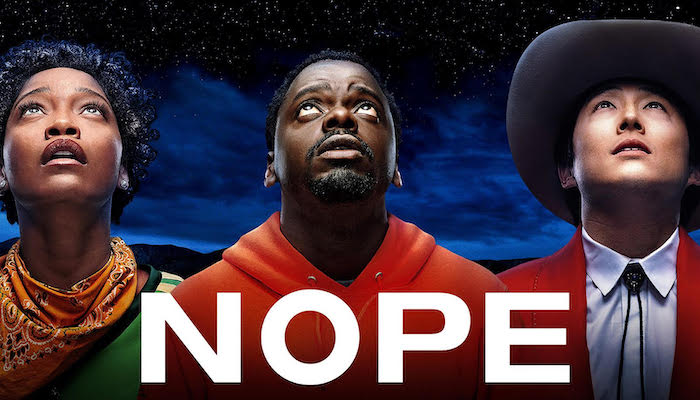
Nope--Jordan Peele's latest is probably the best UFO movie since Close Encounters, though it has a more sinister edge. It's wildly original, funny and creepy sci-fi/horror, yet it also carries the heroic charge of a good western.

Good Night Oppy--This documentary about the Mars rovers Opportunity and Spirit has interesting information about the Red Planet, but it's really about the way the NASA nerds anthropomorphized the robots and fretted over them and cheered them on and ultimately grieved over them. In an entirely unpretentious way, the movie hints at the question of where sentience comes from. 

The Duke--This pandemic-delayed release was, I thought, perhaps the most overlooked and delightful movie of the year. Jim Broadbent is splendid as Kempton Bunton, a cab driver, factory worker and anti-television fee protestor who in 1965 confessed to stealing Goya's Portrait of the Duke of Wellington from the National Gallery in London; Helen Mirren is his fed-up wife. The direction, by the late Roger Michell, is warm, graphically lively and period-rich.
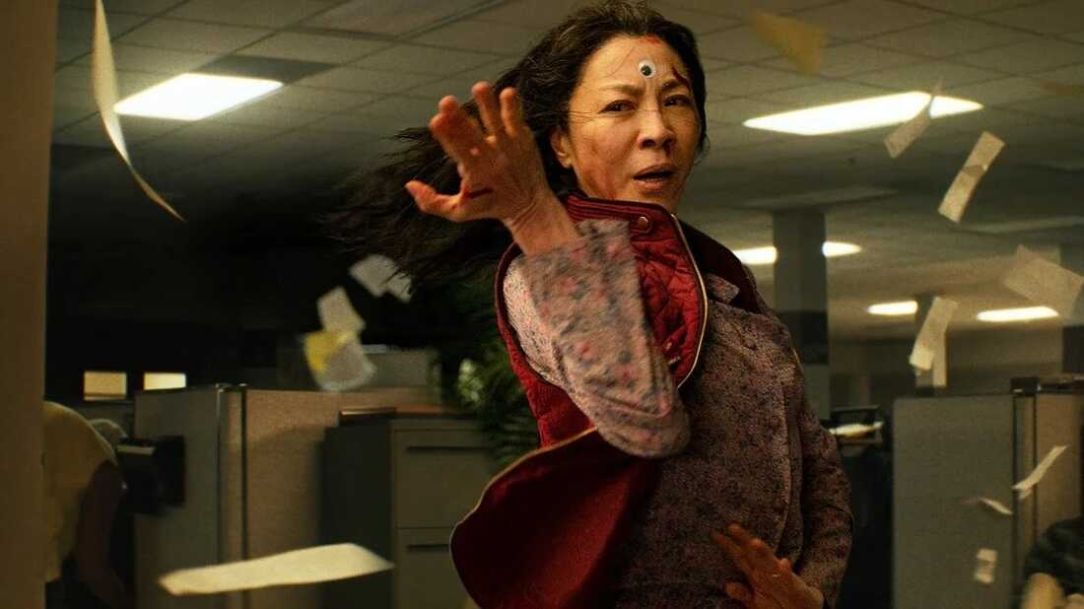
Everything Everywhere All At Once--Family drama, immigrant saga, sly comedy, martial arts actioner, Matrix-style sci-fi adventure and more are mashed-up in this freaky yarn from writer-directors Daniel Kwan and Daniel Scheinert that tries to live up to its title. It's epic, intimate, silly and profound. All at once.

Thirteen Lives--Dramatizing a technically complicated rescue mission in detail, Ron Howard is in his element in this moving account of the rescue of twelve Thai kids and their soccer coach from a flooded cave in 2018. A little tough if you're claustrophobic, but a true feel-good movie.

The Whale--Brendan Fraser gives a luminous, possibly generational performance as Charlie, a morbidly obese English teacher trying to reconnect with his furious estranged daughter. Directed by Darren Aronofsky, the movie is a little heavy and one-note aside from the star, but Fraser's radiance shines through the prosthetics.

Gabby Giffords Won't Back Down--Infuriating because of what Giffords lost when she was shot in 2011; inspirational because of how much she got back, and how courageously she refused to give in to despair. Directors Julie Cohen and Betsy West build the movie around how central music was to Giffords' recovery.

The Fabelmans--In Steven Spielberg's loosely autobiographical coming-of-age yarn, scripted by Tony Kushner, the focus is largely on the parents, beautifully played by Paul Dano and Michelle Williams. The movie isn't a grand slam, but it's fascinating, and it has the best final shot of the year.

Marcel the Shell With Shoes On--This feature expansion of the 2010 viral short by Dean Fleischer-Camp, with Jenny Slate voicing the tiny title character, is sunny and hilarious, but with improbably dramatic and poignant undertones. Isabella Rossellini is exquisite as the voice of Marcel's "Nan."

The Banshees of Inisherin--Martin McDonagh's black comedy about the agonies of friendship goes so sour in its later acts that I almost didn't put it on the list. But the brilliance of the initial conception and, especially, the magnificent acting of Brendan Gleeson, Colin Farrell, Barry Keoghan and Kerry Condon demand its inclusion.

One more list, while I'm at it; for anyone who might unfathomably be interested, here is the embarrassingly short list of books I read this year (as always, it doesn't include short stories, poems, comic books, essays, articles, reviews, automotive manuals, skywriting, menus, fortune cookie fortunes, etc etc)...
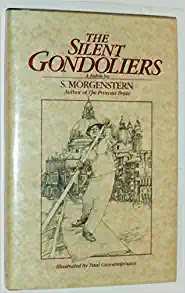
The Silent Gondoliers by William Nolan

Sucker's Portfolio by Kurt Vonnegut, Jr.

Orphans of the Sky by Robert A. Heinlein

Saturday Night and Sunday Morning by Alan Sillitoe

The Moon is a Harsh Mistress by Robert A. Heinlein

The Spread by Barry Malzberg

Ben by Gilbert A. Ralston

Player Piano by Kurt Vonnegut, Jr.

The Investigation by Stanislaw Lem

The Werewolf Principle by Clifford D. Simak

Destry Rides Again by Max Brand

Friday, April 29, 2022

THE NOT-SO-GREAT TRAIN ROBBERY

Interesting imports this weekend:

Opening at the Laemmle in Glendale, CA:

Bronco Bullfrog--Barney Platts-Mills directed this 1969 indie, shot in gorgeous newsprint shades of pale-gray monochrome by Adam Barker-Mill in London's East End, with a cast of nonprofessionals and music by Audience. The story follows Del (Del Walker) and his pals, a bunch of budding if rather half-hearted teenage delinquents.

They commit heinous crimes like sneaking each other into movie theaters and robbing pinball machines to get enough money for "cakes." In one strand of the plot, they reconnect with an old friend, Borstal veteran Bronco Bullfrog (Sam Shepherd), who reproves them for the childishness of their capers and draws them into robbing a freight train.

In another strand, Del meets the lissome Irene (Anne Gooding), two years his junior, and they fall for each other, probably in no small measure because Irene's Mum and Del's Dad so disapprove of the relationship. Their search, together on Del's motorbike, for a bit of privacy becomes the central struggle of the film.

The charm in this blast from the past, now getting a half-century belated stateside re-release, is the undemonstrative affectlessness that these characters display, and which extends to the quiet, doggedly undramatic filmmaking style. When the lads are unloading the freight car and carrying off the boxes, they might be helping Bronco move into a new flat. Del and Irene get cross with each other, part, and then make up with fewer histrionics then most couples show deciding what to watch on TV. Even the movie's few brief eruptions into violence have a curious lack of brutality.

The result is that these inexpressive ne'er-do-wells, softly murmuring their (subtitled) cockney lines, come across as singularly funny and endearing. Somehow their lack of operatics, and the movie's refusal to conform to a cautionary crime movie template--or any kind of template, really--gives these young people a comic dignity.

Opening in the Valley at Harkins Shea:

Charlotte--This animated feature, directed by Eric Warin and Tahir Rana, tells the story of Charlotte Salomon. The gifted artist's brief life was plagued with everything from horrific dysfunction in her depressed, suicide-prone family to unhappy love affairs to, you know, being a member of a high-profile Jewish family in the '30s and '40s in Berlin and later in the south of France during the Occupation. She is now remembered for creating Leben? oder Theater? (Life? or Theatre?) a narrative cycle of hundreds of paintings, overlaid with autobiographical text, a dazzling and innovative work which survived both her and her Nazi persecutors.

Keira Knightley provides Charlotte's voice (in the English-language version; she's Marion Cotillard in the French version). The story is appallingly, almost unrelentingly sad, but it's also inspiring, and the animation is beautiful.

Opening in the Valley at Harkins Fashion Square:

The Duke--The great Jim Broadbent, who provides the voice of Charlotte's wretched "Grosspapa" in Charlotte, plays the lead in this period yarn, a posthumous work by director Roger Michell. It's a lot more fun than Charlotte. Like Bronco Bullfrog, it's a '60s-era heist movie, with a generous and wryly comedic spirit. But that's pretty much where the similarities end. Michell's direction, employing split screens and jazzy George Fenton music, has a '60s throwback flavor.

It tells the true story of Kempton Bunton, a taxi driver and factory worker from Newcastle who was also a self-educated aspiring playwright, as well as a political crank who campaigned to abolish television license fees for elderly people (he was briefly imprisoned himself for defying the requirement). Bunton turned out to be maybe the most improbable, and least offensive, master criminal in history. In 1961, Goya's Portrait of The Duke of Wellington (ca. 1812) was stolen from London's National Gallery, and authorities deemed it the work of a seasoned professional art thief (the theft is referenced in a throwaway gag in Dr. No).

But as it happened the masterpiece was actually residing, the whole time, in the back of a wardrobe in Bunton's house, and before long the authorities began to get letters demanding a ransom, to be paid not to the thief but to charity. To give away much more of the story would be to spoil some of the fun; suffice to say that Broadbent is flawless and lovable, and has the good sense to act as straight man when Helen Mirren, as his beyond fed-up wife Dorothy, hilariously lets rip at him. The whole cast is fine, but a particular word should be said for Matthew Goode's delicately funny work as Bunton's barrister, who develops a sly affection for his brash, obtusely moral client.

I highly recommend this one. Be forewarned, though: Unlike Bronco Bullfrog, The Duke isn't subtitled, and some of us Yanks might wish it was.

Wednesday, August 28, 2013

CIRCUIT TO THE CHASE

In the political thriller Closed Circuit, opening today, a truck bomb explodes in a London market, killing dozens. The surviving terrorist is assigned two lawyers—one, Martin (Eric Bana), to defend him in his public trial, the other, Claudia (Rebecca Hall) to advocate for him during the closed hearings involving classified evidence, which is kept secret even from Martin.


Claudia and Martin have an illicit romantic past—his marriage broke up over his affair with her. This creates the teeniest conflict of interest, but the lawyers, eager for the high-profile assignment, neglect to tell the judge this. Before long both of them, working separately, become aware that they’re under a near-Orwellian level of surveillance, and then that their lives are in danger, as they discover a secret at the heart of the case that the Government is willing to kill to protect. Sadly, nothing seems very implausible about any of this.

Directed by John Crowley from a script by Steven Knight, Closed Circuit hurtles forward with almost unseemly speed and economy. There isn’t a shot or a line of dialogue in the picture that could be called digressive, and the tension rises with metronomic precision, driven along by Joby Talbot’s ominous orchestral music. The atmosphere of humorless, frightened suspicion is palpable and oppressive, and the movie grips.

As usual, the acting has a lot to do with this. Bana’s charm has always been elusive to me, but here he’s supposed to be a bit of a cold fish, so he’s effective, and Hall is engaging as ever, even in this less-than-warm role. From the supporting cast comes creditable work by Ciaran Hinds, Anne-Marie Duff, Julia Stiles, Riz Ahmed and especially Jim Broadbent as a mild-mannered yet almost satanic Attorney General who drops into the movie now and then to level a threat in the most pleasant manner possible.

When Closed Circuit was all over, I did find myself wondering why Claudia and Martin didn’t make a point of shoving their at-risk witness in front of the TV cameras outside the Old Bailey, or why they didn’t simply say in court, in a tattletale-ish sort of voice, “M’lud, MI-5 has been trying to kill us all night.” But Closed Circuit wouldn’t be the first thriller that pulls you along so skillfully that you don’t think about its gaps in logic until after the end credits roll.

As in 1812, the British seem to have re-invaded the States—but this time they’ve targeted our multiplexes. Over the course of the week, along with Closed Circuit, at least two other movies from, by or about Brits have landed wide Yank release: the boy-band documentary One Direction: This Is Us and the Simon Pegg comedy The World’s End. The former will be discussed when it opens here Friday, so let’s talk The World’s End here…


The third entry in the “Cornetto Trilogy” of comedies written by Simon Pegg and Edgar Wright, directed by Wright and starring Pegg and Nick Frost is now in theaters. The first, 2004’s Shaun of the Dead, is a classic both of the zombie genre and of Brit comedy; the second, the 2007 cop-movie spoof Hot Fuzz, started out perhaps even more brilliantly than Shaun but ran out of steam toward the end.

World’s End resides somewhere between the two—not quite the homerun of Shaun, but ultimately more satisfying than Hot Fuzz. The main character is Gary King (Pegg) who is trying to reunite four old school friends (Frost, Paddy Considine, Martin Freeman and Eddie Marsan) to have another go at a legendary but unfinished pub crawl from 1990 in their hometown of Newtown Haven, whose major claim to fame is that it’s home to Britain’s oldest roundabout.

Gary’s a scruffy loser who never grew up, while the other four have moved on to relatively mature lives—and one, Andie (Frost) bears Gary a bitter grudge. Nonetheless, all four of his friends show up for the 12-pub crawl, their sights set to finish with a pint at the pub called The World’s End.

This middle-aged outing alone might have provided enough laughs for a movie by itself, whipped forward by the snappy comic punctuation of Wright’s editing. But about midpoint, The World’s End suddenly takes a strange sci-fi twist, as the lads realize that something has changed in Newton Haven.

Really, it’s just roughly the zillionth variation on Invasion of the Body Snatchers, but it’s an amusing one, and the motivation of the invaders links up thematically with Gary’s personality. As with Hot Fuzz, the movie is a little overambitious—it goes on a smidge too long, and not every scene works. But there are plenty of laughs, and a few touching moments, and the performances are fine, especially by the feisty, stouthearted Frost.

It should also be noted that the final decision of the aliens with regard to humanity—pronounced by Bill Nighy as the voice of “The Network”—is basically the same as that of The Pods in Jack Finney’s original novel The Body Snatchers.

Friday, January 13, 2012

BARENAKED LADY

An elderly hand takes a container of milk from a convenience-store refrigerator. That’s how The Iron Lady begins. The hand belongs to the long-retired Margaret Thatcher (Meryl Streep), who buys the milk and scurries home, unrecognized & unnoticed, one more old ratbag in an ugly winter coat.


In terms of narrative, it may be the cleverest touch in the movie—not just beginning an epic about a long & nasty era in British history with a poignant, small-scale episode, but also beginning the film in a grocery store. The Iron Lady makes the point, early & often, that Lady Thatcher was a grocer’s daughter to the depths of her soul.

Hardly anything else that ensues is of much interest cinematically, but then, it doesn’t seem meant to be. The film is built as a showcase for Streep’s performance, & the result is effectively a one-woman show.

As usual, she makes it an entertaining one. After her hilarious & endearing turn as an expansive, ecstatic, flirtatious Julia Child in Julie & Julia, she’s inevitably not as much fun as this small-souled woman, with her cross perplexity at everyone else’s failure to perceive how right she is. In the end, though, Streep uses these very limitations to generate pathos, & she gives Thatcher witty little flashes of weariness with her own company.


The movie’s achievement, as opposed to Streep’s, is harder to pinpoint. Much as I resent the director, Phyllida Lloyd, for the minutes of my life I gave to her previous film Mamma Mia!, I’ll grant that her work here is mostly efficient. The script, by Abi Morgan, presents a fairly perfunctory chronicle history of the PM’s life—her youth (in which she’s played, capably, by Welsh actress Alexandra Roach) as the worshipful daughter of a Grantham grocer father & an emotionally aloof mother, her early political ambitions & her marriage to Denis Thatcher, her rise within the Tories, her ascension to Prime Minister. Then come the mining strikes, the IRA, the Falkland War, the assassination attempt.

This stuff is all strung, in flashback, along much fuller scenes of Thatcher as an old lady, infirm, condescended-to by her children & heckled by the ghost of the departed Denis (Jim Broadbent). This seems to be the principal concern of the movie: depicting the Iron Lady as aged, sick, bereaved, helpless. A hardhearted viewer might note that these were all categories of humanity for which the Lady showed minimal concern during her career, but Streep, subtle & slyly funny as ever, has it in her power to soften some pretty hard hearts.

She’s got her work cut out for her. Even some of us who have never set foot in the UK may feel our jaws clench at the very mention of the name “Margaret Thatcher.” Along with Ronald Reagan & John Paul II, she’s part of the current neocon Holy Trinity (that none of them could now pass a Tea Party litmus test is both ironic & a testament to their own self-devouring reactionary influence). Thatcher’s importance in 20th-Century history is undeniable, & so is the sad leveling power of age & illness & personal loss. But only by combining these two truths can a Thatcher biopic become palatable for many of us.

Thursday, November 24, 2011

ARTHURIAN LEGEND

Literalism is the joke behind the new computer-animated feature Arthur Christmas. It’s right there in the poster: “Ever wonder how 2 Billion presents get delivered in 1 night?”

2 billion kids have wondered the same thing, & also how reindeer can fly, & how Santa gets down the chimney, etc. According to Arthur Christmas, nowadays it’s accomplished via a massive, technologically sophisticated process involving a city-sized, rocket-powered sleigh, & countless elves operating like commandos, rappelling down the sides of buildings & through windows SWAT-team-style to plant gifts & leave traces that simulate Santa’s visit.

The real Santa (voiced by Jim Broadbent) is at the center of it all, as an ineffectual figurehead, hustled here & there by the elves. The real brains of the outfit, & his itching presumptive heir, is his son Steve (Hugh Laurie), who runs the show from a palatial mission control back at the North Pole & resents his father’s refusal to retire & pass him the reins. The retired senior Santa (Bill Nighy) watches & scoffs at the newfangled spectacle from his rooms.

The title character is Santa’s recessive younger son, who works answering letters, & truly cares about the kids. When Arthur (James McAvoy) learns of a glitch in Steve’s system—a little girl in a small town in Cornwall hasn’t been given her bicycle—he’s appalled that his father & Steve are prepared to just blow it off, as within the margin for error. With just a few hours left before sunrise in England, Arthur & his grandfather set out to make the delivery old-school, using a sled, reindeer, a gift-wrap-obsessed elf & a bit of magic dust. All does not go smoothly.

It does go hilariously, however. This blend of “Yes, Virginia, There Is a Santa Claus” with Apollo 13 is one of the more inventive Christmas movies I’ve seen in a long time.

A product of Aardman Studios—the folks that brought us the Wallace and Grommit films—it’s dizzyingly imaginative on a visual level, & despite the sentimentality inherent in the storyline, it isn’t mawkish, probably because it’s so bracingly honest about creeping institutional impersonality. I also liked the shades of gray in the characters—Arthur is lovable but clueless; without his less warmhearted, more competent relations he’d be helpless. The crotchety Santa emeritus, also lovable, has his own selfish reasons for wanting to make the run, & Steve & father aren’t presented as soulless.

In reality, of course, the charming tradition of giving Christmas gifts has degenerated over the decades into an angst-ridden consumerist nightmare driven by a technological juggernaut far more pitiless than that depicted in the film, with Santa Claus, that fascinating composite of diverse cultural traditions, reduced to its mascot. Arthur Christmas carries, & is deepened by, a rueful awareness of this corruption under its merry, bright surface.

Happy Thanxgiving everybody, by the way. The holiday weekend box office will likely be dominated by Muppets, & that’s fine, but it would be a pity if, because of that, Arthur Christmas was overlooked by audiences.

Speaking of the Muppets…

Monster-of-the-Week: …in honor of their new movie, here’s a Halloween greeting I received, depicting the iconic Miss Piggy as another icon…