Showing posts with label THE TREE OF LIFE. Show all posts

Tuesday, January 7, 2020

TEEN ANGST

Last Friday I presented a Top Ten List for 2019. But let’s not forget that, as of last Wednesday, the 2000-‘Teens are also in the rearview.

Here’s a Top 10 for the ‘Teens:


The Act of Killing (2012) —Joshua Oppenheimer’s shocking nonfiction film, in which participants in killings during the Indonesian massacres of the mid-‘60s re-enact their crimes for the camera, is hard to watch, but probably the movie of the decade.

The Other Side of the Wind (2018) —Released four decades belatedly, the final directorial feature of Orson Welles—shot in the ‘70s, much of it here in the Valley—is a send-up of both old-Hollywood machismo and new-Hollywood artsy posing. Superficially chaotic, it’s full of bravura sequences and fine, funny acting.


The Tree of Life (2011) —Terrence Malick takes on The Meaning of Life through the prism of a midcentury Texas family. A strange, difficult symphony of fractured narrative and beautiful acting.

   
Get Out (2017) —Jordan Peele’s horror comedy-melodrama about race as a hijack-able commodity was a knockout.


Moneyball (2011) —A superbly re-watchable, improbably touching sports movie, about Billy Beane using “Sabermetrics” to rebuild the Oakland A’s. Brad Pitt and Jonah Hill make a great Don Quixote and Sancho of baseball.

Fruitvale Station (2013) —This heartbreaking, infuriating drama about a police shooting at the title BART station marked a spectacular debut for director Ryan Coogler and potent star turns by Michael B. Jordan and Octavia Spencer.

 
American Animals (2018) —Bart Layton’s docudrama, about four college-age nitwits plotting to rob the rare books room at a Kentucky library, is unforgettable in its depiction of movie-driven criminal fantasy, and of the privileged status of the conspirators. 

November (2017) —This black-and-white Estonian gothic, directed by Rainer Sarnet from a novel by Andrus Kivirahk, has a low-key magic all its own. 


Black Panther (2018) —Having debuted with Fruitvale Station, Ryan Coogler went on to direct the most fun of the Marvel movies.

The Lovers (2017) —Hardly anyone seemed to pay any attention to this low-key comedy-drama about adultery turned on its head, so, modest though it may be as a piece of cinema, I’m going to put it on the list. Hope it gets discovered one of these years. 

Here are 10 more that came close: The Skin I Live In, Moonlight, Lincoln, Spotlight, The Shape of Water, Once Upon a Time in Hollywood, Inside Out, The Town, Attack the Block and Ant-Man. 

By the way, after a nearly twenty-year hiatus, Your Humble Narrator finds himself back on Rotten Tomatoes; you can check out my page here.

Friday, November 28, 2014

BOY WONDER

Opening today at Harkins Valley Art:


The Better Angels—Shot in ravishing black-and-white, this vision of Abraham Lincoln’s boyhood in Indiana takes its title, of course, from Lincoln’s famous reference to “The Better Angels of Our Nature” in his first inaugural. Writer-director A. J. Edwards seems to be making the case that said Better Angels were Lincoln’s mother and stepmother. The film even begins with an onscreen quote from Abe: “All that I am, or hope to be, I owe to my angel mother.”

The dreamlike, free-floating narrative depicts both this biological mother, Nancy Lincoln (Brit Marling), who died when he was nine, and his father’s new wife Sarah (Diane Kruger) as paragons who instilled in the frontier boy (Braydon Denney) not only civility but compassion. It’s less generous to Thomas Lincoln (Jason Clarke), Abe’s dour drudge of a dad—his appearances often heralded by the sharp crack of an ax as he splits wood. He’s acknowledged as a decent sort at bottom, but fairly or not it’s implied that Lincoln’s greatness arose in spite rather than because of him.

Edwards worked as an editor on several of Terence Malick’s films, and was credited as “Key Creative Consultant” on Malick’s 2011 The Tree of Life. This isn’t surprising, since The Better Angels—which Malick produced—seems almost like a retelling of The Tree of Life. Not only does Edwards work slavishly in Malick’s elliptical style, but the story is essentially the same—a boy’s memories of saintly maternal influence and of an upright but joyless, emotionally distant father.

Also like The Tree of Life, The Better Angels, with its lingering, quivering attention to the natural world that surrounded these people, will seem hypnotic and powerful to some viewers—like me—and tiresome and exasperating to others. But to no viewers will it seem like a business-as-usual historical film.

Monday, January 2, 2012

THE LIST I CAN DO

For the multitudes trembling in anticipation, here are my Top Ten movies for 2011:


1. The Tree of Life: Terrence Malick’s film isn’t ambitious or anything; it just takes on the Creation of the Universe and the Meaning of Existence. Also, it contains Brad Pitt’s best performance, beautiful music by Alexander Desplat, & a plesiosaurus.

2. The Skin I Live In: Pedro Almodovar’s entry in the venerable European “mad skin doctor” genre is convincing, ingeniously-structured & potent. Antonio Banderas & Elena Anaya are superb as the Doctor & his patient/victim, respectively.

3. Moneyball: Brad Pitt & Jonah Hill play statistical weird science on the Oakland A’s to make them win without marquee players. Sly, restrained direction by Bennett Miller & another gem of a performance by Pitt combine to make this inside-baseball tale fascinating & improbably touching.

4. The Artist: This black-and-white, mostly silent romantic comedy somehow manages to be a movie of substance rather than a stunt. Jean Dujardin is sensational as the title character, an ultra-debonair Hollywood leading man whose career hits the wall when the talkies arrive; the beguiling Berenice Bejo is the spirited up-and-coming star who adores him from afar & would salvage his career if only he wasn’t so proud. The film is studded with charming supporting performances, but the hero’s little dog steals scenes like they were Snausages.

5. Meek’s Cutoff: Kelly Reichardt’s subtextually political Western, loosely based on historical events, is about a bunch of lost covered-wagon settlers looking for a drink of water in the eastern-Oregon desert. It’s an ordeal, but a dramatically valid one, & it maddeningly offers no answers. Michelle Williams is quietly excellent as a clear-headed frontier wife, & Bruce Greenwood gives the performance of his career as the reactionary guide Meek.

6. Martha Marcy May Marlene: Elizabeth Olsen is spectacular in the title role, a young woman who flees a rural New York cult, & John Hawkes is chilling as the cult leader. Sean Durkin’s simple, low-key direction generates moody atmosphere & a subtle, fretful suspense.

7. Attack the Block: Teenage South London street punks jump on their bikes & save the world from aliens on Bonfire Night. Joe Cornish wrote and directed this funny, tense sci-fi tale, with a fine ensemble cast & spooky, amusingly simple invaders.


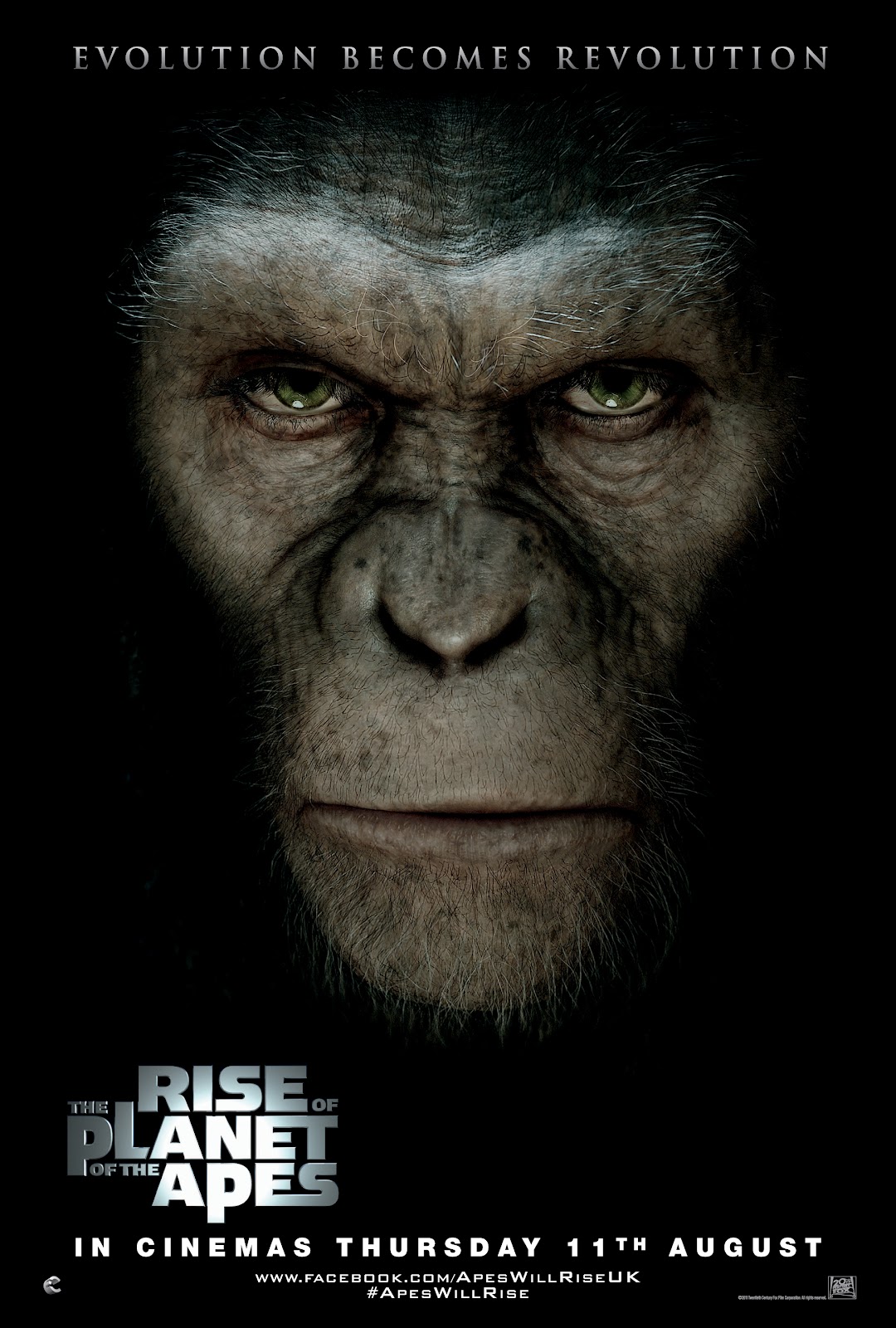
8. Rise of the Planet of the Apes: More top-notch sci-fi, this is the best iteration of the Apes franchise since the 1968 original, cleverly dramatizing how the Ape-pocalypse begins. Behind the CGI, Andy Serkis provides the superb facial expressions of the chimpanzee revolutionary Caesar.

9. Texas Killing Fields: This police procedural from director Ami Canaan Mann , about the murder of young women in a small, grungy Texas town, is a grim & difficult work, but it has an intense, enveloping atmosphere of tragedy.

10. The Adventures of Tintin: Steven Spielberg’s adaptation of the Belgian comic books is pure fun, & dazzlingly skillful cinema. As with The Artist, however, Spielberg lets the dog steal the show.

Also worth checking out: Contagion, Women on the 6th Floor, My Week With Marilyn, Hop, We Bought a Zoo, Footprints, Rio, The Smurfs, J. Edgar, Arthur Christmas, Happy Feet Two, Thor, Rubber, Super8, Trollhunter, Margin Call, Winnie the Pooh, Rango, Henry’s Crime and The Muppets (& the excellent Toy Story short before The Muppets).

A couple of major stinkeroos: Zookeeper, The Green Hornet, Creature & Atlas Shrugged: Part One.

Friday, June 10, 2011

TRUNK SHOW

The specific subject of Terrence Malick’s new film The Tree of Life is a mid-century, middle-class, middle-American family—dysfunction & tragedy played out in Norman Rockwell light. Malick isn’t big on specificity, though, & it wouldn’t be an exaggeration to say that what he’s really taking on with this movie is no less than the Meaning of Life, the inscrutable Fruit & Root of the title Tree.


Malick’s story concerns the O’Briens, of Boomer-era Waco, Texas: Dad (Brad Pitt), who gave up his dream to be a classical pianist for a career as an industrial engineer, the radiant & saintly Mom (Jessica Chastain), and three boys. The eldest of these, Jack (played by Sean Penn as an adult & by the terrific Hunter McCracken as a preteen), is our point of view for most of the film.

It’s an iconic American motif; what makes The Tree of Life different from innumerable other treatments is, first of all, Malick’s narrative style. The story is given to us in elliptical fragments, mostly brief, often enigmatic, seemingly meant to suggest snatches of memory. In its broader organization, it’s also suggestive of a piece of symphonic music, with movements: a light & joyous passage devoted to the mother, a brooding one for the father, a turbulent one for the boy’s sexual awakening, and so forth (the powerful score is by Alexander Desplat).

Past and present, the dramatic & the trivial, are freely mixed with scenes of the characters wandering in expressionistic landscapes. It’s disorienting at first, and some of the questions that arise about exactly what’s happened to the family remain ambiguous. But the wisps & glimpses of story accrue emotional force, & most of what’s onscreen is superbly done—it includes, among other merits, one of Brad Pitt’s best performances, a turn of almost Brando-like vibrancy. Still, what we aren’t shown can be exasperating.


Secondly, The Tree of Life is remarkable for Malick’s ambitiousness of scope: In addition to emotional conflicts—career and personal disappointments turn Dad from a stern & hard-assed but by no means unloving father to a repressive tyrant—& coming-of-age drama, the family is also visited by heartbreak & loss. They cry out to the Almighty, as people do in such times, with the Eternal Questions: “Who are You? What are we to You?” And Malick takes his unironic best shot at giving them, & us, an answer, in visual terms.

The oddest branch on The Tree of Life is a lengthy, epic special-effects sequence depicting the formation of the Cosmos, and the development of life on Earth, from slimy blobs & worms to plesiosaurs & dinosaurs. It’s a majestic free-standing episode, inevitably reminiscent, in atmosphere, of Kubrick’s 2001 (Kubrick crony Douglas Trumbull reportedly worked on the effects), but what, you might well ask, does this titanic spectacle have to do with the O’Briens of Waco, Texas?


The question could be answered in more than one way. It could be that Malick is saying to the bereaved questioner, in the manner of a rationalist-era Voice of God to Job: In light of this magnificent, terrible, pitiless, glorious pageant, how dare you ask for an explanation for your sufferings?

I don’t think, so, though. I think he’s trying to put personal & family travails into a cosmic context—to suggest that our lives are every bit as important, in the grand scheme of things, as exploding suns & volcanoes & primordial monsters. The film seems in some sense theistic in outlook, though not simplemindedly so, & the point seems to be that human life & our interpersonal connections do have metaphysical or transcendental significance, even if we can’t quite understand it.

Of course, Malick’s depiction of The Grand Scheme of Things is just that—a depiction. Your own sensibility will have a lot to do with whether it repels you or thrills you, whether it seems pretentious & presumptuous or an audacious & visionary use of the medium.

For me, it was the latter. Malick, now 67, has made only five features as a director. His marvelous debut, 1973’s Badlands, holds up as a classic; I’ve found most of his subsequent work interesting but diffuse. But The Tree of Life, for all its loose ends & ramblings, strikes me as another that may still look like a classic four decades from now.